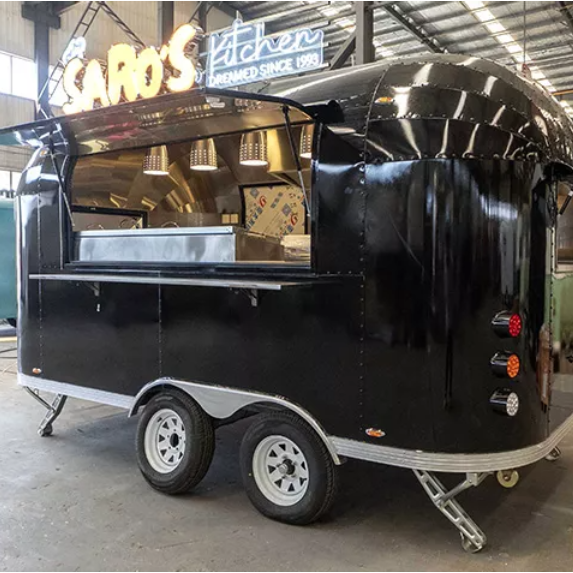
The street food revolution offers incredible opportunities for ambitious entrepreneurs. Entering the mobile food and beverage industry requires aligning your initial vehicle investment heavily against your operational capacity, budget, and revenue goals. Many operators fail early because they choose the wrong platform.
Deciding between a specialized beverage model and a generalized culinary model dictates your daily workflow, equipment needs, and regulatory hurdles. Choosing a heavy-duty kitchen when you only want to serve espresso drains your capital. Conversely, attempting complex menus in a tiny space leads to severe operational bottlenecks.
This guide covers an objective breakdown of startup costs, health code compliance realities, and daily operational complexities. We will walk you through a framework to evaluate which unit best fits your business model. You will learn how to balance equipment footprints, power loads, and local regulations.
Key Takeaways
Beverage-focused units typically offer higher profit margins (70–80%) and require lower initial capital, but demand high transaction volume to achieve target daily revenues.
Standard food units command higher average ticket sizes and menu versatility but require strict adherence to complex health codes (fire suppression, commercial hoods) and heavier towing equipment.
Permitting and compliance requirements differ vastly; beverage operations generally face lower regulatory barriers compared to operations handling raw meat or open-flame cooking.
Your choice of a custom coffee trailer versus a standard food build out should be dictated by your local market gap, access to commissary kitchens, and available startup capital.
1. Business Problem Framing: Analyzing Your Mobile Concept
Success in mobile vending relies on aligning your vehicle choice directly alongside your business goals. You must evaluate your lifestyle, revenue targets, and local infrastructure before buying any equipment. We suggest framing your concept around three distinct pillars.
Defining Success Criteria: You must identify your transaction goals. High-volume, low-ticket transactions define coffee service. You rely on rapid turnover. Lower-volume, high-ticket catering defines food service. You rely on premium pricing and larger group orders.
The Lifestyle Factor: Consider your preferred working hours. Coffee service demands early morning rushes. You will start prep work around 4:00 AM. Food service leans toward lunch rushes, dinner services, and late-night event schedules. They dominate your evenings and weekends.
Commissary Dependency: Local health departments heavily regulate mobile units. You must understand rules regarding prep work, dishwashing, and greywater disposal. Most jurisdictions legally require you to operate from a licensed commissary kitchen.
2. The Case for a Mobile Coffee Trailer
Choosing a beverage-focused business model simplifies many logistical challenges. Investing in a high-quality coffee trailer streamlines your daily focus. You avoid the chaos of managing raw proteins and complex cooking temperatures.
Operational Focus: Coffee operations boast streamlined inventory management. You deal primarily in shelf-stable beans and syrups. You also manage highly regulated but predictable dairy and alternative milks. Spoilage risk remains incredibly low compared to fresh food.
Equipment Footprint: Operating a mobile coffee trailer requires specialized but compact equipment. You need commercial espresso machines, heavy-duty grinders, and reliable ice makers. Under-counter refrigeration keeps milk safely chilled. These appliances fit neatly into smaller spaces.
Financial Realities: Baseline equipment costs sit much lower compared to full commercial kitchens. You avoid expensive fryers and ventilation systems. Gross margins per cup often exceed 75 percent. However, you face a distinct volume challenge. You must secure 100 or more daily transactions to meet typical revenue targets. Low ticket prices mean volume is everything.
Agility & Footprint: Beverage units are typically smaller and lighter. They allow access to tighter event spaces. You can easily park in corporate parks, crowded farmer's markets, or small private driveways. Agility translates directly into more booking opportunities.
3. The Case for a Full Food Trailer
Food units offer immense revenue potential for culinary entrepreneurs. They act as fully functioning commercial kitchens on wheels. You can command premium prices for artisanal meals and exclusive catering services.
Menu Versatility: A full kitchen gives you the ability to pivot cuisines easily. You can cater upscale weddings on Saturdays and serve street tacos on Tuesdays. Menu flexibility protects you against shifting consumer trends.
Equipment Footprint: Cooking demands significant interior space. You need room for stainless steel prep tables, flat-top grills, and deep fryers. Full-size refrigeration remains mandatory. Complex commercial ventilation systems take up massive ceiling space.
Financial Realities: Higher average order value (AOV) naturally offsets lower daily transaction counts. Selling twenty plates at fifteen dollars each outpaces selling twenty lattes. However, you face significantly higher startup costs. Heavy-duty appliances cost thousands. Fire suppression systems (Type 1 hoods) add massive expenses.
Furthermore, you hold higher vulnerability to food waste. Supply chain price fluctuations directly impact your bottom line. Produce and meat prices shift weekly. You must manage inventory tightly to protect your margins.
4. Core Evaluation Dimensions: Equipment, Compliance, and Cost
Comparing these two models requires looking closely at hidden operational requirements. We evaluate them across build styles, utilities, and legal compliance.
Custom Build vs. Standard Layouts
You must assess whether to adapt a pre-built food unit or invest in specialized construction. Retrofitting a standard food unit for efficient espresso service carries a high ergonomic cost. Counters might sit too low for tamping espresso. Plumbing lines might fall short of your filtration needs.
Purchasing a custom coffee trailer designed specifically for barista workflow prevents daily physical strain. Custom units account for precise plumbing capacity and massive generator loads from day one. You avoid expensive remodeling delays.
Power and Water Requirements
Utility demands vary drastically between culinary and beverage models. Misunderstanding these loads causes catastrophic equipment failures.
Power Loads: Espresso machines draw massive electrical loads. They often require 220V/50A service to heat dual boilers. Food trailers rely heavily on propane for cooking. They mainly need electricity for refrigeration, lighting, and ventilation.
Water Capacity: Beverage units require massive fresh water tanks. They also need advanced water filtration systems. Reverse osmosis protects delicate espresso boilers from calcium buildup. Food units prioritize high-capacity hot water heaters. They need endless hot water for three-compartment sinks to wash greasy pans.
Utility/Requirement | Beverage Focus | Culinary Focus |
Electrical Draw | Extremely high (220V/50A common) | Moderate (110V common, mostly 15A/20A circuits) |
Fuel Source | Generator or Shore Power (Electricity) | Propane (Cooking) + Generator (Cooling/Fans) |
Water Filtration | Crucial (Reverse Osmosis required) | Standard inline carbon filters |
Water Usage | High fresh water consumption (drinks) | High hot water consumption (cleaning) |
Health Codes and Permitting Differences
Risk Categorization: Health departments usually classify operations handling raw proteins as high-risk. This triggers stricter initial inspections. You face complex grease trap requirements. Departments enforce mandatory commissary kitchen leases heavily.
Beverage Exemptions: Certain jurisdictions offer simplified permitting for beverage operations. Handling only pre-packaged pastries and drinks lowers your risk category. Lower risk means fewer surprise inspections and cheaper permit fees.
5. Operational Scalability and Implementation Risks
Day-to-day logistics often surprise new owners. Towing heavy equipment and managing tight staff workflows dictate your ultimate success.
Towing Capacity and Logistics
You must calculate the Gross Vehicle Weight Rating (GVWR) accurately. Food units come laden with heavy steel equipment, commercial fryers, and massive generators. They often require heavy-duty tow vehicles. You generally need a 3/4-ton or 1-ton truck to tow them safely.
Beverage units weigh significantly less. They omit heavy grills, fryers, and thick hood systems. You can often tow them using standard SUVs or half-ton pickup trucks. This saves you thousands in additional vehicle purchases.
Staffing and Workflow
The Barista Bottleneck: Coffee service relies entirely on specialized skill and raw speed. A single poorly trained barista can bottleneck the entire operation. Customers will not wait twenty minutes for a latte. You must invest heavily in staff training to maintain high output.
The Line Cook Dynamic: Culinary setups require distinct workstations. You need dedicated zones for prep, cooking, and expediting. Standard food units generally require a minimum of two to three staff members during peak service. Labor costs eat into your gross profits quickly.
6. Shortlisting Logic: Making Your Final Decision
Making your final choice depends entirely on matching your budget to your operational capacity. Use this logic to guide your investment.
Choose the beverage route if: You have a budget under $40,000. You prefer morning working hours. You want to minimize raw food spoilage risks. You lack a heavy-duty tow vehicle. Starting small makes sense here. A smaller coffee cart trailer acts as a viable proof-of-concept entry point for cautious entrepreneurs.
Choose the food route if: You have a budget exceeding $60,000. You possess strong culinary experience. You intend to target lucrative private catering events. You already have affordable access to a commercial commissary kitchen.
Hybrid Models: Beware the risks of attempting to do both simultaneously. Packing a full kitchen alongside specialty espresso service creates severe space constraints. It also risks massive electrical overloads. Pick one core competency and execute it perfectly.
Conclusion
Neither model guarantees passive income or immediate success. Your triumph lies strictly in aligning the vehicle build alongside local market demand and your personal operator capacity. Analyze your neighborhood to see what is missing before you spend a dime.
Take these actionable next steps to move forward:
Contact your local health department for specific county regulations regarding mobile vending classifications.
Secure a commissary kitchen agreement before purchasing any equipment.
Verify the towing capacity of your current vehicle against your projected unit weight.
Solicit detailed quotes from specialized manufacturers to compare actual build costs.
FAQ
Q: Can I convert a food trailer into a coffee trailer?
A: Yes, but it requires extensive retrofitting. You must upgrade electrical panels to handle 220V espresso machines. You will also need to re-route plumbing for advanced water filtration. Removing unnecessary commercial hoods leaves aesthetic damage and requires roof patching. The conversion costs often make buying a purpose-built unit more economical.
Q: Do coffee trailers need a commercial hood?
A: Most jurisdictions do not require Type 1 or Type 2 hoods for basic beverage service. Health departments typically mandate hoods only if you bake raw dough, fry food, or roast raw beans on-site. Always verify specific ventilation exemptions locally.
Q: What is the minimum size for a mobile coffee trailer?
A: You generally need an 8x10 or 8x12 foot footprint minimum. This space comfortably accommodates a two-group espresso machine, twin grinders, under-counter refrigeration, and health-code-mandated sinks. Smaller dimensions usually force you to sacrifice either the handwashing sink or crucial counter space.
Q: Which business model has a faster ROI?
A: Beverage units often achieve a faster ROI due to lower initial debt and incredible gross margins (up to 80%). However, food units generate massive single-day revenue spikes through private catering events. A fully booked food unit can pay off its higher debt quickly if managed perfectly.
 注: 建议图片大小150px*50px


