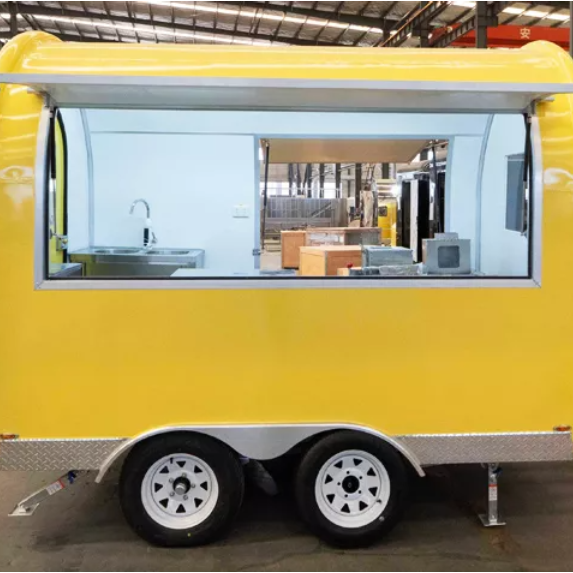
Purchasing a mobile catering unit involves high stakes. Your trailer design directly impacts operational efficiency and brand visibility. You must capture customer attention quickly while maintaining a smooth workflow inside. Traditional square trailers offer standard, predictable layouts. However, a round food trailer provides a unique and highly profitable balance. It merges striking aesthetics, easier towing logistics, and clever interior spatial planning.
The choice shapes your entire business model. Our goal is straightforward. We want to provide an evidence-based framework for catering businesses. You will evaluate if a round-style model aligns perfectly with your menu. We will explore workflow demands and local compliance requirements. You will learn how to assess design benefits accurately. We will help you navigate equipment constraints. You will discover exactly how to choose the right manufacturer for your specific mobile enterprise.
Key Takeaways
Round food trailers offer superior aerodynamic towing and distinct visual appeal, increasing foot traffic in competitive event spaces.
Curved interior walls require strategic equipment placement and custom fabrication, making them better suited for focused menus like specialty beverages or desserts.
Evaluating a round concession trailer requires assessing local health codes regarding ventilation and washable surface areas.
Total Cost of Ownership (TCO) is influenced by the shell material (fiberglass vs. aluminum) and higher baseline resale values driven by aesthetic demand.
Framing the Decision: Why Trailer Shape Impacts Catering Revenue
The Foot Traffic Premium
Visuals matter immensely in mobile catering. A round design acts as a standalone marketing asset. It draws eyes naturally at busy festivals, outdoor weddings, and corporate events. People love the retro or sleek modern look. It creates immediate curiosity. You get more walk-up customers simply because they want a photo. It builds organic social media marketing effortlessly. Attendees share pictures of your unique setup online constantly. This visual distinctiveness separates you from dozens of standard box trailers. You establish brand recognition much faster. Event organizers consistently prefer aesthetically pleasing vendors. They want visually appealing food trucks to enhance their venue atmosphere. This preference leads directly to better event placements. You secure prime locations near venue entrances or main stages.
Towing and Logistics
Moving a standard square box creates massive wind resistance. Aerodynamic teardrop or rounded airstream-style designs slice through the air smoothly. You gain much better fuel efficiency on the highway. Towing stability improves drastically. Crosswinds affect curved surfaces far less severely. This reduces driver fatigue during long hauls between cities. Your tow vehicle engine experiences less strain. This extends the lifespan of your truck transmission. Maneuvering into tight festival spots becomes simpler. The rounded corners reduce the turning radius slightly. You navigate narrow streets and crowded parking lots safely.
Success Criteria
You cannot define ROI merely by measuring interior square footage. You must look at actual event booking rates. Premium aesthetics unlock high-tier private events. Brides and corporate planners pay extra for beautiful catering setups. You should calculate reduced towing fuel expenses. Measure overall customer perception carefully. High perceived value lets you charge premium prices for your menu items. Customers willingly pay more when the presentation feels upscale. A sleek curved design signals high quality. It frames your entire operation as a premium culinary experience.
Evaluating the Utility of a Round Concession Trailer
Space vs. Workflow
Curved walls complicate the standard kitchen triangle. You cannot just push square appliances flush against a curve. You lose crucial inches of depth behind equipment. We solve this by placing preparation zones along the centerline. Narrow counters fit better along the extreme curves. You must map out employee movement carefully. Two workers need space to pivot without colliding. You place the ordering window strategically to minimize turning. The person taking orders should stand clear of the prep station. This division of space maximizes service speed. You avoid dangerous cross-traffic inside a compact footprint.
Material Selection and Durability
You must evaluate your base materials critically. Molded fiberglass and riveted aluminum dominate this category. Proper selection impacts your daily operations.
Feature | Molded Fiberglass | Riveted Aluminum |
Construction | Seamless, single-piece shell | Multiple panels riveted together |
Weight | Lightweight, easier to tow | Slightly heavier, depends on framing |
Maintenance | Simple washing, occasional waxing | Requires frequent polishing to prevent dulling |
Durability | Rust-proof, resists minor dents well | Classic aesthetic, susceptible to visible scratches |
Fiberglass offers a seamless, rust-proof shell. It resists dents from minor impacts. Aluminum delivers a classic, highly polished aesthetic. It requires higher maintenance to prevent dulling. You must polish aluminum regularly to maintain its shine. Your material choice dictates your maintenance routine entirely.
Customization Constraints
Standard commercial equipment assumes completely flat walls. Outfitting a round concession trailer requires custom fabrication. Stainless steel gaps must be securely sealed. Health inspectors hate unreachable gaps where food debris collects. We build custom backing plates to bridge these gaps. Builders must contour stainless steel prep tables to match the wall radius. This requires highly skilled fabricators. You cannot simply buy off-the-shelf tables and bolt them down. Every inch requires precise measurement and custom fitting. Best practice dictates using flexible stainless steel flashing. This seals the awkward voids permanently.
Ideal Use Cases: Matching Menu to Mobile Architecture
The Ice Cream Trailer Application
Specialized menus perform best in curved spaces. The layout supports freezers and dipping cabinets seamlessly. You serve out of a large, centrally located window. You do not need heavy commercial ventilation hoods. An ice cream trailer maximizes customer interaction. The builder places the dipping cabinet right at the service window. Customers see the product immediately. The curved rear wall houses extra chest freezers. This keeps heavy weight low and centered. You operate a clean, high-volume business. The lack of cooking grease keeps the interior pristine.
The Mobile Snack Trailer Concept
High-margin, low-prep items thrive inside aerodynamic shapes. Think coffee, crepes, pastries, and pre-packaged goods. A mobile snack trailer requires minimal active cooking. You need espresso machines, blenders, and glass display cases. These appliances sit perfectly on curved front counters. You keep the messy prep work off-site in a commissary kitchen. The trailer acts primarily as a final assembly and retail point. You plug into shore power easily. You serve hundreds of customers per hour. The limited menu speeds up transaction times tremendously.
Limitations for Heavy Duty Catering
Full-scale frying demands strict spatial requirements. Multi-station cooking needs massive exhaust systems. Fire suppression units take up valuable ceiling space. Standard square trailers handle these heavy-duty setups much better. A rounded roof restricts overhead hood placement. Fryers produce excessive grease-laden vapor. You must capture this vapor entirely. A curved ceiling forces the hood lower. This creates a cramped environment for tall chefs. We strongly advise against complex menus here. Keep heavy griddles and multiple fryers in traditional box trucks. Stick to specialized, low-grease operations for curved units.
Compliance, Risks, and Implementation Realities
Health Department Standards
Local health codes dictate every interior decision. You must navigate sink placement carefully within a curved footprint. Inspectors review your plumbing schematics rigorously.
Assess water capacities: Cities often require gray water tanks to be 15% larger than fresh water tanks.
Ensure strict surface compliance: Inspectors demand smooth, easily cleanable walls. Rough fiberglass interiors fail inspections immediately.
Install coved flooring: The floor-to-wall transition must curve gently to prevent dirt buildup along the bottom edges.
Provide adequate hot water: A tankless water heater saves critical space along a curved wall while meeting temperature requirements.
You must secure approvals before purchasing equipment. A minor health code violation halts your entire business operation.
Ventilation Challenges
Installing commercial Type 1 hoods presents severe engineering complexities. A rounded roof resists standard square roof exhaust fans. Fabricators must build custom exterior mounting collars. They must ensure completely waterproof seals around the penetration point. Rainwater naturally flows down a curved roof. A poorly sealed exhaust fan invites catastrophic internal leaks. You must direct exhaust air safely away from the service window. This protects your customers from smoke. Complex ventilation systems often bust your startup budget. This reinforces the need for low-smoke menus.
Weight Distribution
Tongue weight matters immensely for safe towing. Axle load requires careful, mathematical management. You must place heavy equipment near the center of a rounded chassis. This prevents dangerous trailer sway on the highway. If you put heavy refrigerators in the extreme rear, the tongue lifts. This causes the tow vehicle to lose steering traction. We map out equipment weights during the initial blueprint phase. You balance the fresh water tank against the heaviest appliances. Proper weight distribution protects your vehicle and your employees.
Procurement Logic: Shortlisting Manufacturers and Next Steps
Vendor Vetting
You must scrutinize potential builders thoroughly. Ask for detailed 3D interior renderings before paying deposits. Demand solid proof of previous DOT compliance. Check their history of health department approvals. We want completely transparent communication from day one. You need to see how the equipment fits inside the curves digitally. This prevents expensive spatial conflicts later. Consulting a specialized builder for your round food trailer ensures structural integrity. A reputable vendor understands the unique geometry involved.
Warranty and Support
Demand clear, written warranty terms. Axle warranties are non-negotiable for mobile businesses. Shell leak guarantees protect your expensive interior buildout. Request comprehensive electrical system schematics upon delivery. You will need these diagrams during future repairs. Knowing exactly where wires run behind a fiberglass shell saves hours of labor. Never accept a handshake deal on warranties.
The Shortlisting Framework
We use a strict shortlisting logic to evaluate manufacturers. This framework prevents costly purchasing mistakes.
Phase | Action Step | Expected Outcome |
1. Confirm Menu | Finalize every single recipe and ingredient. | A complete list of required appliances and storage capacities. |
2. Verify Local Codes | Call the local health inspector directly. | Clear rules on sink sizes, water tanks, and wall materials. |
3. Request Floor Plans | Demand top-down and isometric views from builders. | Visual proof of a working kitchen triangle inside the curve. |
4. Audit History | Call past clients and read verified reviews. | Confidence in the manufacturer's build quality and after-sales support. |
Following this sequence eliminates builders who lack engineering expertise. It protects your capital investment.
Conclusion
A curved design serves as a high-visibility, high-ROI asset for specialized menus. You must prepare for clever spatial optimization. The aerodynamic benefits reduce towing stress significantly. The distinct aesthetic acts as a powerful marketing tool. Your immediate next step involves finalizing your exact equipment list. You should consult a local health inspector before commissioning any custom build. This proactive approach guarantees a smooth, profitable launch for your mobile catering business.
FAQ
Q: Are round food trailers harder to wrap with custom graphics?
A: Yes. Wrapping compound curves requires highly specialized vinyl application techniques. Standard installers often struggle to prevent wrinkles. You must hire professionals experienced in wrapping vehicles like VW bugs or airstreams. They use heat guns to stretch the material perfectly over the rounded shell.
Q: Can a round food trailer accommodate a full commercial kitchen?
A: While technically possible through custom fabrication, it limits crucial aisle space. A full kitchen requires complex, heavy ventilation engineering. Flat-backed stoves and deep fryers fit poorly against curved walls. We strongly recommend using standard square trailers for heavy-duty, multi-station cooking operations.
Q: Do round trailers tow better than standard square trailers?
A: Yes. They offer immense aerodynamic benefits. The rounded shape drastically reduces wind resistance on the highway. This results in improved fuel economy for the tow vehicle. It also minimizes trailer sway during heavy crosswinds, making the driving experience much safer.
Q: What is the expected lifespan of a fiberglass round trailer?
A: A high-quality seamless fiberglass shell easily lasts over 15 to 20 years. The material inherently prevents rust and corrosion. You must maintain the exterior gel-coat properly. Regular washing and annual waxing prevent UV damage, ensuring the trailer remains structurally sound and visually appealing.
 注: 建议图片大小150px*50px


