Taking a brand activation on the road creates immediate tension between visual impact and logistical reality. Your exterior never functions merely as a billboard. It becomes a moving asset facing relentless highway wear, extreme climates, and shifting local regulations.
At the critical decision stage, your brand roadshow food trailer must transition from a conceptual design to a physical build. You must specify materials and evaluate fabrication options carefully. This phase dictates whether your campaign looks pristine in month six or arrives peeling and damaged.
We will introduce a practical framework for evaluating your exterior branding options. You will learn how to balance material durability, asset flexibility, and return on objective (ROO). This guide prepares you to select the exact exterior components your mobile campaign demands.
Key Takeaways
- Material Matters: The choice between cast and calendared vinyl dictates whether a custom wrap food trailer survives a multi-state tour without shrinking or peeling.
- Asset Flexibility: Modular exterior options (like magnetic panels or digital screens) allow for mid-tour campaign adjustments without costly re-wraps.
- Compliance First: Design choices—particularly window perforations and structural additions—must clear Department of Transportation (DOT) safety regulations and local event zoning laws.
- Base Vehicle Identity: The structural style (e.g., an Airstream marketing trailer vs. a modern expandable box) serves as the primary branding canvas, heavily influencing the required exterior modifications.
Defining Success Criteria for Your Brand Pop-Up Trailer
Before selecting materials, you must align your exterior branding strategy against core campaign objectives. Different goals demand entirely different visual approaches. Evaluating a brand pop-up trailer requires you to look beyond basic aesthetics and focus on functional output.
If your primary goal involves rapid product sampling, your exterior needs massive, instant brand recognition from a distance. You want large fonts and high-contrast colors. Conversely, if you prioritize experiential retail or B2B lead generation, the exterior should invite close-up inspection. These campaigns benefit from textured materials, matte finishes, and subtle architectural details.
You face a constant dilemma between highway survival and stationary event perfection. Long-distance transit exposes your vehicle to rock chips, high winds, and severe weather. Yet, once parked, the vehicle must look flawless to attendees standing inches away. High-gloss finishes show micro-scratches from road debris quickly. Textured architectural wraps hide road wear better but cost significantly more.
Finally, assess your scalability. Building a heavily customized exterior makes sense for a single-hero mobile retail trailer. However, replicating a complex mix of digital screens and neon fabrications across a twenty-vehicle fleet multiplies your failure points and maintenance costs. Keep fleet designs highly repeatable.
Core Exterior Branding Categories Evaluated
Vinyl Wrapping (Full vs. Partial)
Vinyl wrapping remains the industry standard for mobile marketing. However, not all vinyl performs equally. You must insist on premium cast vinyl from reputable manufacturers like 3M or Avery Dennison. Installers create cast vinyl by pouring a liquid mixture into a flat sheet, resulting in a material possessing zero structural memory. It conforms beautifully into deep recesses and around rivets.
Many discount vendors quote calendared vinyl. Manufacturers roll calendared vinyl like pizza dough. It constantly tries to shrink back to its original shape. When exposed to summer sun, calendared vinyl pulls out of vehicle recesses and peels at the edges. A custom wrap food trailer built for national travel requires cast vinyl to survive.
Use this decision lens: full wraps offer complete transformation and maximum visual impact. Partial wraps leverage the base paint color of the vehicle. Partial wrapping provides a highly cost-effective solution if you want a clean, minimalist logo food truck approach.
Dimensional Signage and Fabrications
Flat graphics sometimes fail to capture attention in crowded festival environments. You can introduce visual disruption by applying dimensional signage. 3D channel letters, laser-cut acrylic logos, and roof-mounted marquees break the standard rectangular silhouette.
These modifications carry significant physical risks. Adding a heavy marquee increases wind resistance dramatically. It alters how the tow vehicle handles at highway speeds. You also introduce potential clearance issues under older bridges or event entry gates. Always engineer these additions keeping structural load limits in mind. Roof structures often require internal steel reinforcement, eating into your interior payload capacity.
Digital Displays and Illumination
Flush-mounted exterior LED screens transform a static vehicle into a dynamic broadcasting asset. Digital integration allows for mid-tour messaging pivots. You can promote breakfast items in the morning and switch to evening entertainment visuals without touching a physical sign.
Logistics dictate digital success. Direct daylight washes out standard screens. You must source high-brightness LED panels rated for at least 5,000 nits. Furthermore, calculate the power draw carefully. Large exterior screens require substantial generator sizing, increasing noise and fuel requirements.
Structural Aesthetics (The Base Canvas)
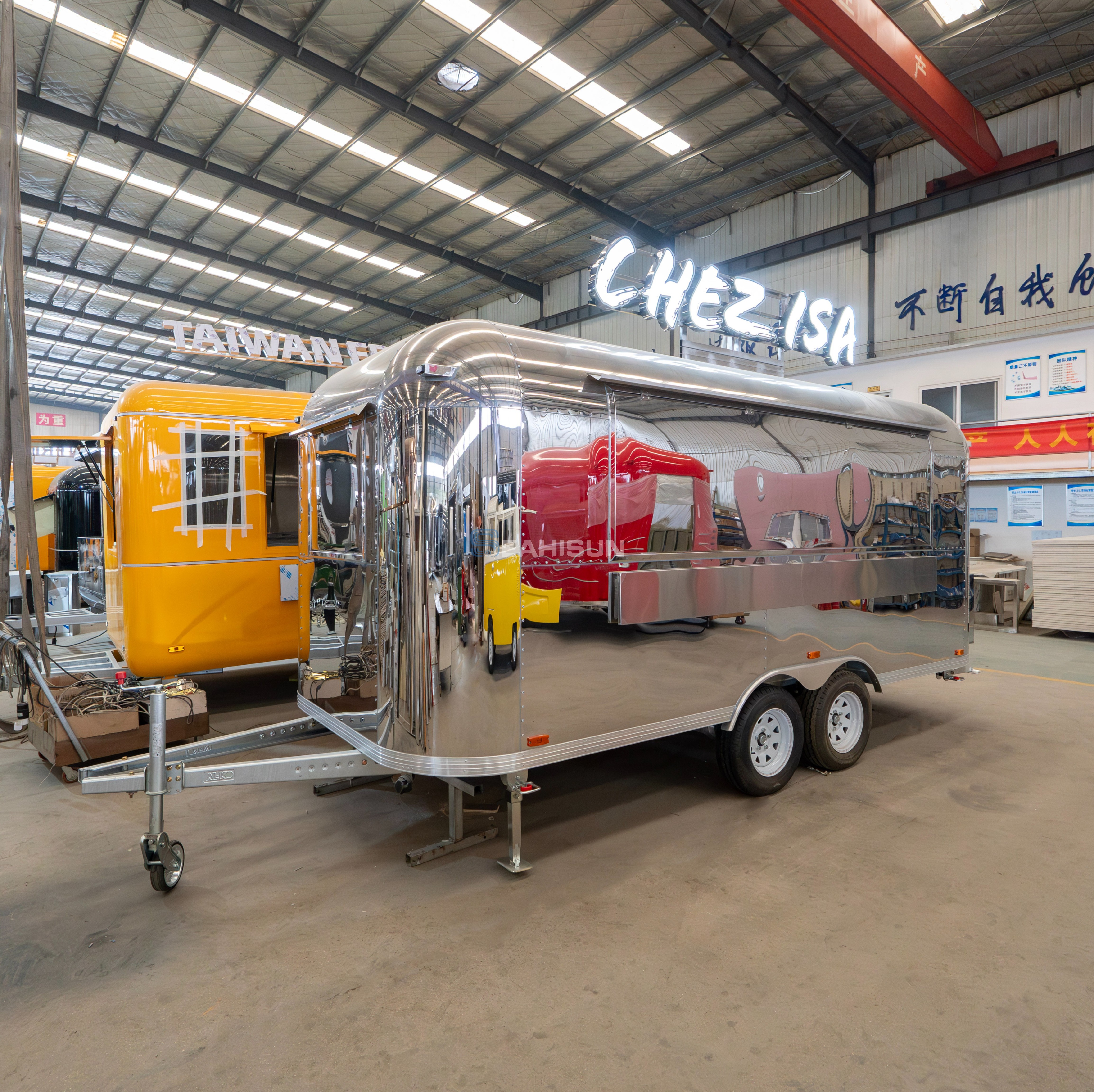
Sometimes, the vehicle itself acts as the primary branding canvas. Relying on an Airstream marketing trailer utilizes polished aluminum as a core identity piece. This retro-futuristic style demands minimal adhesive branding. You let the iconic shape do the heavy lifting.
Modern alternatives feature expandable footprints. Fold-out stages, gull-wing doors, and pop-up roofs serve as secondary branding surfaces. Once deployed, these structural elements reveal hidden graphics, maximizing your visual real estate only when parked safely at the venue.
Comparison of Core Exterior Branding Mediums | Branding Medium | Primary Advantage | Main Drawback | Ideal Campaign Type |
| Premium Cast Vinyl Wrap | Total transformation; protects original paint. | Prone to scratching from road debris. | Multi-city product sampling tours. |
| Dimensional Fabrications | High visual disruption; premium feel. | Increases wind drag and structural weight. | B2B lead generation; VIP experiences. |
| Exterior LED Screens | Dynamic, updateable mid-tour messaging. | High power draw; heavy initial investment. | Experiential retail; content-heavy campaigns. |
| Structural Aesthetics (Airstream) | Instant nostalgic connection; high perceived value. | Requires frequent professional polishing. | Premium lifestyle brand activations. |
Implementation Realities: Durability, Climate, and Maintenance
Beautiful concepts routinely fail upon meeting real-world conditions. You must anticipate how extreme climates affect your mobile asset. Intense summer sun accelerates UV fading and degrades exterior adhesives. Conversely, winter road salt corrodes metal framework and eats away at protective laminates. Driving through varied climates across a national tour stresses every exterior component.
You need a strict maintenance protocol to keep the vehicle looking presentable. Daily washing becomes mandatory, but incorrect washing destroys branding. Follow these specific rules:
- Hand Wash Only: Never take a wrapped vehicle through an automated car wash. The abrasive brushes will lift the edges of the vinyl and cause immediate peeling.
- Manage Water Pressure: Keep pressure washers below 2,000 PSI. Maintain a distance of at least 18 inches from the surface. Never spray directly into the seams of the wrap.
- Select the Right Soap: Use pH-neutral detergents. Avoid harsh degreasers unless tackling localized grease spills near kitchen exhaust vents.
- Matte vs. Gloss Care: Matte wraps require specialized detailers. Waxing a matte wrap will permanently ruin the flat finish, leaving glossy streaks.
Always plan for the "mid-tour repair" assumption. No vehicle completes a six-month tour without enduring minor collisions, rock chips, or localized vandalism. You cannot afford to sideline your asset for a two-week body shop repair. Keep a dedicated tour crash kit inside the tow vehicle. This kit should contain backup vinyl panels cut to specific body segments, spare 3D letters, and heavy-duty double-sided mounting tape. Quick field repairs keep the campaign moving.
Compliance, Safety, and Siting Restrictions
Your exterior design must navigate a web of legal requirements. Ignoring Department of Transportation (DOT) regulations leads to immediate grounding. Applying window perforations (perforated vinyl) over serving windows looks great, but applying them over driver-visibility areas or towing sightlines violates strict light-transmission laws. Furthermore, DOT actively restricts heavily reflective or true mirror-finish materials on specific panels, as they blind other drivers during midday transit.
Event zoning conflicts pose another massive hurdle. Municipal pop-up locations enforce strict ordinances. You will likely encounter the following restrictions:
- Illumination Bans: Many city centers restrict flashing exterior LEDs or ultra-bright digital screens to prevent traffic distractions.
- Footprint Limits: Sidewalk permits often restrict how far a fold-out stage or awning can protrude. You need foldable signage solutions to adapt to tight spaces.
- Noise Ordinances: If your exterior screens require a massive diesel generator, you may exceed local decibel limits. Consider battery-bank integrations for silent operation.
Weight distribution physics dictate what you can safely attach to the exterior. Adding heavy steel marquees or digital screens alters the trailer’s tongue weight. Proper towing requires a tongue weight between 10% and 15% of the gross trailer weight. Shifting too much weight to the rear causes dangerous highway swaying. You must balance front-to-back load distribution meticulously, often requiring specialized towing configurations and weight-distribution hitches.
Cost-to-Outcome Framework & Shortlisting Logic
Evaluating your exterior investment demands a strategic cost-to-outcome framework. You must weigh the upfront investment against the entire campaign lifecycle. Painting an exterior provides incredible durability and a stunning finish. However, custom paint demands a massive upfront expense and proves very difficult to change. A custom wrap costs less initially and allows for complete removal at the campaign's end, protecting the base asset's resale value.
Selecting the right fabrication partner guarantees your success. Do not choose vendors solely based on the lowest bid. Use this checklist to vet your fabrication agency:
Fabrication Vendor Selection Checklist
- Certifications: Do they employ 3M-certified or Avery-certified installers? This guarantees proper stretching and heating techniques.
- Engineering Capability: Do they possess in-house structural engineering for roof modifications?
- Commercial Warranties: Do they provide written warranty terms specifically covering commercial highway use?
- Material Transparency: Do they specify the exact brand and series of vinyl and laminate in their proposals?
Your next step involves finalizing the creative brief for your fabrication agency. Lock in the base vehicle type first. Decide on your primary exterior medium. Finally, outline all compliance checkpoints based on your planned route. Providing clear parameters prevents costly mid-build revisions and ensures your mobile asset launches on schedule.
Conclusion
The best exterior branding strategies successfully balance bold experiential design with the gritty, unforgiving realities of mobile logistics. Your asset must captivate audiences while surviving highway vibrations, UV degradation, and strict DOT scrutiny.
Decision-makers should prioritize material quality and legal compliance over purely conceptual aesthetics. Specifying premium cast vinyl, engineering heavy dimensional signage properly, and planning for mid-tour maintenance will protect your initial investment. A beautiful concept holds no value if it falls apart in week three of a national tour.
Audit your proposed route map and campaign duration today. Review local zoning laws for your target cities, assess your required mileage, and finalize your exterior material specifications based on real-world durability requirements.
FAQ
Q: How long does a commercial food trailer wrap typically last?
A: A high-quality wrap using premium cast vinyl typically lasts three to five years under normal conditions. However, the reality of commercial roadshow travel, frequent high-speed transit, and intense daily UV exposure usually reduces pristine condition to 18-24 months. Regular hand washing and covered storage drastically extend the wrap's visual lifespan.
Q: Can we change out exterior branding mid-tour for different cities?
A: Yes. You can implement modular exterior solutions for regional messaging. Heavy-duty magnetic panels work well on steel-bodied vehicles. Alternatively, you can install interchangeable tension-fabric frames or use exterior digital screens. These solutions allow you to pivot messaging per city without undertaking a costly and time-consuming full re-wrap.
Q: Are there restrictions on using exterior digital screens while driving?
A: Absolutely. Most state and municipal jurisdictions strictly prohibit active, outward-facing digital displays while a trailer is in transit. Moving images and bright lights violate driver distraction laws. You must power down exterior screens during highway travel and designate them strictly for stationary event use.
 注: 建议图片大小150px*50px


