Shifting consumer behavior actively favors experiential commerce over static brick-and-mortar leases. Modern shoppers seek engaging pop-ups at festivals, city centers, and private events. Brands must adapt to these location-flexible demands quickly. Scaling a mobile footprint introduces complex logistical challenges. You need a unit large enough to securely house diverse inventory and equipment. However, it must remain nimble enough to navigate tight urban spaces and secure high-traffic event access. This exact balance eludes many expanding businesses.
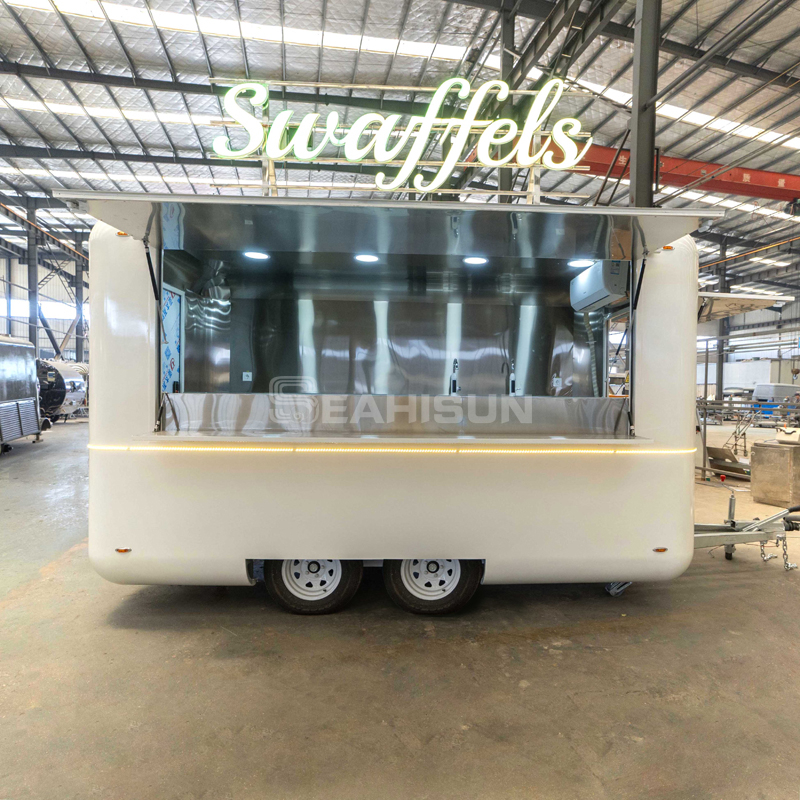
We highlight the white custom food truck as the definitive blank canvas for multi-purpose experiential marketing. It seamlessly supports rapid brand activations and robust daily operations. The following guide offers an objective look at essential specifications. We will explore the strict structural requirements and vital compliance metrics you must check. You will discover how to effectively evaluate this dynamic asset for your growing mobile fleet.
Key Takeaways
- A 4.9m footprint offers the optimal balance between high-capacity inventory storage and standard-license towing compliance.
- Opting for a white, unbranded exterior provides a highly reflective, temperature-regulating base optimized for vinyl wrap applications.
- Evaluating a custom trailer requires strict scrutiny of axle load ratings, chassis materials, and localized electrical compliance.
- Successful mobile retail deployments depend on modular interior layouts rather than fixed commercial kitchen formats.
Defining the Success Criteria for a Mobile Retail Trailer
A successful mobile retail trailer must maximize every available inch of interior space. E-commerce brands and local retailers increasingly adopt mobile formats to reduce overhead. Choosing the right dimensions dictates your operational capacity and your physical reach.
Maximizing ROI per Square Meter
Industry data highlights 4.9 meters (approximately 16 feet) as the ultimate sweet spot. This specific length provides ample interior volume for shelving and point-of-sale systems. It perfectly balances dual-axle stability on highways. Drivers can maneuver these dimensions easily through crowded urban environments. Shorter units compromise your inventory capacity drastically. Longer units severely restrict your parking options at busy municipal events. This precise footprint maximizes your return on investment per square meter.
The "Blank Canvas" Advantage
Starting your build with a factory white food trailer drastically reduces initial fabrication costs. Seasonal brand campaigns require rapid visual transformations. A pure white surface serves as an ideal, neutral substrate. You avoid the high expenses associated with custom paint jobs. Fleet managers apply high-quality vinyl wraps directly over the factory finish. When a marketing campaign concludes, operators simply peel off the wrap. They rebrand the unit for the next product launch within hours.
Cross-Functional Viability
Modern mobile assets must demonstrate extreme adaptability. A single physical unit should pivot between different business models seamlessly. Operators expect cross-functional viability via modular retrofitting. Consider these operational pivots:
- Dry Goods Retail: Utilizing track shelving for apparel or packaged goods.
- Experiential Marketing: Creating an immersive brand activation space with digital displays.
- Traditional Food Service: Adding cooking appliances to function as a standard mobile food truck.
This flexibility ensures your initial capital expenditure continues generating revenue across various seasons and market trends.
Structural Evaluation: What to Look for in a 4.9m Food Truck
Aesthetic appeal means nothing without a durable foundation. Evaluating a 4.9m food truck requires deep scrutiny of its underlying architecture. Poor structural choices lead to costly downtime and dangerous highway failures.
Chassis and Axle Specifications
Always identify the necessary Gross Vehicle Weight Ratings (GVWR) before finalizing a build. You must support dense commercial retail displays safely. You might also install heavy culinary equipment later. Substandard axles warp under uneven retail loads.
Frame material selection dictates the lifespan of your unit. Demand galvanized steel frames for your foundation. Galvanized steel undergoes a chemical dipping process. This process creates a robust zinc barrier. It prevents destructive rust degradation significantly better than standard painted steel. Painted frames inevitably chip from road debris. Moisture enters those chips and compromises the structural integrity rapidly.
Exterior Paneling and Insulation
Exterior panels face constant abuse from weather and transit. Evaluate fiberglass, aluminum, or composite materials carefully. Aluminum offers excellent weight reduction and resists corrosion. Fiberglass provides seamless aesthetics and superior impact resistance. Composites blend both qualities effectively.
A factory white finish remains critical for long-term operational efficiency. White panels reflect harmful UV rays naturally. This reflection reduces your interior cooling costs drastically during summer events. Furthermore, reputable vinyl wrap installers prefer smooth, factory-cured white surfaces. It guarantees seamless adhesion and prevents air bubbles during custom marketing applications.
Towing and Hitch Standards
Never overlook towing hardware. Verify all braking systems comprehensively. You must ensure absolute hitch compatibility with standard commercial fleet vehicles. Your towing system directly impacts driver safety and legal compliance.
| Brake System Type | Mechanism | Best Use Case | Maintenance Level |
| Electric Brakes | Uses an in-cab controller to engage trailer brakes electronically. | Heavy commercial loads requiring precise stopping power. | Moderate (Requires electrical testing). |
| Surge Brakes | Uses trailer momentum to compress a hydraulic cylinder. | Shared fleet vehicles lacking electronic controllers. | High (Hydraulic fluid monitoring). |
Custom Trailer Interior Layouts: Features-to-Outcomes
Interior design dictates your daily operational throughput. You must approach a custom trailer build focusing on specific business outcomes. Form always follows function in mobile retail environments.
Power and Utility Routing
Plan meticulously for variable electrical loads. Mobile retail projects typically power robust POS systems, high-lumen display lighting, and heavy-duty HVAC units. These requirements differ sharply from standard cooking appliance loads.
Discuss conduit routing with your fabrication team early. Aesthetic-driven brands prefer concealed conduit routing. Hidden wires keep retail displays looking clean and professional. Conversely, exposed conduit offers easier access for maintenance. Choose concealed wiring for high-end retail, and exposed wiring for industrial or culinary concepts.
Modular Shelving and Floor Plans
Fixed cabinetry limits your operational agility. Evaluate track-based wall systems instead. These modular systems allow operators to swap inventory displays daily. You can sell hanging apparel on Friday and boxed merchandise on Saturday.
Prioritize ergonomic workflow constraints. Optimize the physical distance between your service window and your back-wall inventory. Employees should retrieve items taking no more than two steps. This efficiency maximizes customer throughput during peak foot traffic.
- Common Mistake: Installing deep base cabinets. They force employees to bend constantly.
- Best Practice: Utilize vertical space. Keep fast-moving inventory at chest height.
Flooring and Climate Control
Select commercial-grade, high-traction flooring exclusively. Slip-resistant diamond plate or textured rubber prevents employee injuries during high-paced service. Residential flooring warps under the stress of mobile deployment.
Specify roof-mounted AC units tailored specifically to your cubic volume. A 4.9m space heats up rapidly under direct sunlight. Undersized units fail to cool the interior. Oversized units cycle off too quickly. They leave humid air trapped inside, which damages sensitive dry goods and retail packaging.
Compliance, Security, and Implementation Risks
Deploying a mobile asset involves navigating complex municipal codes. Failing to anticipate these regulatory hurdles stalls your launch indefinitely. You must proactively manage implementation risks.
Zoning and Permitting Realities
Navigate local health department and fire marshal regulations proactively. We acknowledge an important distinction here. Dry retail use often bypasses the strict food-grade constraints required for commercial kitchens. You may not need commercial grease traps or specialized gray water holding tanks.
However, localized electrical codes remain rigidly enforced. Transit authorities and local fire marshals will inspect your wiring panels. They check generator clearances and emergency exit dimensions. Ensure your builder provides certified electrical schematics for these inspections.
Weight Distribution Hazards
Trailer weight dynamics dictate highway safety. The risk of uneven inventory loading remains extremely high in mobile retail. Operators sometimes stack heavy boxes on one side of the unit.
This imbalance leads directly to dangerous trailer sway at highway speeds. Severe sway causes roll-overs. Overloading the rear behind the axle causes the towing vehicle's front wheels to lift. Always place your heaviest inventory directly over the dual axles. Secure all loose items before transit to prevent catastrophic axle failure.
Security Measures
Mobile retail units frequently house high-value merchandise overnight. Evaluating physical security protocols protects your assets.
- Evaluate specialized locking mechanisms on all service windows.
- Install robust, heavy-duty entry doors featuring deadbolts.
- Integrate hidden GPS tracking systems inside the chassis.
Risk and Mitigation Chart | Implementation Risk | Primary Consequence | Effective Mitigation Strategy |
| Code Non-Compliance | Denied event permits and lost revenue. | Pre-approve schematics with local fire marshals. |
| Uneven Weight Loading | Severe trailer sway and axle failure. | Center heavy loads directly over dual axles. |
| Merchandise Theft | Significant financial and inventory loss. | Install deadbolts and concealed GPS trackers. |
Shortlisting Logic: Choosing Your Fabrication Partner
Your manufacturer acts as your strategic partner. The mobile fabrication industry features varying levels of quality control. You must apply strict shortlisting logic before signing a purchase agreement.
Transparent Sourcing
Demand fully verifiable origins for critical components. Ask builders where they source their raw steel, their axle assemblies, and their electrical breaker panels. Reputable manufacturers gladly provide brand names and specifications for these parts. Using unbranded, substandard axles guarantees early mechanical failure.
Lead Times vs. Build Quality
Set realistic deployment timelines. Understand exactly why "rush" builds pose severe operational threats. Manufacturers accelerating fabrication often skip crucial sealant curing times. This compromise severely degrades water-tightness. Roof leaks destroy valuable retail inventory instantly. Quality custom fabrication requires adequate time for structural welding and electrical testing.
Warranty and Post-Sale Support
Define acceptable warranty terms before committing funds. A professional builder stands behind their craftsmanship. Scrutinize the fine print regarding structural integrity and roof leak coverage. Determine how they handle warranties for third-party electrical components like air conditioners. A comprehensive support network minimizes costly downtime when hardware issues inevitably arise on the road.
Conclusion
A white custom food truck in the 4.9m configuration serves as a highly scalable physical asset. It provides a low-risk pathway for agile retail expansion. By leveraging its blank canvas exterior and modular interior, brands launch immersive pop-up experiences rapidly. You avoid the restrictive overhead of traditional commercial leases.
Before moving forward, strictly define your exact payload requirements. Map out your projected electrical load based on your POS and lighting needs. This preparation ensures you request an accurate manufacturer quote.
Take action today to modernize your brand's physical footprint. Download a technical spec sheet from a reputable manufacturer. Schedule a comprehensive fleet consultation to discuss your specific custom fabrication needs and deployment timelines.
FAQ
Q: What is the payload capacity of a standard 4.9m food truck?
A: Payload capacity varies by specific axle configuration, but typically ranges between 1,500 to 3,000 kg. You must determine the exact limit by checking the trailer's Gross Vehicle Weight Rating (GVWR) and subtracting the trailer's empty tare weight.
Q: Can a white food trailer be easily wrapped for different retail campaigns?
A: Yes, smooth white composite or aluminum exteriors are the ideal substrate for partial or full 3M vinyl wraps. This reflective, neutral surface allows brands to execute cost-effective rebranding rapidly for seasonal campaigns.
Q: Does a mobile retail trailer require the same permits as a food truck?
A: Generally no. Dry retail operations lack the gray water, grease trap, and exhaust hood requirements of traditional food service. However, structural integrity and localized electrical compliance, as mandated by DOT or transit authorities, remain strictly mandatory.
Q: What tow vehicle is required for a 4.9m custom trailer?
A: Safe towing usually requires a half-ton to three-quarter-ton pickup truck (such as an F-150 or F-250 equivalent). The vehicle must be equipped with a class IV hitch and an integrated electronic brake controller, depending on your final loaded weight.
 注: 建议图片大小150px*50px


