Operating a spicy pot business demands specialized thermal and ventilation capabilities. Standard street setups simply cannot support them. Translating a high-heat, heavily spiced cooking model into a mobile footprint is remarkably complex. You must strictly adhere to complex fire safety protocols. You must also manage rigorous airflow dynamics and strict ingredient preservation standards. Traditional street food relies on moderate, steady heat. Conversely, dry pot and Ma La Xiang Guo rely on aggressive, flashing heat. This guide breaks down the essential technical equipment requirements. We explore optimal layout configurations and crucial compliance factors in detail. You need these exact details to evaluate and spec a custom spicy pot food trailer safely. Use this specific knowledge to pass strict local health inspections smoothly. You can easily avoid overspending by getting the structural build right the first time. We will show you exactly how to size your ventilation accurately. You will also learn to select proper refrigeration units and calculate rigid payload limits effectively.
Key Takeaways
- Spicy pot models require high-BTU commercial wok ranges and Type 1 commercial hoods with advanced fire suppression.
- Ingredient display and high-volume refrigeration draw significant power, dictating the sizing of your generator and towable vehicle.
- Evaluating a custom build versus a retrofit depends heavily on local health codes regarding open-flame cooking and grease management.
- Proper payload calculation (GVWR) is critical, as heavy water tanks and commercial-grade appliances easily exceed standard axle limits.
The Operational Demands of a Mobile Spicy Pot Business
You face highly unique challenges when launching this specific culinary concept. Standard concession vehicles handle deep fryers and flat-top grills quite easily. However, they buckle under the intense operational demands of dry pot cooking. You need rigorous upfront planning to balance intense heat, safe air quality, and smooth customer service flows.
Thermal Output & Recovery
Spicy pot relies heavily on rapid, high-heat stir-frying or continuous boiling. Standard flat-top griddles are completely insufficient for this method. They lose their surface heat too quickly when loaded. Instead, you must carefully evaluate high-pressure wok burners. Some modern operators prefer dedicated commercial hot pot induction systems. Your ultimate choice depends directly on raw BTU output and thermal recovery time. High-BTU jet burners bounce back to peak temperatures instantly after you add cold, raw ingredients. This fast thermal recovery actively prevents the food from steaming instead of searing. It ensures delicate vegetables stay crisp while dense meats sear perfectly. A slow recovery time destroys the authentic texture completely.
Air Quality & Fume Extraction
Capsaicin and atomized chili oil create severe, suffocating airborne irritants. Searing dried chilies releases highly volatile compounds into your enclosed workspace. Standard concession exhaust fans will absolutely not clear this hazardous air. They simply lack the necessary static pressure and suction power. If you use standard fans, operators will choke. Service will stop entirely. Success requires a heavy-duty, commercial-grade, high-CFM ventilation system. High-CFM hoods pull the dangerous spicy vapors out rapidly and efficiently. This keeps the internal environment safe and breathable for your culinary team. It also prevents grease particles from settling onto every interior surface.
The "Pick-Your-Own" Workflow
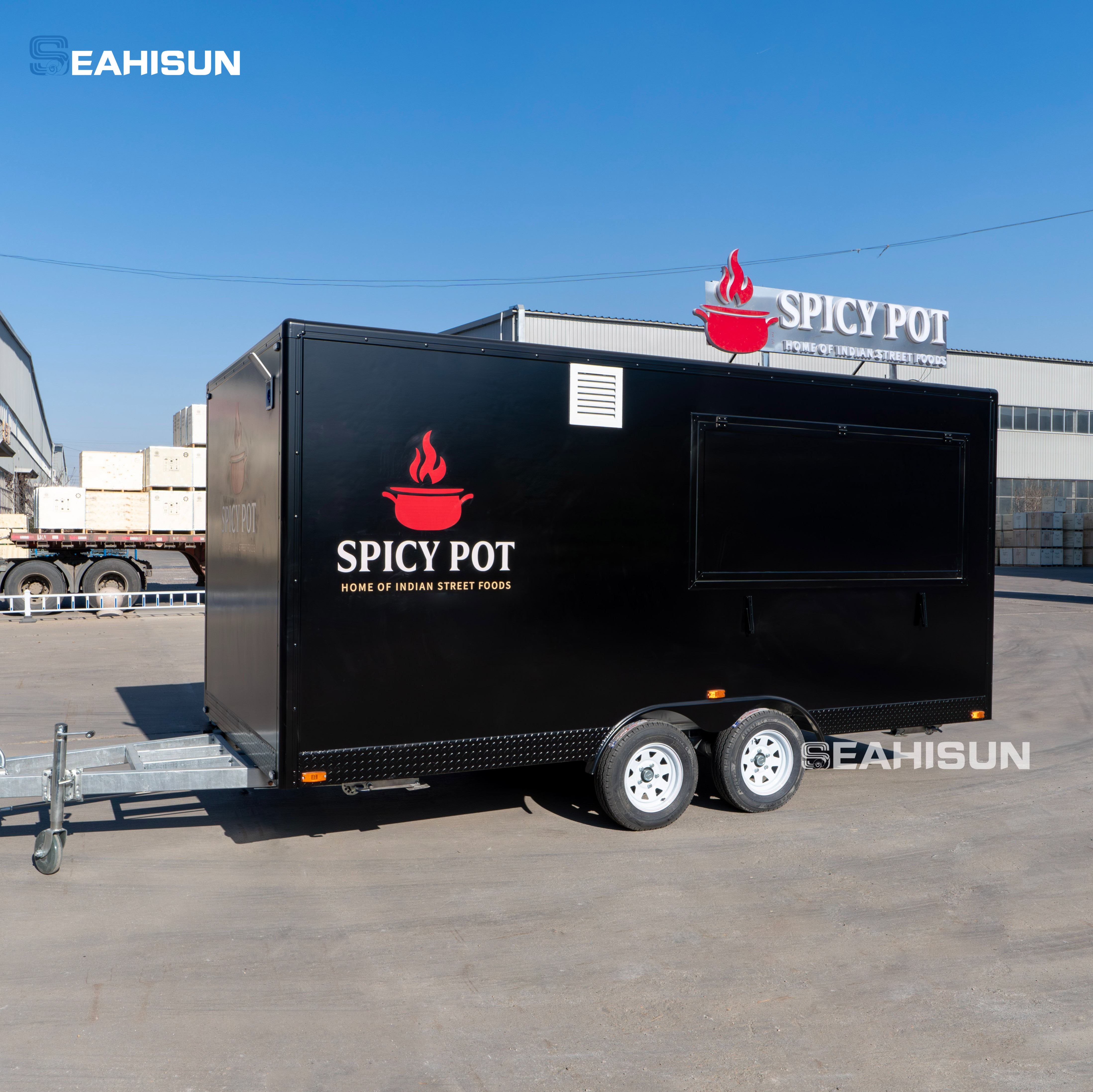
Unlike fixed, pre-portioned menus, a hot pot food trailer requires a highly interactive spatial layout. Customers usually select their own raw ingredients from a forward-facing refrigerated display. They point out their preferred fresh greens, marinated meats, and specialty noodles. This fundamentally alters the traditional, simple service window layout. You need a dedicated, spacious ordering zone completely separate from the final pickup window. The glass display must keep delicate ingredients consistently cold while remaining highly visually appealing. You must carefully plan this customer flow pattern. Good planning prevents severe physical bottlenecks during those busy lunch rushes.
Core Cooking and Ventilation Equipment Criteria
Selecting the correct cooking apparatus is your most critical design decision. You must balance massive firepower against your available floor space and propane fuel limits. Furthermore, every single piece of equipment must meet strict local safety codes unconditionally.
High-Pressure Wok Ranges vs. Stock Pot Ranges
You must directly compare multi-hole wok ranges against heavy-duty stock pot ranges. Multi-hole wok ranges are absolutely ideal for dry pot preparations. They cradle the round-bottom pans perfectly, concentrating the flames. Conversely, stock pot ranges work much better for broth-heavy, soup-based setups. They support massive, heavy liquid pots securely over the open flame.
When making your final evaluation, look for specific operational features. Choose heavy cast-iron grates for maximum long-term durability. Specify dedicated, built-in water lines positioned right at the wok station. These allow for blazing fast mid-service cleaning. Rinsing the hot wok between orders maintains strict flavor integrity. It actively stops distinct, separate orders from tasting identically spicy.
Comparison Chart: Wok Ranges vs. Stock Pot Ranges | Equipment Type | Ideal Application | Key Feature Required | Typical BTU Demand |
| Multi-Hole Wok Range | Dry Pot (Ma La Xiang Guo) | Knee-pedal water valves, cast-iron rings | Very High (Up to 100k+ BTU per burner) |
| Stock Pot Range | Soup-based Hot Pot (Ma La Tang) | Heavy-duty flat grates, low profile height | High (60k - 80k BTU per burner) |
Best Practice: Always demand commercial-grade steel frames. Residential woks warp under commercial heat within weeks. They cannot withstand the daily operational abuse.
Ventilation and Fire Suppression (Type 1 Hoods)
A Type 1 commercial exhaust hood is absolutely non-negotiable. It must also include a properly sized makeup air unit. These advanced hoods manage heavy, grease-laden, spicy vapors effectively. Local fire marshals strictly enforce this requirement for any active commercial catering trailer.
You face serious implementation risks here. Insufficient CFM (Cubic Feet per Minute) will choke the entire workspace rapidly. Spicy fumes will halt your operations immediately. Ensure you pair the hood with an Ansul wet chemical fire suppression system. Or, use an equivalent certified system. Open flames interacting directly with vaporized chili oil pose a massive, unpredictable fire hazard. A proper Type 1 system neutralizes this severe risk entirely. It protects both your expensive investment and your working staff.
Refrigeration and Prep Station Logistics
Keeping massive quantities of raw ingredients perfectly safe is your next major hurdle. You serve highly perishable items like raw seafood, sliced meats, and delicate mushrooms. Your cold storage units must withstand extreme internal temperatures without faltering.
Front-of-House Ingredient Display
You should utilize commercial drop-in refrigerated prep tables. Equip them securely using thick glass sneeze guards for optimum customer safety. The sneeze guard protects the raw food while allowing pristine, clear visibility. Customers love seeing fresh, vibrant ingredients right before they order.
When evaluating these display units, pay close attention to the compressor ratings. Compressors must handle abnormally high ambient temperatures. The stagnant air inside a busy towable kitchen often exceeds 100°F during summer months. Residential-grade fridges will fail spectacularly under these harsh conditions. Check the unit recovery rates as well. Frequent sliding door openings or lid lifting let dense cold air escape quickly. A high-recovery commercial compressor restores the safe holding temperature in minutes.
Bulk Storage Capacity
Authentic spicy pot recipes require massive volumes of fresh leafy greens. You also need substantial space for varied mushrooms and raw proteins. Evaluate under-counter commercial refrigerators carefully. Choose them over tall upright models whenever possible. Under-counter units maximize your critically limited stainless steel prep space. Upright fridges eat into your valuable elbow room aggressively. You need broad, flat surfaces to chop, portion, and stage complex multi-item orders.
Cross-Contamination Safeguards
Health inspectors scrutinize raw ingredient handling practices very closely. You must establish distinct, safely separated prep stations immediately.
- Designate one specific area exclusively for raw poultry and meats.
- Assign a completely separate zone for raw seafood preparation.
- Keep a third station strictly for washing vegetables and portioning noodles.
Specify NSF-certified, seamless stainless steel tables everywhere. Seamless edges actively prevent dangerous bacteria from hiding in microscopic cracks. This simple choice helps you meet strict health inspector requirements easily. It also makes your mandatory end-of-day cleanup process much faster and more sanitary.
Utilities, Payload, and Compliance Realities
Impressive equipment specs mean absolutely nothing if you cannot power or tow them safely. You must calculate your exact utility needs precisely. Ignoring structural payload limits always leads to catastrophic on-road failures.
Power Supply Sizing
Sudden electrical spikes represent a massive, often overlooked risk factor. Heavy refrigeration compressors, water heaters, and exhaust fans pull massive loads. They often cycle on simultaneously during peak heat. This creates a massive, system-shocking electrical surge. You cannot rely solely on shore power assumptions at events. Outdoor festivals rarely provide enough stable amperage for high-draw culinary setups.
Follow these distinct steps to size your primary generator accurately:
- List every single electrical device on your master equipment manifest.
- Document the continuous running wattage for each individual item.
- Find the peak starting wattage for all compressor-driven and motorized appliances.
- Add the total running wattage to the single highest starting wattage number.
- Select a robust generator offering at least 20% more capacity than your calculated total.
Typically, you will need a 9,000W to 12,000W minimum generator to run smoothly without tripping breakers.
Plumbing Capacity for Heavy Grease
Spicy pot equipment demands rigorous, constant, heavy-duty cleaning. Hot woks accumulate sticky starches and extremely heavy chili oils rapidly. Evaluate your mandatory 3-compartment sink sizing carefully. Ensure your absolute largest wok or stock pot can submerge fully into the basins. A sink that is too small violates basic health codes immediately. It also slows down your critical dishwashing process significantly.
Compliance is strictly non-negotiable here. Specify commercial grease traps meeting your specific local municipal codes. Ensure your freshwater and greywater tanks maintain the legally required ratio. Standard environmental codes usually dictate a 1:1.15 capacity ratio. Your greywater tank must always be substantially larger than your freshwater supply.
Weight Distribution (GVWR)
Water, commercial hoods, and heavy-duty generators weigh thousands of pounds combined. Cast-iron wok ranges add massive, highly concentrated loads to the floor. Verify the axle ratings of the street food trailer early in the process. Do this before finalizing any equipment list. Look for robust, heavy-duty setups, like dual 5,200 lb axles. Proper Gross Vehicle Weight Rating (GVWR) prevents catastrophic, dangerous suspension failure on highways. Balance the heavy items over the axles evenly during the design phase. Never place all your heavy cooking gear on one single side.
Shortlisting Equipment and Trailer Builders
You must partner with a highly competent, experienced manufacturer. Building this specific layout requires advanced structural engineering. A generic, cheap hot dog cart builder will not suffice for these intense operational demands.
Retrofit vs. Custom Build
You need a highly solid decision framework here. Retrofitting a standard mobile food cart is almost always cost-prohibitive. Standard carts severely lack the necessary structural wall supports. They cannot handle custom, heavy Type 1 hoods safely. They also lack the complex, high-flow gas line routing required for high-BTU jet burners.
A custom build is usually the much smarter long-term investment. It allows the specialized manufacturer to reinforce the walls properly from day one. They can weld sturdy, permanent supports for your heavy equipment directly to the steel frame. This proactive step prevents long-term structural warping and dangerous gas leaks.
Vetting Builders and Suppliers
Do not hire a builder blindly based on cheap price tags. Ask them for highly detailed CAD layouts upfront. These technical drawings must prove an optimal, frictionless workflow. Trace the exact steps from the raw ingredient display to the active wok station. Then, trace the final path to the serving window. The physical flow must make logical, ergonomic sense.
Verify their documentation practices rigorously. They must provide official, stamped equipment spec sheets. You also need precise, clear schematics for your county health department submission. Without these vital documents, you simply cannot get your local operating permit.
Look for strong, verifiable trust indicators. Reputable builders act as protective consultants, not just simple welders. They will flatly refuse to install cheap, residential-grade equipment. They know it will fail spectacularly in a harsh commercial environment. They actively protect you from making expensive, amateur regulatory mistakes.
Conclusion
Launching this fiery concept requires intense, unwavering operational discipline. You must prioritize high-CFM ventilation above all other design elements. High-recovery refrigeration keeps your diverse, highly perishable ingredient list completely safe. Strict payload compliance ensures your heavy vehicle remains legally roadworthy. Never sacrifice these core functional elements for cheap aesthetic upgrades. Flashy vinyl wraps will never save a failing, poorly ventilated kitchen. Focus your starting budget entirely on the mechanical foundation first.
Take immediate action today by compiling your specific, finalized menu. Document every single ingredient you actually plan to serve. Use this detailed list to finalize your total, absolute BTU requirements. Calculate your exact cubic-foot refrigeration needs based on weekend volumes. Once you have these hard, unarguable numbers, you are ready. You can confidently request highly accurate quotes from specialized, experienced trailer manufacturers.
FAQ
Q: Can I use a standard food truck hood for a spicy pot food trailer?
A: No. Standard hoods fail entirely against atomized chili oils. Searing dried peppers releases dense, irritating capsaicin vapors. A Type 1 commercial hood provides the necessary high CFM suction to clear these irritants safely. Additionally, local fire codes legally require a Type 1 hood paired with a wet chemical fire suppression system for any open-flame, grease-laden cooking.
Q: How much power does a hot pot food trailer typically need?
A: You generally need a generator rated between 9,000W and 12,000W. Your refrigeration compressors and exhaust fans draw massive power when starting up. You must calculate the total running watts of all devices. Then, add the single highest starting wattage among them. This prevents sudden electrical spikes from tripping your breakers mid-service.
Q: Is a towable kitchen better than a motorized truck for this menu?
A: Yes, in most cases. Trailers usually offer higher weight capacities and more functional floor space. You must carry heavy cast-iron wok ranges, large water tanks, and dense raw ingredients. Motorized truck chassis often hit their weight limits quickly. Trailers equipped with dual heavy-duty axles handle these massive payload requirements much more safely.
 注: 建议图片大小150px*50px


