Cosmetic finishes often sell modern food trailers, but the foundation truly matters most. The underlying structural base determines your operational lifespan and daily reliability. For export buyers purchasing units sight-unseen across the globe, structural failures represent the most critical post-delivery risk you can face. Ocean freight stress introduces severe mechanical strain during transit. Varying international road conditions demand highly robust build quality. Furthermore, evolving local towing regulations require much more than a generic welded frame. Structural integrity dictates whether you pass initial local inspections or face immediate, costly rework upon arrival. We provide an evidence-based evaluation framework below. You will learn how to interrogate manufacturers on exact weight limits and material compliance. You will understand how to confidently verify blueprints before ever placing a deposit.
Key Takeaways
- A fully equipped commercial kitchen requires a high-capacity food trailer chassis designed for static and dynamic loads, not a repurposed utility trailer base.
- Prioritize a galvanized steel frame over standard painted steel to combat rust, especially for ocean freight and coastal operations.
- Matching the food trailer axle and trailer suspension to your Gross Vehicle Weight Rating (GVWR) is non-negotiable for mobile trailer safety and equipment protection.
- Verification requires documented blueprints and certified weight slips, not just verbal assurances from the manufacturer.
The Business Impact of a Purpose-Built Food Trailer Chassis
The base frame forms the absolute backbone of your mobile kitchen. It dictates every scalable aspect of your future business. You must anchor heavy equipment securely. You need a platform capable of reaching profitable locations legally. A weak foundation strictly limits your menu options and geographic reach. If you cannot support heavy commercial ovens, your culinary offerings suffer immediately.
We often see export buyers confuse generic utility bases with specialized platforms. A standard towable chassis typically supports evenly distributed static loads. People use them to move furniture, boxes, or light landscaping equipment. Commercial kitchens, however, carry severe asymmetric loads. You might place a 400-pound generator and massive deep fryers entirely on the driver’s side. The passenger side might only feature a lightweight service window and a hollow prep counter. This dramatic, uneven weight distribution causes generic frames to twist slowly over time. A purpose-built food trailer chassis combats this stress directly. Engineers design them specifically for commercial catering. They reinforce cross-members and place them strategically under heavy appliance zones. They account for the aggressive dynamic forces generated during highway travel.
When a frame twists, disaster follows quickly. Service windows jam and refuse to open. Exterior body panels pop their rivets. Gas lines stretch and potentially crack. You must prevent these operational nightmares before fabrication even begins.
Never accept vague promises about structural strength from a sales representative. Always ask suppliers direct, highly technical questions to prove their engineering competence. Ask them: "Can you provide CAD drawings showing load distribution and cross-member spacing?" Legitimate manufacturers gladly supply these blueprints. These documents prove the frame can handle your exact equipment layout safely. If a builder refuses to share structural drawings, consider it a massive warning sign. Move on to a qualified manufacturer.
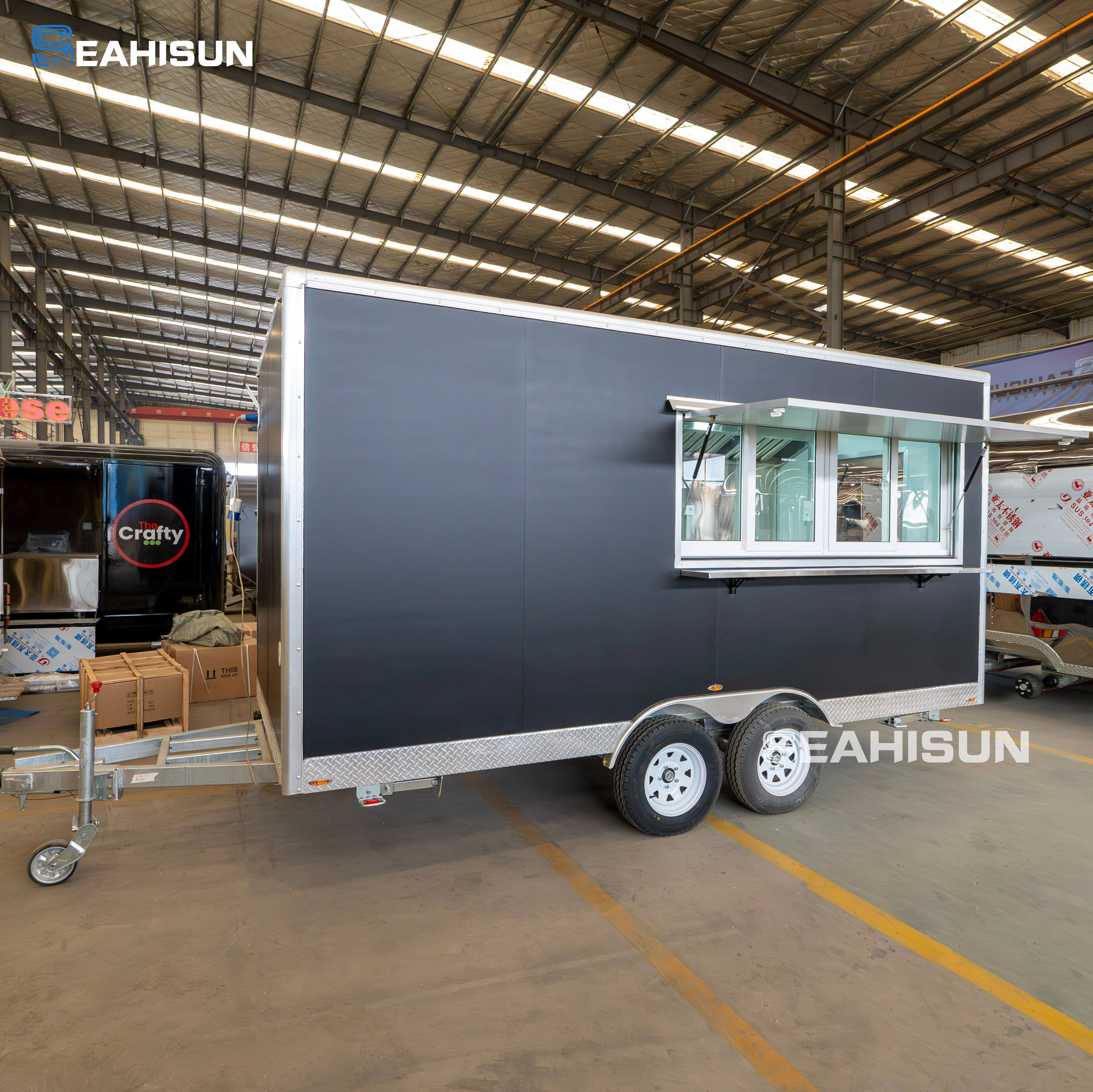
Evaluating Frame Materials: Why a Galvanized Steel Frame is the Export Standard
Material selection drastically impacts your unit's longevity and structural health. Standard painted steel looks fine initially on the factory floor. However, it offers minimal long-term protection against the elements. Powder-coated steel provides a thicker, slightly more durable skin against surface scratches. Yet, hot-dipped galvanized steel remains the ultimate, non-negotiable standard for export builds. The galvanization process immerses raw fabricated steel into vats of molten zinc. This critical step coats both the interior hollows and the exterior of every structural tube.
Condensation forms heavily inside shipping containers during extended ocean freight. You might face 30 to 40 days of sea transit. Temperature fluctuations cause this moisture to sweat out constantly. This hidden water attacks untreated internal steel surfaces immediately. Daily water exposure in active food prep areas also accelerates corrosion from the top down. Regular floor washing forces moisture into microscopic weld cracks. A high-quality galvanized steel frame entirely prevents this internal rust factor. It acts as an impenetrable barrier against coastal salt air and internal kitchen moisture.
You face a slightly higher upfront investment for galvanization. Yet, it entirely eliminates massive structural repair bills down the road. You avoid expensive sub-frame sandblasting and re-welding operations 3 to 5 years later.
Watch out for serious manufacturer red flags during your procurement process. Some low-tier builders simply spray cheap silver anti-rust paint over untreated box steel. They falsely claim this equals true galvanization. Demand concrete photographic proof from the factory floor. Ask them to show the actual dipping process before final assembly begins. Inspect the photos for the classic, slightly mottled zinc finish.
Steel Frame Treatment Comparison | Material Treatment | Corrosion Resistance | Initial Investment | Ideal Operating Environment |
| Standard Painted Steel | Low | Minimal | Strictly dry climates, stationary indoor setups |
| Powder-Coated Steel | Moderate | Medium | Local towing, moderate seasonal weather |
| Hot-Dipped Galvanized Steel | Maximum | High | Ocean export freight, extreme coastal operation |
Axle Configurations and the Math of Payload Capacity
Understanding trailer weight math prevents dangerous overloading scenarios. The formula remains simple yet absolutely essential for every export buyer. Gross Vehicle Weight Rating (GVWR) minus the trailer's empty tare weight equals your maximum payload. You must keep all heavy kitchen equipment, fresh water, ingredients, and staff strictly under this payload limit. Overloading leads directly to blown tires and snapped axles.
Sizing the appropriate food trailer axle requires precise calculation and realistic business planning. Consider the three main configurations available on the global market:
- Single Axle: Best suited for compact coffee carts or small setups under 10 feet. It offers high maneuverability in tight urban spaces but severely limits payload capacity.
- Tandem Axle: The recognized industry standard for 12 to 20-foot commercial units. It provides excellent highway stability and crucial blowout protection. If one tire fails, the other supports the weight until you stop safely.
- Triple Axle: Absolutely necessary for massive 22+ foot units. If you carry commercial pizza ovens, giant smokers, or large water tanks, you need three axles to distribute the extreme weight safely.
Braking systems also require careful, location-specific evaluation. Electric brakes offer smooth stopping power from the towing vehicle. They do require an installed in-cab brake controller. Mechanical overrun (surge) brakes activate automatically when the tow vehicle slows down, pushing against a hydraulic cylinder in the hitch. Export compliance often dictates your legal choice here. European transit authorities heavily favor mechanical surge brakes. The North American market heavily relies on electric braking systems.
Never accept "estimated" weight capacities from a factory sales representative. Demand hard data. Require the manufacturer to provide a certified weigh bridge ticket for a similarly spec'd build. Hard data guarantees you receive legally compliant axles matched to your actual operating reality.
Trailer Suspension Systems: Protecting Your Kitchen Investment
Road shock destroys expensive commercial kitchen equipment incredibly fast. A poor trailer suspension transfers every pothole impact directly into your cabin. This constant violent vibration cracks sensitive commercial refrigeration lines. It shakes gas fittings loose over time. Loose gas lines create severe, life-threatening fire hazards. You must absorb road impact before it reaches your appliances.
Buyers typically choose between two main shock absorption types. We highly recommend evaluating them based on your specific road conditions.
- Leaf Springs: Highly cost-effective and globally recognized. Mechanics anywhere in the world can repair or replace them easily. However, they deliver a noticeably rougher ride and transfer more vibration into the chassis.
- Rubber Torsion Axles: Feature thick rubber cords inside the axle tube. They provide independent wheel movement, meaning a bump on the left tire does not affect the right tire. They lower your overall ride height and deliver significantly smoother transit. However, torsion systems require exact weight matching to function correctly. You cannot overload them.
Proper shock absorption directly ensures ultimate mobile trailer safety. High-quality systems actively prevent dangerous trailer sway at highway speeds. They keep your center of gravity stable during sharp turns or sudden braking maneuvers. Poor suspension causes the trailer body to roll aggressively, risking a rollover accident.
Always ask suppliers this critical decision prompt: "Which system do you strictly recommend for a 3,000 kg payload operating on rough rural roads, and what are your replacement part standards?" Their detailed answer reveals their engineering competence immediately. If they suggest cheap leaf springs for highly fragile espresso equipment, find another builder.
Suspension System Comparison Chart | Feature Profile | Leaf Spring Setup | Rubber Torsion Setup |
| General Ride Quality | Stiff, prone to bouncing when empty | Smooth, absorbs harsh vibrations well |
| Routine Maintenance | Requires periodic visual checks and lubrication | Virtually maintenance-free enclosed system |
| Global Repairability | Excellent, universal parts available everywhere | Complex, requires specialized replacement axles |
| Load Forgiveness | Can handle slight overloading better | Strictly requires precise payload matching |
Export Compliance, Shipping, and Local Road Legality
You must actively navigate complex global compliance standards before finalizing your factory order. Structural design, hitch types, and lighting looms differ drastically across regions. You cannot ship a generic trailer globally without modifying the core specifications.
US DOT and NHTSA standards dictate specific exterior lighting colors, reflector placement, and safety chain weight ratings. European CE and ADR frameworks mandate complex overrun braking systems and highly specific hitch coupling heights. Australian ADR standards impose very strict welding protocols and heavy drawbar design rules. Inform your manufacturer of your exact destination country on day one.
Ensure your chosen builder provides a globally compliant, permanently stamped 17-digit VIN. You also need a comprehensive Certificate of Origin or a formal Certificate of Conformity. Local DMV or transit authorities require these specific documents for initial road registration. Without proper homologation paperwork, your new unit essentially becomes a stationary, illegal asset.
Furthermore, shipping container fitment strictly dictates your freight expenses. Factory engineers must design physical dimensions to slide smoothly through standard 40HQ container doors. They must position the wheels carefully to clear internal container thresholds and lashing rings. If a custom unit exceeds standard container width, you face exorbitant Roll-on/Roll-off (RoRo) shipping rates. Proper dimensional planning keeps your ocean freight economical and entirely safe.
- Verify the final exterior width clears 40HQ container doors with a comfortable margin.
- Ensure the tongue or drawbar is bolted and removable to fit within tight container length limits.
- Confirm the frame features heavy-duty lashing points to secure the unit safely during rough sea transit.
Conclusion
A reliable procurement decision requires looking far past shiny stainless steel walls and attractive LED lighting. You must scrutinize the base framing, rolling gear, and shock absorption mechanisms. Evaluate these structural elements rigorously to secure a profitable, long-lasting mobile enterprise.
Always eliminate manufacturers who refuse to provide structural CAD blueprints or technical drawings. Reject suppliers unable to supply exact, certified payload capacities for their builds. Demand clear photographic proof of material treatments, especially galvanization, before the floor goes down. Take immediate action by demanding a comprehensive technical specification sheet from your shortlisted vendors. Compare their chassis specs aggressively. Your entire business literally rides on this single foundation.
FAQ
Q: How thick should the steel be on a commercial food trailer chassis?
A: Standard commercial builds require 4mm to 5mm thick steel for main load-bearing beams. The exact required gauge depends heavily on overall trailer length and Gross Vehicle Weight Rating (GVWR). Large 20-foot kitchens carrying heavy commercial ovens strictly require 5mm structural tubing to prevent hazardous frame sagging.
Q: Is a tandem axle always better than a single axle?
A: Not always. A tandem axle provides superior highway stability, excellent weight distribution, and crucial blowout safety for heavy builds. However, for highly compact units operating in tight urban environments, a single axle offers unmatched maneuverability. You must align your axle choice strictly with your total payload requirements.
Q: Can a manufacturer upgrade the suspension after the trailer is built?
A: Retroactive structural upgrades prove highly difficult and financially inefficient. Factory engineers weld mounting brackets directly to the frame during initial fabrication. Changing from leaf springs to torsion systems later requires cutting structural steel, severely risking frame integrity. Always finalize weight calculations and system choices during the initial blueprint phase.
Q: What documentation do I need to prove chassis compliance in my country?
A: You generally need a stamped 17-digit VIN plate photograph, a manufacturer's Certificate of Origin, and a formal compliance declaration. European buyers require specific CE/ADR homologation paperwork. US buyers need explicit DOT/NHTSA compliance statements. Always verify these exact import document requirements with your local transit authority early.
 注: 建议图片大小150px*50px


