Transitioning a culinary concept into a mobile format requires more than just buying a generic shell. It demands a specialized mobile kitchen engineered for peak workflow. Strict health code compliance is equally essential. Startups often underestimate the power, ventilation, and spatial constraints of mobile units. This oversight frequently causes costly mid-build retrofits. It can even lead to failed health inspections down the line.
You need precise planning to avoid blowing your operational budget. A well-designed floor plan directly impacts your daily service speed. It also determines how efficiently your staff handles rush hour ticket volumes.
This guide provides a framework for evaluating and sourcing a highly reliable build. You will learn how to specify a high-ROI restaurant equipment food trailer. We will show you how to align this mobile asset perfectly to your specific menu, operational volume, and local regulatory requirements.
Key Takeaways
- Menu dictates the build: A high-heat concept requires entirely different payload and ventilation specs than a cold-prep setup.
- Compliance is hyper-local: Generic builds often fail local health and fire department inspections without custom modifications.
- Total Cost of Ownership (TCO) exceeds the sticker price: Base shell costs rarely include NSF-certified equipment, fire suppression systems, or high-capacity power generators.
- Vendor vetting is critical: Prioritize manufacturers who offer transparent weight load calculations, detailed CAD layouts, and post-sale warranty support.
1. Defining Your Concept: Standard Shells vs. Custom Mobile Catering Trailers
Deciding on a unit layout is your first major business hurdle. You must choose between adapting your menu to a pre-built model or investing capital into a purpose-built design. Standard shells offer speed and availability. Custom layouts offer precision and longevity.
Pre-built models suit proof-of-concept testing perfectly. They demand significantly lower initial capital upfront. They work very well for low-complexity menus. For example, a standard ice cream cart or a basic beverage station rarely needs intricate modifications. However, standard layouts carry inherent operational risks. Retrofitting heavy commercial gear into these tight spaces often compromises spatial efficiency. It frequently increases your long-term maintenance burden because the original frame was never meant to support heavy appliances.
Fully custom builds cater to high-volume operations. They handle specialized menus effortlessly. They easily accommodate brand-specific structural changes. You need a linear workflow to succeed during peak hours. Prep areas must flow naturally into cooking stations. Cooking stations must lead directly to your service windows. A thoughtfully designed custom mobile catering trailer eliminates cross-traffic bottlenecking among your staff. It keeps everyone safely in their designated zones.
Consider these specific scenarios where custom units strongly outshine standard shells:
- Handling raw proteins requiring distinct, physically separated sanitation zones.
- Integrating heavy-duty specialty ovens or massive flat-top griddles.
- Designing multiple service windows to support dual-line order taking.
- Installing extra-large water and fuel tanks for remote festival deployments.
2. Equipment Sourcing: Outfitting Your Restaurant Equipment Food Trailer
You must evaluate mobile appliances using a rigorous features-to-outcomes approach. Standard brick-and-mortar commercial kitchen equipment does not always translate well to the road. Manufacturers must scale mobile units for constant highway vibration. They must fit these items into a highly limited footprint. They also face extreme ambient temperature swings throughout the year.
Choosing the right cooking and ventilation systems is a critical early step. You must evaluate Type 1 versus Type 2 hoods based squarely on your grease output. High-heat zones require integrated fire suppression systems to meet fire codes. Ansul systems remain the industry gold standard here. They tailor fire protection specifically for the intense, confined environment of mobile kitchens.
Refrigeration choices impact your daily workflow directly. You must balance interior storage volume against clear sightlines and available prep space. Under-counter units maximize your horizontal working surface area. Upright refrigerators hold far more ingredients but can block communication between stations. Compressor placement matters deeply. You must ensure adequate airflow in a confined, hot space. Poor ventilation burns out expensive commercial compressors very quickly.
Sanitation and plumbing require precise mathematical calculations. You must determine fresh and greywater tank capacities based strictly on local health department ratios. Most counties legally mandate a 15% larger greywater requirement to prevent overflow hazards. Water heating is another critical compliance factor. On-demand tankless heaters often save valuable wall space. However, traditional tank heaters sometimes provide more consistent flow rates for washing heavy dishes. You need reliable hot water to maintain mandatory 3-compartment sink compliance.
Commercial Hood Specifications for Mobile Kitchens | Hood Category | Primary Use Case | Fire Suppression Needs | Airflow Requirement |
| Type 1 Hood | Fryers, grills, ranges (Grease-producing) | Mandatory integrated Ansul system | High-velocity exhaust & makeup air |
| Type 2 Hood | Ovens, steamers, coffee (Heat/Moisture) | Usually exempt (check local fire codes) | Moderate exhaust only |
3. Specialized Builds: From Pizza Food Trailers to Expandable Units
Different culinary menus demand entirely unique structural capabilities. You must match your daily operational needs to specific solution categories. Heavy equipment layouts require rigorous structural engineering from the ground up. For example, a high-capacity pizza food trailer carries immense static weight. Stone deck ovens and heavy commercial BBQ smokers radically alter the unit's center of gravity.
Weight distribution is a massive safety consideration. You cannot simply bolt a 600-pound oven anywhere you want. Manufacturers must calculate the gross vehicle weight rating (GVWR) carefully. You will likely need reinforced flooring to handle the stress. Dual-axle or even triple-axle upgrades become mandatory for heavy menus. This essential reinforcement ensures safe towing at highway speeds. It also completely prevents chassis warping over time.
High-volume setups sometimes utilize sophisticated expandable layouts. You can evaluate mechanical slide-outs to increase your interior cubic square footage. Expandable formats provide crucial extra walking room during stationary service. However, you must assess mechanical reliability thoroughly. Expandable mechanisms introduce new ongoing maintenance challenges. They also increase your daily setup and teardown times compared to traditional rigid frames.
Always consider these essential structural upgrades for heavy-duty applications:
- Upgrading to a heavy-duty tubular steel frame for maximum rigidity.
- Installing diamond-plate aluminum flooring seamlessly over marine-grade plywood.
- Adding heavy-duty stabilizer jacks rated for your exact fully loaded capacity.
- Using thicker exterior aluminum siding to prevent panel flexing during transit.
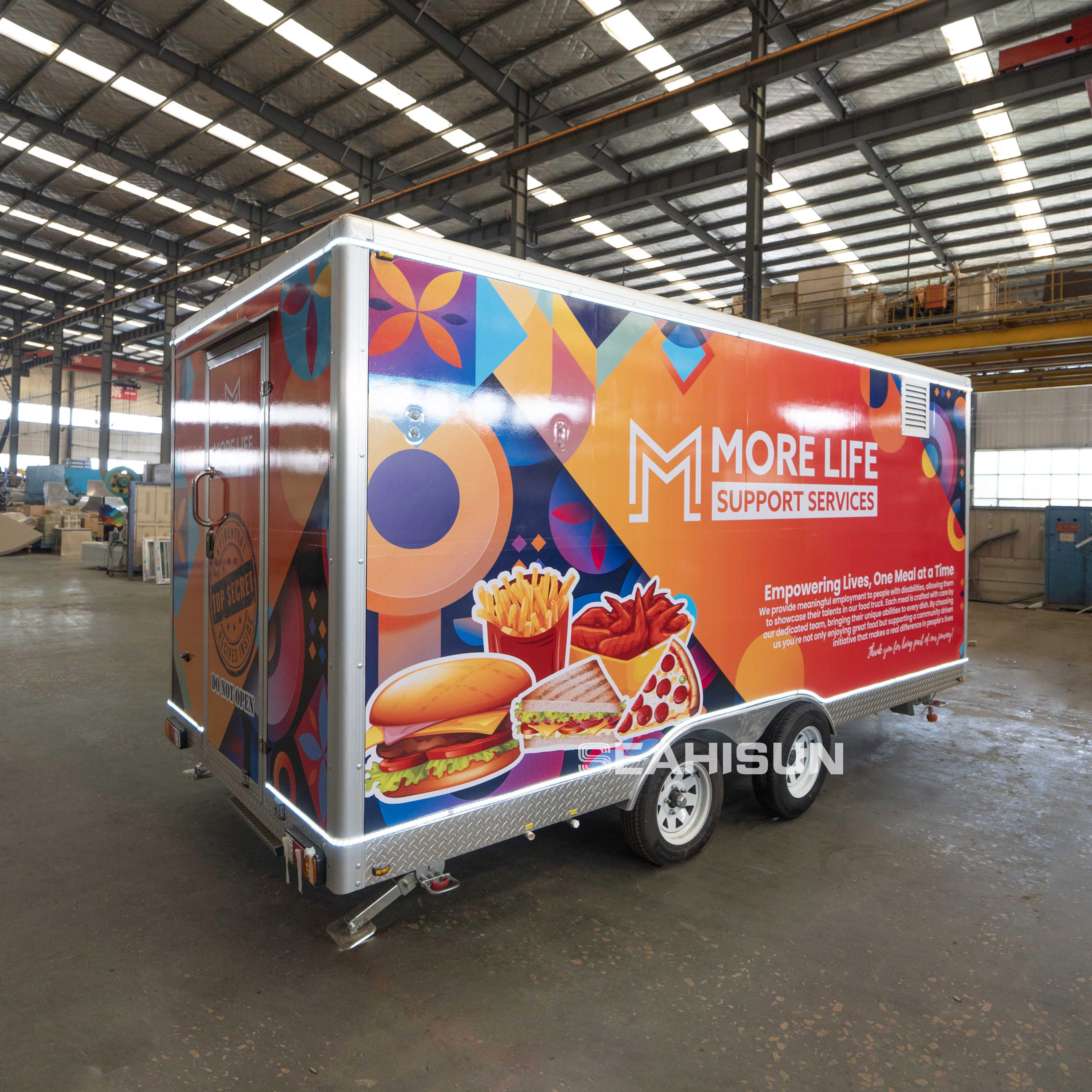
4. Analyzing the True Concession Trailer Price and ROI
You need a robust financial framework to evaluate these mobile kitchens properly. Move far beyond the baseline marketing prices you see online. You must understand the fully loaded, operational expenses required to open your doors. A massive price delta exists between purchasing an empty shell and commissioning a fully outfitted restaurant equipment trailer.
When you research a baseline concession trailer price, factor in the hidden operational variables immediately. Generator sizing represents a major ongoing expense. You must calculate long-term fuel consumption costs accurately. Commercial vehicle insurance also bites significantly into your monthly margins. Furthermore, your towing vehicle might require expensive suspension upgrades, brake controllers, or heavy-duty hitches just to move the unit safely.
Do not ignore local regulatory expenses during your planning phase. Permitting fees vary wildly by county and state. Commissary kitchen rental requirements often impose a fixed monthly overhead you cannot avoid. Health department inspection costs add up quickly if you fail the first round and need re-inspections.
To model your ROI effectively, calculate a realistic break-even timeline. Compare your maximum daily service volume capacity against your initial build-out costs. A cheaper, smaller shell might severely limit your peak cooking capacity. This physical restriction directly caps your daily revenue ceiling. Investing more capital upfront often yields a faster break-even point because you can serve a higher volume of customers simultaneously.
5. Vendor Shortlisting & Implementation Risks
Filtering out low-quality importers requires strict shortlisting logic. You want to select reliable, proven custom builders who understand food service. Always request concrete technical evidence from potential manufacturing partners before signing anything.
First, demand highly detailed CAD drawings. These architectural blueprints must show precise equipment dimensions. They should include comprehensive electrical load schematics detailing every outlet and breaker. Second, ask for verifiable proof of National Association of Trailer Manufacturers (NATM) compliance. Ensure they use NSF-approved materials throughout the prep and cooking zones. Smooth, easily cleanable stainless-steel surfaces are non-negotiable for passing strict health inspections.
You must actively manage implementation risks throughout the entire build process. Delivery delays cripple many mobile startups before they ever launch. Mitigate supply chain issues by embedding strict timeline guarantees directly into your build contract. Establish clear financial penalties for unexcused late deliveries.
Avoid the generic blueprint trap at all costs. Many builders recycle old layouts to save engineering time. Refuse any design lacking a direct cross-reference with your specific county health codes. What easily passes inspection in one state often fails miserably in another. Your vendor must adapt their plans specifically to your local jurisdiction.
Conclusion
Purchasing a mobile kitchen represents a complex infrastructure investment. It is never just a simple vehicle transaction. You must base your final purchasing decision on specific workflow demands. Rigorous load and power calculations remain essential for daily safety. Verified regulatory compliance protects your business continuity long-term. Never base your purchase solely on upfront aesthetic appeal or the lowest base price.
Take these immediate action steps to move your project forward:
- Draft a highly specific preliminary equipment list tailored to your exact menu.
- Secure a physical copy of your local health department's mobile food facility requirements.
- Request fully itemized CAD proposals from at least three carefully vetted manufacturers.
- Confirm your tow vehicle holds the necessary towing capacity for your expected GVWR.
FAQ
Q: How long does it take to build a custom restaurant equipment food trailer?
A: Depending on complexity and supply chain variables, expect 8 to 16 weeks from approved CAD drawings to final delivery. Avoid vendors promising unrealistic turnaround times. Custom fabrications and specialized equipment sourcing simply take time. Rushed builds often suffer from poor quality control and delayed health department approvals.
Q: Do I need a special license to tow a mobile catering trailer?
A: Typically, a standard driver's license suffices. However, this changes if the combined weight of your tow vehicle and trailer exceeds local commercial thresholds. In the US, this threshold is generally 26,000 lbs. Specific commercial towing regulations vary significantly by jurisdiction. Always verify local Department of Transportation rules beforehand.
Q: Can I install my own restaurant equipment after buying a shell?
A: Yes, but doing so shifts immense liability entirely onto you. You become completely responsible for weight distribution, gas line safety, and electrical load balancing. This DIY approach frequently complicates commercial insurance policies. It can also cause major delays during health department approvals if your installations lack professional certification.
 注: 建议图片大小150px*50px


