Vintage aesthetics draw crowds instantly. Nostalgic curves and bright retro finishes make people stop, look, and ultimately buy. However, operating dual-temperature zones inside a highly compact space presents a massive engineering hurdle. You often place continuous-duty freezers right next to boiling commercial fryers. This extreme temperature clash creates severe operational stress on every system onboard. Purchasing a dual-purpose unit is never just about nailing the perfect retro design. It demands a rigorous evaluation of power distribution, thermal management, and underlying structural durability. If you ignore these hidden elements, your beautiful cart might suffer crippling equipment failures during peak rush hours. This guide establishes a clear, vendor-neutral, and compliance-focused framework. We will help you navigate the complex technical requirements to successfully shortlist and purchase a highly reliable unit.
Key Takeaways
- Thermal Isolation is Mandatory: Combining an ice cream food cart setup with a deep fried snacks trailer requires distinct ventilation and heat shielding to prevent freezer failure.
- Power Architecture Dictates Viability: Simultaneous operation of commercial fryers and continuous-duty freezers demands upgraded, verified electrical panels (often 50A+).
- Material Durability Impacts ROI: A rust resistant trailer chassis and exterior are non-negotiable, particularly given the corrosive nature of daily grease exposure and routine pressure washing.
- Compliance Precedes Customization: Health department approvals hinge on fire suppression systems and multi-compartment sinks, which must be factored into the floor plan before aesthetic modifications.
The Engineering Challenge: Combining Cold and Hot Operations
Maximizing menu profitability often means serving entirely different food categories. High-margin ice cream attracts the afternoon crowd. Deep-fried snacks capture the evening dinner rush. Doing both requires overcoming severe physical constraints inside a mobile unit. You have very little square footage to work inside. Placing two extreme temperature zones close together causes immediate friction.
Thermal conflict management is your biggest operational hurdle. Fryers generate intense ambient heat. They also release heavy, airborne grease into the tight space. On the other side, ice cream freezers require cool intake air. If a freezer sucks in 110-degree, grease-laden air, the compressor works twice as hard. This inevitably leads to premature compressor burnout.
When evaluating floor plans, demand a physical separation between hot and cold zones. The best layouts place hot fryers near the rear exhaust and freezers near a front service window. You should look for upgraded insulation inside the divider walls. Reflective heat shields between stations keep ambient temperatures stable.
You cannot ignore strict ventilation requirements. Commercial fryers mandate Type 1 commercial exhaust hoods. These hoods must include integrated fire suppression systems. You must verify the vintage roofline can handle the structural weight of these heavy hoods. Necessary ducting must route through the roof without ruining the classic aesthetic. A poorly planned exhaust system ruins both your retro look and your interior air quality.
Thermal Management Comparison Chart | Equipment Type | Environmental Output | Operational Vulnerability | Required Mitigation |
| Commercial Deep Fryers | Extreme heat, aerosolized cooking oil | Fire risks, oil splatter, poor air quality | Type 1 exhaust hood, fire suppression, grease traps |
| Continuous-Duty Freezers | Minimal heat exhaust, requires cool intake | Compressor failure from high ambient heat | Air intake baffling, separate cooling zones, AC vents |
Running a specialized ice cream food cart operation alongside a deep fried snacks trailer setup is entirely possible. It just requires proactive floor planning and heavy-duty ventilation hardware.
Power & Utility Frameworks for High-Draw Equipment
A dual-menu operation pulls a tremendous amount of electricity. Proper electrical load planning separates successful businesses from catastrophic opening days. You must calculate the combined amp draw of every appliance. Soft-serve machines draw massive starting currents. Dipping cabinets need uninterrupted power. Add the exhaust fans, interior lighting, and roof-mounted AC units. The total electrical demand quickly exceeds standard setups.
Do not accept standard RV electrical systems. They simply cannot handle commercial kitchen demands. You must demand a built-in power panel explicitly rated for commercial loads. Most dual-temperature units require at least a 50-amp, 220-volt service. Better yet, look for dual 50-amp panels if your ice cream machines are particularly large.
You must understand the realities of generator versus shore power assumptions. Running high-draw equipment off-grid brings unique challenges.
- Calculate Starting Watts: Compressors need up to three times their running wattage just to start.
- Prevent Voltage Drops: Undersized generators cause voltage to sag. This physically damages expensive compressor motors over time.
- Define Minimum Requirements: A heavy fry-and-freeze combo often requires a generator producing at least 10,000 to 12,000 running watts.
Gas system integration is equally critical. Frying equipment generally runs on propane to save electrical capacity. You must evaluate the propane line configuration carefully. Check the plans for DOT-approved external tank mounts. These mounts must securely lock heavy tanks during transit. Ensure all gas lines feature easily accessible shut-off valves near the fryers for rapid emergency response.
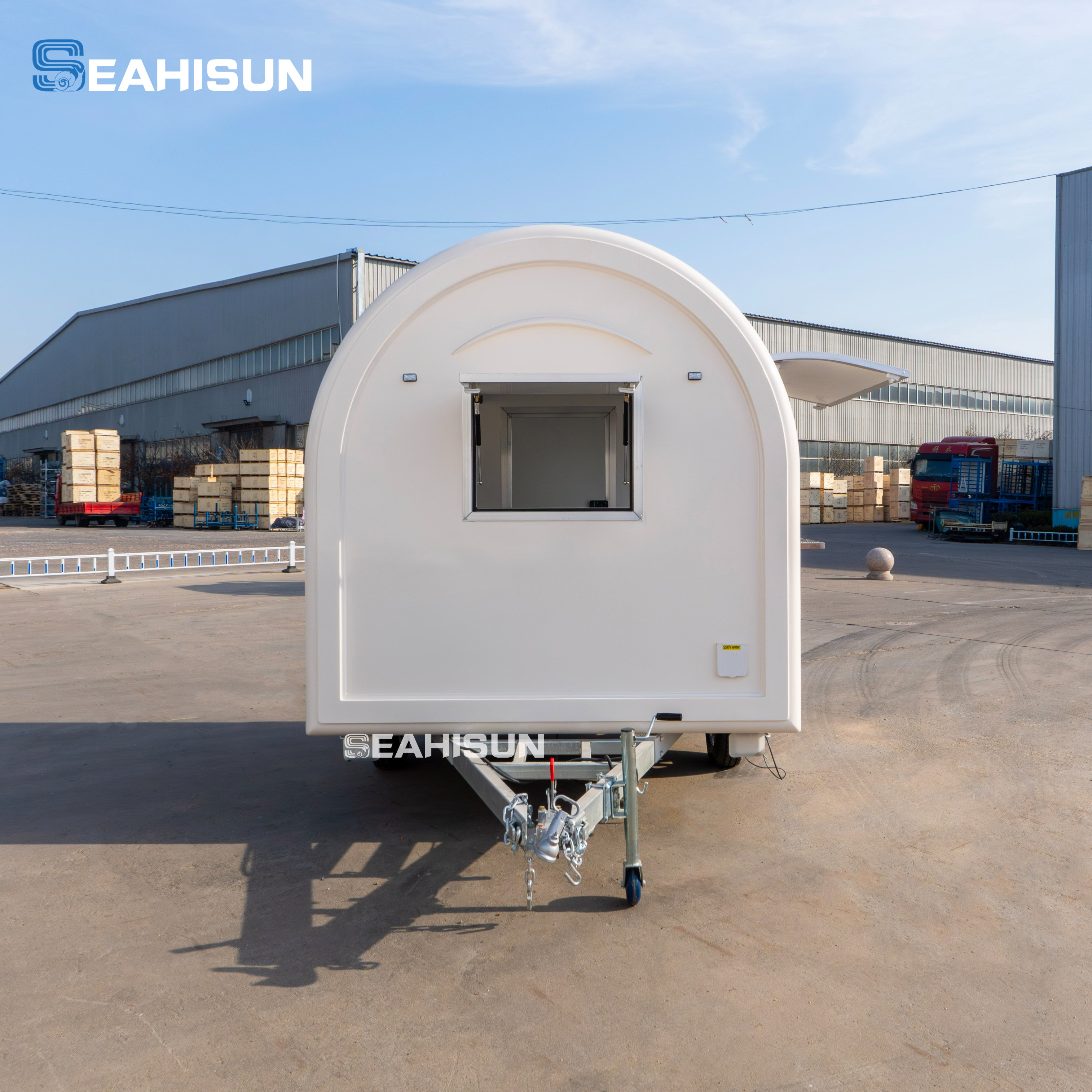
Structural Integrity and Rust Resistance
The exterior of a vintage food trailer might mimic the 1950s beautifully. However, the underlying chassis absolutely must meet modern industrial standards. A retro aesthetic means nothing if the floor buckles under the weight of commercial appliances.
Require detailed specifications on chassis steel thickness. Ask the vendor about their weld quality and specific axle weight ratings (GVWR). A heavy-duty dual-axle system is practically mandatory. Commercial fryers hold gallons of heavy oil. Ice cream machines feature dense metal compressors. Fresh and gray water tanks add hundreds of pounds when full. Your chassis must support all this weight dynamically while bouncing down the highway.
You also need uncompromising anti-corrosion standards. Securing a rust resistant trailer is an absolute necessity. The combination of deep frying and ice cream service creates a highly corrosive environment inside. Airborne cooking oils settle in every corner. Routine internal wash-downs introduce constant moisture.
Look for specific material implementations to fight this corrosion. Galvanized steel frames provide a strong, rust-proof skeleton. Aluminum exterior cladding prevents exterior rust while keeping the overall tow weight down. Inside the unit, insist on food-grade stainless steel interior walls. You should specifically request 304-grade stainless steel over 201-grade. The 304 variant contains more nickel, making it vastly superior for rust prevention in wet, greasy environments.
Health, Safety, and Compliance Considerations
Navigating local health codes is an unavoidable reality. Buying an imported or poorly planned mobile catering trailer carries immense risk. If the build does not meet local standards, health inspectors will deny your operating permits outright. Retrofitting sinks and plumbing after delivery is incredibly expensive and frustrating.
You need a specific set of must-haves integrated into the initial build:
- 3-Compartment Sink: Sized appropriately to submerge your largest cooking pots or ice cream hoppers.
- Separate Hand-Washing Sink: Placed conveniently with dedicated splash guards.
- Adequate Tank Ratios: Your gray water tank typically must be 15% larger than your fresh water capacity to prevent overflow.
- Hot Water Heaters: Sized to maintain high temperatures during continuous dishwashing.
Grease management requires careful implementation. Fried food operations dump heavy grease into the plumbing system. You need a built-in grease trap located beneath the sinks. Furthermore, you need physical stainless steel splash guards separating the active fryers from any adjacent food prep areas.
Ensure your vendor utilizes NSF/ANSI certified equipment. Health inspectors look closely for these certification badges. The National Sanitation Foundation sets strict standards for smooth, easily cleanable surfaces. If your countertops or appliances lack these recognized labels, inspectors may flag them as unsanitary.
Shortlisting Vendors and Evaluating ROI
Choosing between new custom, pre-built, or used units profoundly impacts your financial assumptions. Used units initially seem cheaper. However, they almost always lack the specific power routing needed for a heavy fry-and-freeze combo. Retrofitting heavy-gauge wiring into a used unit destroys any initial cost savings.
Consider long-term scalability. If this concept proves successful, you might want a fleet of identical vintage units. Can your chosen manufacturer standardize the build? A custom builder who documents their process ensures your second and third units match perfectly.
Watch out for immediate red flags in manufacturer claims. Avoid vendors who refuse to provide CAD drawings of the interior layout. You cannot verify spatial workflows without detailed schematics. Be highly skeptical of "plug-and-play" claims regarding a dual-menu vintage style mobile food trailer. Any vendor claiming simple setup without showing detailed electrical load calculations is likely cutting corners.
Finally, clarify warranty and post-sale support. Look for clear distinctions in the contract. The warranty covering the trailer structure (the chassis and shell) usually differs from the warranty on installed appliances. Understand exactly who pays for labor if an ice cream compressor fails during the first month of operation.
Conclusion
Evaluating a dual-purpose unit requires strict adherence to engineering fundamentals. You must prioritize structural integrity, robust power capacity, and strategic thermal management above all else. Paint colors, retro curves, and decorative lighting are great for marketing, but they will not keep your fryers hot and your freezers cold during a massive lunch rush. A weak chassis or overloaded electrical panel will quickly halt your operations.
Your next steps should focus strictly on data gathering and verification. Instruct your buyers to request itemized weight distribution charts from shortlisted manufacturers. Demand comprehensive electrical load calculations before agreeing to any designs. Always review the exact material spec sheets to confirm 304-grade stainless steel and galvanized framing. Only place your deposit once these technical documents align with your local health codes and operational demands.
FAQ
Q: Can a vintage style food trailer handle the weight of commercial deep fryers and ice cream machines?
A: Yes, provided the manufacturer uses upgraded dual axles and a reinforced chassis. Buyers must calculate the total equipment weight (plus full water tanks) against the trailer’s GVWR.
Q: What is the best material for a rust resistant trailer interior?
A: Food-grade 304 stainless steel is the industry standard for hot/greasy environments due to its high corrosion resistance and ease of sanitation.
Q: Do I need a special generator to run both frying and freezing equipment?
A: Frying is typically powered by propane, but the exhaust hoods, freezers, AC, and lighting require significant electrical power. A commercial-grade generator (often 10,000 watts or more) is usually required if shore power is unavailable.
Q: Are imported vintage trailers compliant with US/EU health codes?
A: Not by default. Buyers must specify local plumbing (sink sizes, water tank ratios) and electrical standards (110V/220V, specific plug types) to the manufacturer prior to the build.
 注: 建议图片大小150px*50px


