High-traffic outdoor dining and entertainment spaces require highly robust infrastructure. These demanding environments must balance premium aesthetic appeal and extreme durability perfectly. Residential-grade materials fail rapidly under continuous commercial use. They cannot survive relentless environmental exposure safely. For hospitality venues, multi-family developments, and premium residential projects, specifying correct casework dictates long-term success. It means the difference between a decade of low-maintenance operation and costly, premature replacements. A purposefully designed stainless steel outdoor cabinet kitchen provides essential structural integrity. It ensures mandatory hygiene compliance easily. It also delivers the weatherproofing required for commercial BBQ areas. This guide outlines how you evaluate material grades accurately. We also explore choosing between modular and custom configurations. Finally, you will learn to mitigate critical installation risks effectively. By following these principles, you ensure your outdoor cooking space performs flawlessly year after year.
Key Takeaways
- Material matters most: A 304 stainless steel cabinet is the baseline for commercial durability, while 316 marine-grade is mandatory for coastal environments.
- Purpose-built components: Integrating a dedicated BBQ grill cabinet and a commercial-grade outdoor kitchen sink ensures safe heat dissipation and health code compliance.
- Deployment flexibility: A modular kitchen approach significantly reduces installation timelines and labor costs compared to traditional masonry or fully custom fabrication.
- Risk mitigation: Proper evaluation requires verifying steel gauge thickness, weather-sealing mechanisms, and combustible clearance requirements before procurement.
The Business Case for Stainless Steel in High-Traffic BBQ Areas
Commercial outdoor kitchens face a triad of severe environmental threats constantly. They endure harsh UV rays, driving rain, and corrosive salt air. They also suffer heavy mechanical wear from high patron turnover daily. Furthermore, facility operators must navigate strictly enforced food safety regulations. These spaces cannot afford extended operational downtime for equipment repairs.
An optimal commercial outdoor kitchen must deliver verifiable longevity. It needs zero-rot performance across its entire operational lifespan. It requires minimal seasonal maintenance from your facilities team. It also demands seamless integration with heavy-duty cooking appliances. The setup must handle massive heat output safely.
Why does stainless steel outperform other common construction materials? Wood framing rots eventually when exposed to constant moisture. Polymer panels warp under extreme ambient heat from grills. Stucco-finished masonry often cracks during harsh freeze-thaw cycles. In contrast, stainless steel offers a fully non-porous, non-combustible surface. It resists bacterial buildup effectively. It withstands extreme temperature fluctuations effortlessly.
Consider these specific operational advantages of stainless metal:
- It allows for precise structural leveling across sloped patio concrete.
- It maintains absolute uniformity across large, multi-appliance installations.
- It prevents mold spores from penetrating the cabinetry interior.
- It tolerates harsh chemical cleaners required by commercial health codes.
Evaluating Material Specs: Why a 304 Stainless Steel Cabinet is the Baseline
Navigating steel grades dictates your project's operational lifespan directly. The industry relies heavily on the 304 and 316 alloy series. You must understand these differences before purchasing.
The 304 series serves as the accepted industry standard. A 304 stainless steel cabinet provides excellent corrosion resistance generally. This makes it perfect for inland commercial applications. It relies on a balanced chromium-nickel composition for baseline environmental protection.
Meanwhile, 316 marine-grade steel contains added molybdenum. This specific addition dramatically enhances resistance to chemical pitting. It prevents chloride-induced corrosion highly effectively. You must specify 316 grade for beachfront resort properties. It remains equally essential for poolside installations exposed to heavy chlorine.
Warning: Avoid 430-series stainless steel for structural outdoor cabinetry completely. It lacks nickel entirely in its metallurgical composition. This omission makes it highly susceptible to rapid rusting outdoors.
Always evaluate cabinetry based on exact metal thickness. We consider 18-gauge steel the absolute minimum acceptable standard. It offers basic structural rigidity for light use. However, 16-gauge steel remains preferred for high-impact commercial environments. Thicker steel prevents denting from heavy kegs or commercial kitchen supplies. Thicker metal also provides a premium, solid acoustic feel when closing doors.
Always inspect the internal hardware components carefully. Ensure hinges, drawer glides, and leveling legs utilize premium steel grades. Cheap zinc-plated hardware will rust and fail quickly. Powder-coated finishes offer great aesthetic alignment for branded spaces. You can use powder coating safely if the underlying substrate remains premium stainless.
| Steel Grade | Key Alloy Component | Corrosion Resistance | Best Application Environment |
| 304 Stainless | Chromium & Nickel | High | Inland commercial patios, standard rooftops |
| 316 Marine-Grade | Adds Molybdenum | Extreme | Coastal properties, chlorinated pool areas |
| 430 Series | Lacks Nickel | Low | Indoor use only (Avoid outdoors) |
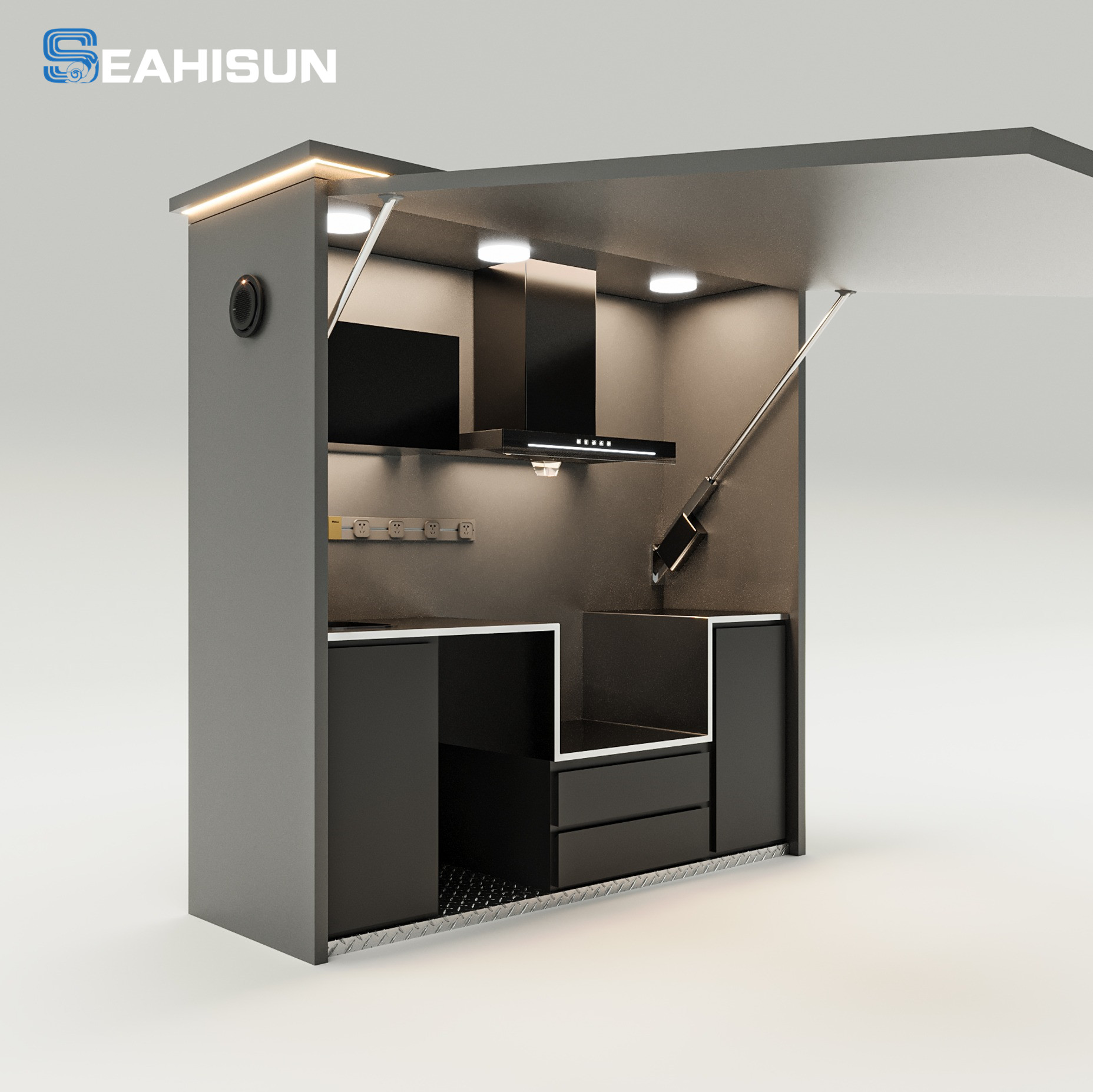
Essential Components of a Commercial Outdoor Kitchen Setup
Every professional setup requires purposefully engineered modules. These units house specific functional areas safely. You cannot mix and match residential parts here.
A commercial BBQ grill cabinet needs a highly reinforced internal chassis. Heavy-duty commercial grill heads easily weigh hundreds of pounds. Crucially, the cabinet must include proper ventilation panels. Vents prevent highly dangerous propane or natural gas buildup inside. The unit also requires insulated heat jackets inherently. You must use these jackets whenever placing grills near combustible materials.
You need a dedicated outdoor kitchen sink for health code compliance. Food inspectors demand proper handwashing and utensil sanitation stations. Look for deep-basin, seamlessly welded stainless sinks. They should feature integrated access doors beneath the plumbing basin. This open access ensures easy P-trap maintenance. It also guarantees proper pipe winterization before freezing temperatures arrive.
These combos form the critical storage backbone. Evaluate these units for double-lined door construction. Double lining adds immense rigidity and a premium heavy feel. Look for magnetic weather-seals around the interior frames. Enclosed drawer boxes are absolutely mandatory outdoors. They prevent pest intrusion effectively. They also block sideways rainwater from soaking your stored utensils.
Designers often overlook trash and recycling pull-outs, but they remain critical. High-traffic spaces generate massive amounts of waste quickly. These units must feature heavy-duty commercial glides. Sealed waste enclosures help manage rotting food odors. They also deter local wildlife from raiding the patio overnight.
Modular Kitchen vs. Custom Fabrication: Choosing Your Deployment Strategy
Selecting your deployment strategy impacts project timelines heavily. You generally choose between pre-engineered modules or custom-built solutions. Each approach carries distinct operational realities.
The modular approach offers tremendous structural advantages. A pre-engineered modular kitchen delivers highly predictable final costs. Manufacturers subject these systems to rigorous weatherproofing tests beforehand. They also guarantee rapid deployment on your job site.
Furthermore, modularity allows for incredibly easy future scalability. Venues can seamlessly add matching modules later. You can integrate a new pizza oven cabinet easily when capacity grows. It requires minimal site disruption.
Custom fabrication carries very different logistical realities. You should reserve this strategy for highly irregular architectural footprints only. Custom builds easily navigate weird angles or existing masonry pillars.
However, they carry significantly higher upfront engineering costs. They require much longer fabrication lead times overall. Furthermore, custom units often lack standardized weather-sealing tests. You rely entirely on the individual fabricator's skill level.
Weigh your project timeline against actual footprint constraints carefully. For 90% of commercial BBQ areas, standard systems win easily. Specifying a premium modular system delivers verified performance instantly. It ensures the absolute lowest implementation risk for your general contractor.
Installation, Compliance, and Weatherproofing Risks
Even premium cabinetry fails quickly under poor installation practices. We must address utility access and foundation leveling early. Proper planning prevents expensive post-installation rework.
Commercial setups require incredibly robust utility planning. You must route gas lines, electrical conduits, and water pipes correctly. Cabinets must offer clean, pre-cut access ports. Removable back panels remain essential for installers. They facilitate safe utility connections quickly. They achieve this without compromising the cabinet's structural integrity.
Outdoor concrete patios always slope slightly for proper water drainage. Usually, this slope runs a quarter-inch per foot. Cabinetry must accommodate this angled slope perfectly. They must feature heavy-duty, independently adjustable leveling legs. Manufacturers craft these sturdy legs from solid stainless steel. Removable toe-kicks then conceal these legs gracefully for a finished look.
Always ensure your design meets stringent local fire codes. You must strictly observe mandatory clearances from combustible surfaces. Many commercial regulations require accessible counter spaces for disabled patrons. Specify ADA-compliant counter heights where necessary. These heights typically sit around 34 inches from the finished floor.
You must set realistic maintenance expectations for your staff. Environmental contaminants eventually settle on the exposed metal. Even premium stainless steel requires routine scheduled cleaning. Use specialized stainless polish regularly on all exposed panels. It removes surface contaminants efficiently. This essential maintenance preserves the metal's passive chromium protective layer.
Follow this simple risk mitigation checklist during installation:
- Verify all underground utility drop locations before finalizing the final cabinet layout.
- Confirm local fire code clearance requirements for all commercial gas appliances.
- Ensure your chosen sink module includes sufficient interior room for commercial grease traps.
- Establish a routine weekly polishing schedule to prevent environmental surface staining.
Conclusion
Sourcing specialized outdoor cabinetry represents a foundational venue investment. It directly dictates the operational efficiency of your cooking staff. It guarantees the absolute longevity of a commercial BBQ area. Ignoring material science leads to rapid equipment failure.
Use smart shortlisting logic during procurement. Prioritize manufacturers offering extreme material transparency. They must publish their specific steel grading clearly. They must list their exact gauge thickness prominently. They should also outline warranty terms explicitly for intense commercial use.
Begin your next steps by mapping the exact appliance footprint. Measure your required grill, sink, and refrigeration needs accurately. Consult with a specialized dealer or manufacturer directly. Request a professional 3D layout of the proposed space. Finally, ask for a detailed line-item quote based strictly on a modular configuration. This approach secures your investment effectively.
FAQ
Q: Does a 304 stainless steel cabinet rust outdoors?
A: It is highly rust-resistant, not rust-proof. Surface discoloration (tea staining) can occur from environmental contaminants but can be cleaned off. For absolute protection in coastal areas, 316 grade is required.
Q: Do stainless steel outdoor cabinets get too hot to touch in the sun?
A: Direct sunlight will heat the metal. Choosing powder-coated stainless steel or ensuring the BBQ area is situated under a pergola or shade structure mitigates this issue in high-traffic commercial zones.
Q: Can a modular kitchen accommodate built-in appliances from different brands?
A: Yes. Premium modular systems offer appliance-specific trim kits and adjustable grill cabinets designed to house major commercial grill and refrigeration brands seamlessly.
Q: How do you keep pests and water out of outdoor kitchen storage?
A: Specify cabinets with enclosed, seamlessly welded boxes, double-lined doors, and integrated rubber or magnetic weather stripping to create a secure, weatherproof seal.
 注: 建议图片大小150px*50px


