Operating a food business in national parks, botanical gardens, or historical sites requires a delicate balance. The vehicle must be visually striking enough to attract tourists. Yet, you need highly functional equipment to handle high-volume foot traffic seamlessly. For aesthetic-driven locations, operators face a tough choice. The selection usually narrows down to the classic Airstream style and the modern round top food trailer. Both offer the curved profile park authorities prefer. However, they operate very differently in everyday service. This guide breaks down the operational realities, cost structures, and implementation risks of both options. We will explore structural differences and compliance challenges in detail. Making the wrong choice limits your menu. It can also disrupt your cash flow significantly. Our goal is to help you finalize your procurement decision confidently.
Key Takeaways
- Visual Appeal vs. Practicality: Both models offer the curved, visually appealing aesthetic required by strict scenic spot guidelines, but differ drastically in underlying structural utility.
- Cost & ROI: Round top food trailers reduce initial capital expenditure by up to 60% compared to retrofitting a vintage Airstream, significantly accelerating the break-even point.
- Customization Limitations: Airstreams are historically recreational vehicles; retrofitting them for commercial kitchen exhaust, weight distribution, and fire safety requires complex engineering.
- Maneuverability: Purpose-built round food trailers utilize modern, lightweight materials, reducing towing requirements and simplifying parking in tight tourism corridors.
The Business Problem: Vending Constraints in Scenic Tourism Areas
Tourism boards and park authorities enforce strict visual guidelines. They often disqualify standard square box trailers immediately. Parks demand aesthetic harmony to preserve the visitor experience. Heritage sites reject bright, angular vehicles. They prefer soft, curved lines blending into the natural or historic surroundings. You must pass rigid design review boards before obtaining a permit. This restriction drastically narrows your equipment choices.
Navigating tight roads presents another major challenge. Nature reserves often feature uneven terrain and narrow pathways. Historical squares offer very limited parking footprints. Maneuvering large, heavy setups becomes risky. You might damage historic pavement or struggle to turn around in tight dead ends. Operators need compact setups fitting easily into designated zones. Lighter weights reduce the risk of sinking into soft ground. Towing dynamics dictate where you can safely set up shop.
Self-contained power and water are absolute necessities. You cannot always rely on external hookups in remote areas. Generators must run quietly to avoid disturbing wildlife or tourists. Fresh water and gray water tanks require massive capacities to sustain full-day operations. This establishes the baseline requirements for a viable tourism food trailer. You need equipment built to handle rigorous off-grid demands without failing.
Airstream Trailers: The Heritage Solution and Its Realities
Vintage allure remains undeniable. High brand recognition attracts crowds effortlessly. You secure a premium perceived value instantly. A polished Airstream trailer acts as a powerful marketing magnet. Customers love taking photos next to these iconic silver bullets. This organic social media exposure drives significant foot traffic. Many luxury brands use them exclusively for pop-up activations. The aesthetic commands higher menu prices.
Converting an RV into a commercial kitchen presents huge engineering hurdles. You lose structural integrity when cutting large serving windows into the aluminum shell. Installers must reinforce the frame heavily to prevent sagging. Installing commercial hood systems inside a curved ceiling is notoriously difficult. Fire safety standards complicate this further. The curved walls push equipment toward the center. This creates a cramped walking aisle for your chefs. Modifying the original chassis to handle heavy cast-iron stoves often leads to costly fabrication.
Sourcing replacement parts takes extensive time. Vintage models lack modern supply chain support. You cannot simply order a curved glass window on Amazon. Custom fabricators must recreate damaged exterior panels. Extended downtime kills your cash flow during peak tourist seasons. Old wiring and aging subfloors require constant vigilance. Operators often underestimate the ongoing maintenance burden.
Round Top Food Trailers: Purpose-Built for Commercial Agility
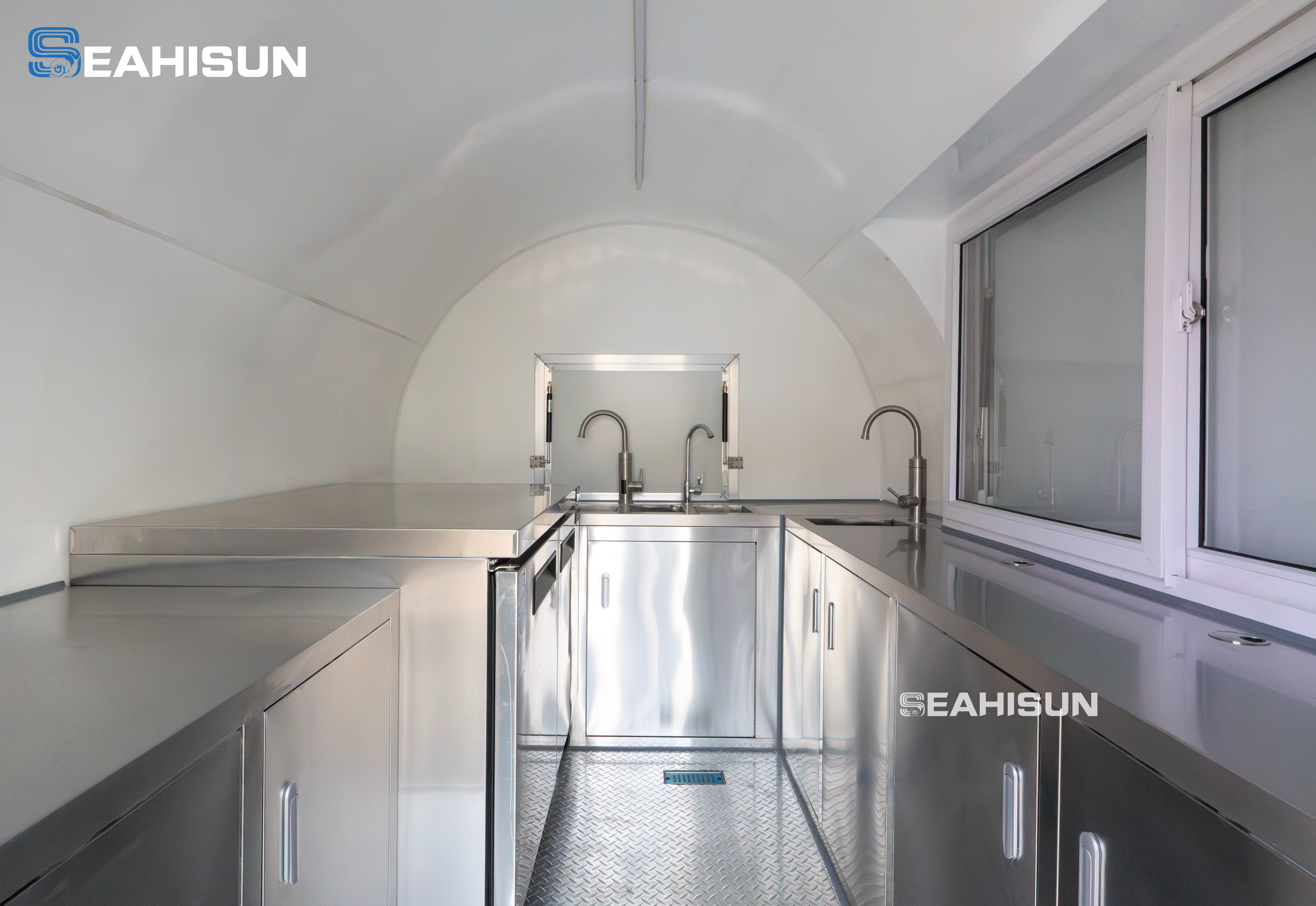
Manufacturers design the round top trailer strictly for food service. It mimics the desirable curved aesthetic perfectly. Yet, it operates as a modern mobile vending trailer from day one. Builders optimize the interior dimensions for standing comfort. They install commercial-grade plumbing and electrical systems at the factory. You skip the retrofitting phase entirely. Health inspectors recognize these factory builds easily. This accelerates your permitting process significantly.
Builders use modern fiberglass, insulated panels, and lightweight aviation aluminum. This insulation prevents the classic condensation issue. Single-wall aluminum RVs sweat heavily over commercial cooking equipment. Dripping water violates health codes and creates slip hazards. Modern insulated panels keep interior temperatures manageable during intense summer shifts. They also retain heat during chilly autumn festivals. The exterior materials resist denting better than vintage aluminum.
A purpose-built round food trailer allows for custom axle placement. This structural engineering supports heavy specific equipment securely. You can position a massive BBQ smoker or a heavy soft-serve ice cream machine precisely. The manufacturer calculates the weight distribution over the axles. Towing balance remains perfect. This prevents dangerous trailer sway on the highway. You enjoy a safe, predictable towing experience regardless of your heavy kitchen equipment.
Head-to-Head Evaluation: Core Decision Dimensions
Upfront Cost & ROI Timeline
Sourcing and retrofitting a vintage shell demands a massive budget. Costs easily range between $60,000 and $120,000 before you serve a single meal. Custom fabrication consumes the majority of these funds. In contrast, fully equipped round top models start around $15,000. Premium custom builds rarely exceed $40,000. This drastic difference impacts your first-year cash flow directly.
| Metric | Vintage Airstream Retrofit | Purpose-Built Round Top |
| Initial Acquisition | $15,000 - $30,000 (Empty Shell) | $15,000 - $40,000 (Fully Equipped) |
| Retrofit/Build Cost | $45,000 - $90,000+ | Included in acquisition |
| Estimated Build Time | 3 to 6 months | 4 to 8 weeks |
| ROI Break-Even | 18 to 36 months | 6 to 12 months |
Taking on massive debt increases operational pressure. A high initial cost extends your ROI timeline significantly. You must sell thousands of additional units just to break even. Lower upfront capital preserves your cash reserves. You can invest those savings into marketing or premium ingredient sourcing.
Weight, Towing, and Logistics
Gross Vehicle Weight Ratings (GVWR) dictate your towing logistics. Vintage shells use heavy steel frames and thick materials. Once loaded with fryers and water tanks, they become incredibly heavy. You often need a heavy-duty truck. An F-250 or F-350 class vehicle becomes mandatory. Buying a dedicated heavy-duty tow vehicle adds $40,000 to $80,000 to your startup costs.
Modern round top models utilize lightweight composites. Their engineered frames offer high strength without excess bulk. Many operators safely tow them using standard half-ton pickups or mid-size SUVs. This versatile towing option simplifies logistics immensely. You can hire seasonal staff to move the unit easily. Maneuvering a lighter rig through a cramped botanical garden feels much less stressful.
Insurance and Compliance
Insurance companies view modified vintage vehicles as high-risk assets. Assessing their true replacement value proves difficult. Premiums for heavily modified RVs soar due to custom fabrication risks. Finding an underwriter willing to cover a commercial kitchen inside a 1970s shell takes time. Standard commercial auto policies often exclude them.
Factory-certified new food trailers simplify insurance applications. Underwriters possess standard data for these models. Premiums remain affordable and predictable. Health department compliance also favors new builds. Factory models feature built-in NSF-certified surfaces. They include properly sized, integrated gray water tanks. Retrofitting these mandatory elements into vintage units requires expensive custom fabrication. Inspectors look favorably upon standardized commercial equipment.
Implementation Considerations & Rollout Risks
Health inspectors scrutinize retrofitted RVs rigorously. They know amateur builders often hide water lines behind decorative walls. Non-commercial flooring substrates raise major red flags. Plywood subfloors rot quickly if gray water leaks. Inspectors demand strict adherence to commercial codes. Failing an initial inspection delays your launch by weeks. You lose prime operating days while fixing minor plumbing infractions.
Factory-built units undergo standard compliance testing during assembly. Manufacturers install diamond-plate aluminum or seamless vinyl flooring securely. They leave plumbing lines accessible for easy inspection. You arrive at the health department with a manufacturer certificate. This documentation speeds up the approval process. Park authorities also appreciate clear, standardized safety documentation.
Utility hookups require careful planning. A scenic spot food trailer often runs off a generator. National parks enforce strict noise limits. Your generator must not exceed specified decibel levels. Integrated, sound-dampened generator boxes are crucial. Specifying these boxes on a custom round top is straightforward. Manufacturers weld them directly to the tongue. Retrofitting a soundproof box onto a vintage Airstream disrupts the visual flow and requires custom mounting brackets.
Shortlisting Logic: Which Trailer Fits Your Business Model?
Choosing the right vehicle depends entirely on your specific business goals. Analyze your available capital, menu requirements, and operational mobility.
Choose the vintage option if:
- You command a massive upfront capital budget without needing fast returns.
- You operate a highly premium or luxury brand.
- The vehicle serves as the main attraction rather than just a kitchen.
- You plan to keep the unit stationary at a single flagship location.
- Your menu requires minimal heavy cooking equipment or massive ventilation.
Choose the modern round top if:
- You need rapid deployment to capture seasonal tourist traffic immediately.
- Your kitchen workflows demand high-BTU cooking and heavy equipment.
- Lower overhead and faster profitability remain your primary business goals.
- You require the agility to move between different scenic spots frequently.
- You want to avoid purchasing a specialized heavy-duty towing fleet.
Conclusion
Your equipment must deliver reliable performance every single day. Airstreams hold unmatched nostalgic capital and visual prestige. However, round top food trailers deliver the exact same visual appeal required by strict park authorities. They do this while providing vastly superior commercial practicality. You face lower financial risk and enjoy a faster path to profitability.
Prioritize workflow efficiency over vintage authenticity. Evaluate your menu needs carefully. Focus on equipment offering built-in compliance and off-grid readiness.
Consult with a qualified manufacturer to review custom floor plans. Ask them to calculate weight distributions for your specific culinary concept. Request a complete compliance checklist before finalizing any purchase. Taking these steps ensures your scenic spot operation runs profitably and legally from day one.
FAQ
Q: Are round top food trailers legal in national parks?
A: Yes, provided they meet local health codes, fire safety standards, and any specific visual/branding guidelines set by the park authority.
Q: Do round top trailers hold their resale value compared to Airstreams?
A: While Airstreams appreciate as collector items, round top trailers depreciate like standard commercial equipment, though their initial cost is drastically lower.
Q: How long does it take to customize a round food trailer vs. retrofitting an Airstream?
A: Provide a realistic timeline estimate: 4-8 weeks for a new factory build vs. 3-6 months for a high-quality vintage retrofit.
 注: 建议图片大小150px*50px


