Small mobile vendors face a continuous, uphill battle. You need eye-catching visual appeal to drive impulse sales. However, you must balance this against maneuverability and strict budget constraints. Enter the round food truck ice cream cart. This specialized unit acts as a high-ROI alternative to standard step-vans. It outperforms bulky square trailers in almost every metric. It excels in highly lucrative environments. These include private events, tight urban spaces, and heavy pedestrian zones.
Our guide provides an objective, evidence-based framework. We want to help you evaluate and standardize these units. You will learn how to choose the right equipment. We will cover health code compliance and proper scalability. You will get the exact tools needed to build a profitable mobile business.
Key Takeaways
- Round food trailers offer a 20-30% reduction in drag during towing and provide a distinct "retro" aesthetic that increases event-booking conversion rates.
- The primary failure point in mobile ice cream operations is inadequate power-to-cooling ratios; evaluating insulation density and compressor types is non-negotiable.
- Local health department compliance (specifically 3-compartment sink requirements and greywater ratios) dictates the minimum viable size of your cart.
- Procurement requires vetting suppliers on chassis durability, axle weight ratings, and DOT/CE compliance.
Why a Round Food Trailer Outperforms Standard Setups for Ice Cream
Mobile vending requires smart business framing. You must define success criteria early. A standard square truck screams "industrial." A curved, vintage-style unit communicates premium quality. This distinction directly impacts your bottom line.
Aesthetic ROI & Venue Access
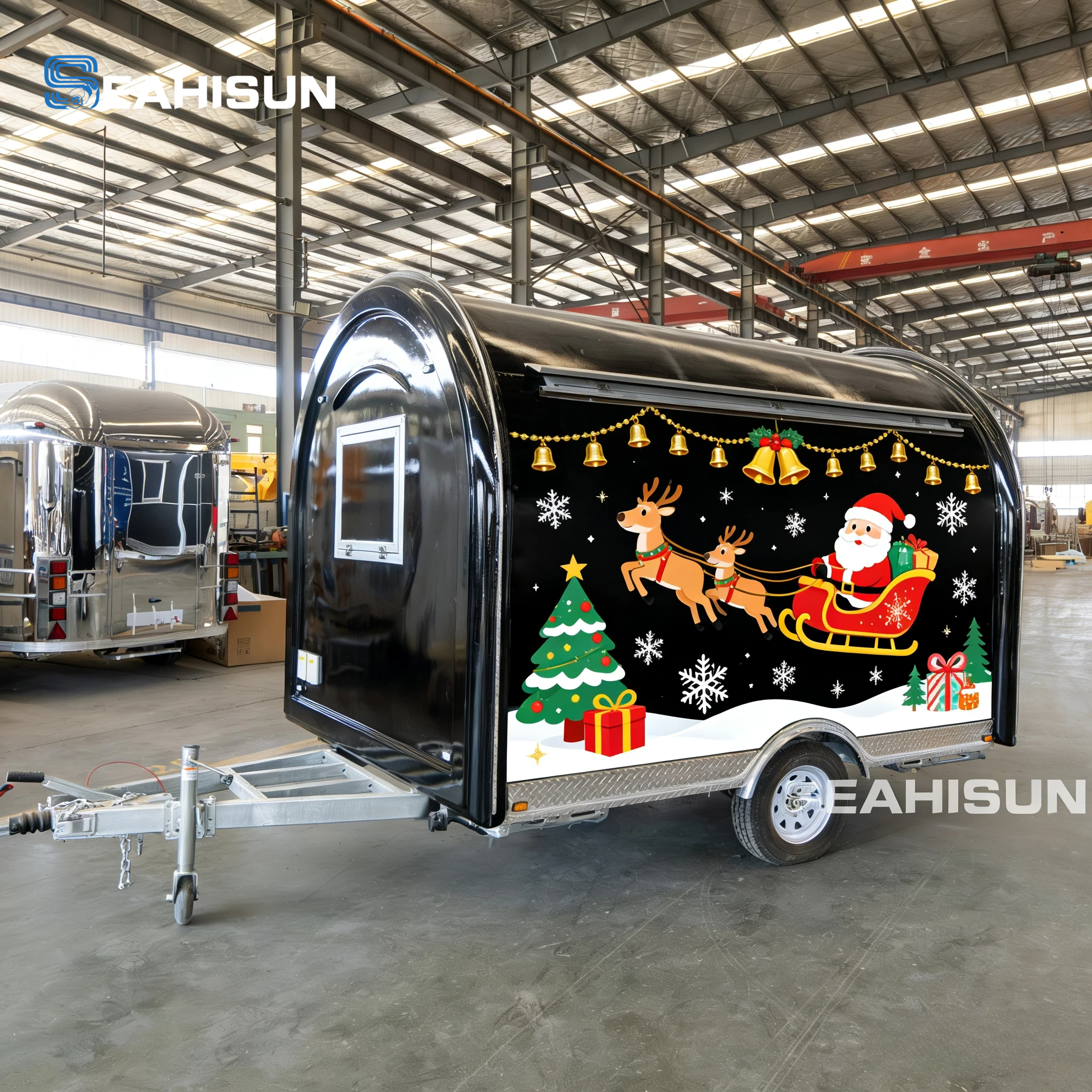
Aerodynamic, curved designs mimic vintage airstreams. This aesthetic generates a massive return on investment. Wedding planners and corporate event coordinators often reject industrial-looking trucks. They prefer visual elements matching their upscale themes. A polished round food trailer looks like a deliberate design choice. It feels like a premium catering station rather than a street food truck. This premium look allows vendors to access lucrative private events. You can charge higher minimums. You also face less pushback on pricing.
Maneuverability & Towing
Operating a mobile business involves daily logistical hurdles. Towing a massive rig requires commercial-grade trucks. This eats into your profit margins. A small food trailer changes this reality completely. Round profiles significantly reduce wind resistance. They cut drag by up to 30 percent. You can easily tow these units using standard SUVs or light-duty trucks. Better maneuverability means you can navigate tight alleys. You can back into difficult driveway spots. You spend less time parking and more time selling.
Footprint Efficiency
Compact, circular, or tear-drop footprints maximize spatial efficiency. Standard vendor tents measure exactly 10x10 feet. A compact trailer fits perfectly inside these boundaries. You can access indoor expo spaces seamlessly. Many indoor venues restrict large trucks due to fire codes. A smaller unit bypasses these restrictions. Despite the compact exterior, internal workflows remain highly optimized. You stand in the center. You can reach freezers, sinks, and serving windows without taking unnecessary steps. This reduces physical fatigue during long shifts.
Core Evaluation Dimensions: Specifications That Dictate Success
Do not buy equipment based on looks alone. You must connect features to actual business outcomes. The wrong hardware will ruin your product. Melted ice cream means lost revenue and damaged reputation.
Refrigeration & Power Architecture
Refrigeration is the heartbeat of your business. You must choose the right system for your specific operational model.
Active Compressors vs. Cold Plates
You face two main refrigeration choices. Active compressors require constant power. You must plug them into shore power. If shore power fails, you need a generator. Generators create loud, obnoxious noise. This noise ruins the ambiance at private events like weddings. Cold plates offer a stark contrast. You plug them in overnight to charge the cooling system. They hold sub-zero temperatures for 8 to 12 hours. They eliminate the need for generator noise during service. This becomes a critical selling point for premium private events.
| Feature | Active Compressors | Cold Plates |
| Power Source During Service | Continuous Generator or Shore Power | None required (charged overnight) |
| Noise Level | High (due to generator running) | Completely Silent |
| Best Use Case | High-volume street vending, festivals | Weddings, corporate lobbies, quiet zones |
| Weight Impact | Lighter overall, but requires heavy generator | Very heavy built-in plates |
Insulation Realities
Your cooling system will fail without proper insulation. Verify the polyurethane foam thickness before buying. We recommend a strict minimum of 50mm. Thick insulation prevents rapid temperature loss during peak summer operations. Direct sunlight hitting a metal exterior creates intense heat. Thin insulation allows this heat to penetrate the cabin. This overworks your compressors and melts your product. Always ask the manufacturer for a cross-section photo of the wall panels.
Structural Integrity & Materials
Your ice cream cart must withstand daily road vibrations. Material selection dictates longevity.
Exterior Materials
You generally choose between three materials. Fiberglass is lightweight and smooth. It accepts vinyl branding wraps flawlessly. Brushed aluminum looks distinctly retro and premium. It requires frequent polishing to maintain its shine. Galvanized steel provides ultimate durability. However, steel adds significant weight and requires rigorous rust-proofing. Evaluate your local climate. Coastal areas require high rust resistance. Fiberglass often wins in humid, salty environments.
Chassis & Axles
Payload requirements demand strict attention. An ice cream business carries incredibly heavy equipment. Deep freezers, water tanks, and generators add massive weight. Ice cream itself is dense and heavy. You must mandate checking the Gross Vehicle Weight Rating (GVWR) of the towable cart. A weak chassis will bend under full load. Under-rated axles will snap on potholes. Always buy a chassis rated for at least 30 percent more weight than your projected maximum load.
Navigating Compliance, Health Codes, and Road Legality
Ignoring compliance will shut your business down. Health inspectors look for specific structural requirements. You cannot outsmart the health department. You must build compliance directly into your cart.
The Plumbing Bottleneck
Health codes mandate specific plumbing setups. You almost always need a 3-compartment sink. You also need a dedicated handwash station. This requires four sinks total in a tiny space. Inspectors also check water tank ratios. The standard ratio of fresh water to grey water tanks sits at 1:1.5. If you have a 10-gallon fresh tank, you need a 15-gallon grey tank. We strongly warn against buying un-plumbed import carts. Retrofitting plumbing into a finished, curved wall is a nightmare. It often costs more than the cart itself.
Electrical Certifications
Non-compliant wiring poses a massive fire risk. Inspectors will check your electrical panels. Ensure the cart meets local electrical standards. In the US, look for NSF/UL listed components. The exterior breaker box must be properly grounded. Many cheap imports use thin wires. These wires melt when running multiple freezers. Demand a certified electrical schematic from your manufacturer. Refuse delivery if the breaker box lacks proper weatherproofing.
DMV & Transit Regulations
Your unit must be street legal. You need DOT-approved tires. Standard passenger car tires will fail under trailer loads. You must use standardized taillight wiring harnesses. Choose either a 4-pin or 7-pin connector based on your tow vehicle. Safety chains are absolutely mandatory. Without them, a disconnected trailer becomes a deadly missile. Meeting these transit regulations ensures you operate a legally compliant mobile fast food trailer. Registering an illegal unit is impossible in most states.
Cost Analysis and Scalability for Small Vendors
Transparent financial assumptions prevent bankruptcies. You must understand unit economics. Scaling up requires a mapped-out strategy. Avoid guessing your profitability metrics.
Unit Economics
Model a realistic payback period. Start by comparing base model prices against fully equipped versions. A "cheap" base model often lacks sinks, freezers, and proper wiring. Once you add branded wraps, permits, and equipment, the price doubles. Calculate your daily street-side revenue cautiously. Factor in bad weather days. Private event minimums offer predictable income. A lower overhead cart accelerates profitability dramatically. You do not pay for heavy truck insurance. You skip expensive diesel engine repairs. This lean approach creates positive cash flow much faster than a motorized truck.
Scaling Up
Starting small enables smart growth. You do not need five trucks on day one. You can use a "hub and spoke" business model. Follow these proven scaling steps:
- Establish the Hub: Rent space in a commercial commissary kitchen. Use this for bulk storage, cleaning, and preparation.
- Launch the First Spoke: Deploy your first compact cart. Perfect your menu, branding, and customer service.
- Analyze Data: Identify high-performing locations and peak private event seasons.
- Duplicate the Spoke: Purchase a second identical unit using profits from the first.
- Deploy Simultaneously: Send cart A to a corporate event while cart B hits a local festival.
This model limits your initial financial exposure. It allows you to expand your footprint using generated capital rather than massive bank loans.
Shortlisting Suppliers: A Skeptic’s Checklist Before Buying
The manufacturing market is flooded with low-quality builds. You must approach procurement with deep skepticism. Trust nothing without visual or documented proof.
Verify Welding and Assembly
Instruct buyers to ask for specific photos. Request images of the chassis welds before the factory mounts the body. Weak welds fail on bumpy roads. If buying a pre-built unit, inspect the seam sealing personally. Look closely around windows and wheel wells. Water ingress destroys carts from the inside out. Rotten floors will drop your heavy freezers onto the highway.
Warranty and Parts Availability
Emphasize the risk of cheap overseas units. If a proprietary axle breaks, you cannot wait six weeks for a replacement part. Every day off the road burns your capital. Advise shortlisting vendors who use universal components. Your refrigeration parts should be easily replaceable by any local HVAC technician. Domestic parts networks act as an insurance policy for your business continuity.
Final Pre-Purchase Steps
Execute this strict action list before sending any funds. This chart acts as your final defense against bad investments.
| Checklist Item | Why It Matters | Action Required |
| Spec Sheet Verification | Ensures the build matches your operational needs. | Demand a line-by-line signed PDF from the builder. |
| VIN / Chassis Number | Mandatory for DMV registration and insurance. | Verify availability of a 17-digit standard VIN. |
| Equipment Dimensions | Freezers must fit your specific tubs/pans perfectly. | Measure interior dimensions against your actual inventory. |
| Sink Layout Proof | Health department will measure basin depths. | Request photos of sinks with a tape measure showing depth. |
Cross-reference every dimension carefully. Do not assume standard ice cream tubs fit inside standard freezers. Measure everything twice.
Conclusion
Summary Verdict
A specialized curved unit represents a strategic investment. It provides massive branding advantages. It delivers unmatched operational agility. It is not just a visual novelty. It solves real logistical problems for small vendors.
Final Warning
Aesthetic appeal must never compromise mechanical reliability. A beautiful cart that fails health inspections is useless. A stunning retro exterior cannot hide poor insulation or a weak chassis. Always prioritize function alongside form.
Call to Action
- Download our comprehensive pre-purchase spec checklist today.
- Contact your local health department immediately for exact sink and plumbing requirements.
- Request a detailed quote from a verified, reputable manufacturer to begin mapping your budget.
FAQ
Q: Can a standard car tow a round mobile ice cream trailer?
A: Yes, in many cases. You must verify your vehicle's towing capacity first. Check the cart's dry weight versus wet weight (fully loaded with equipment and water). Most standard SUVs with a Class II or Class III hitch can safely tow these lightweight units.
Q: Do I need a generator for a mobile fast food trailer focused on ice cream?
A: It depends on your equipment. Soft-serve machines require massive, continuous power. You will definitely need a generator. Hard scoop or pre-packaged ice cream setups can use cold plates. Cold plates hold freezing temperatures for hours without running a generator during service.
Q: How do I clean and sanitize the interior of a curved food cart?
A: Look for food-grade stainless steel interiors. Avoid porous materials. Ensure your build includes a centrally located floor drain. This allows you to gently wash down surfaces and push dirty water out safely. Always use approved sanitizing solutions that won't degrade sealants.
Q: Are imported round food trailers street legal in the US/EU?
A: Not automatically. They must possess proper DOT (US) or CE (EU) certifications. You must have a recognized VIN number for registration. They also require compliant lighting harnesses, standardized tires, and approved axles. Always verify these elements before importing.
 注: 建议图片大小150px*50px


