Purchasing an outdoor mobile kitchen is a major capital expenditure. Mismatched equipment or compliance failures often delay your launch by months. You cannot afford an idle rig while peak season passes by. Getting the core specifications right from day one is critical to your operational survival.
High-heat, heavy-equipment concepts like BBQ operate fundamentally differently from climate-sensitive concepts like ice cream. They demand distinct chassis strengths, power capacities, and layout configurations. A one-size-fits-all approach routinely fails in the mobile food industry. You need a setup specifically engineered for your daily menu requirements.
We will provide a stringent evaluation framework to help you select a structurally sound, code-compliant unit. You will learn how to navigate payload limits, electrical draws, and health department mandates. This guide empowers you to protect your investment and build a highly efficient workflow.
Key Takeaways
- BBQ vs. Ice Cream Needs: BBQ requires heavy-duty axles for smoker payloads and commercial fire suppression; ice cream requires high-amp electrical systems and superior insulation.
- Compliance is Non-Negotiable: Local health departments dictate exact sink dimensions, water tank ratios, and surface materials (NSF-certified) before a permit is issued.
- Procurement Paths: Choosing between a highly customized build and a ready-to-deliver trailer depends entirely on your target launch date and menu complexity.
- Hidden Bottlenecks: Tow vehicle capacity (GVWR) and commissary agreements are the most common oversights for first-time buyers.
BBQ vs. Ice Cream: Defining Core Trailer Specifications
Standardized models rarely serve extreme ends of the culinary spectrum effectively. Trying to force a generic layout to accommodate complex menus usually requires expensive post-purchase structural modifications. You must define your exact operational baseline before reviewing floor plans.
Structural Demands of a BBQ Food Trailer
Payload capacity remains the most critical factor for heavy food concepts. Commercial smokers, wood reserves, and meat holding cabinets weigh thousands of pounds. A standard single-axle chassis will fail under this stress. You need dual or triple heavy-duty drop axles to support these massive payloads. These reinforced axles prevent frame bending and eliminate dangerous trailer sway during highway transit.
Ventilation and fire safety introduce rigorous regulatory hurdles. Operating wood-fired or gas smokers requires mandatory Type 1 commercial exhaust hoods. These hoods must integrate Ansul fire suppression systems directly over the cooking equipment. A specialized BBQ food trailer utilizes makeup air fans to balance internal air pressure. Without this balance, your exhaust hood cannot pull smoke out effectively.
Grease management dictates your flooring choices. Smoked meats produce high volumes of rendered fat. You need specialized under-sink grease traps to stay compliant with local wastewater ordinances. Easily washable diamond-plate aluminum or seamless stainless steel flooring is non-negotiable. Porous materials degrade quickly and fail health inspections.
Electrical & Climate Demands of an Ice Cream Trailer
Climate-sensitive menus hinge entirely on continuous power generation. An ice cream trailer experiences massive electrical draws. Commercial freezers, soft-serve machines, and rooftop AC units cycle continuously. You need high-amperage electrical panels to support these overlapping startup surges. A standard 50-amp panel often falls short, causing breakers to trip during busy summer rushes.
Insulation determines equipment survival. Upgraded wall and ceiling insulation reduces HVAC strain dramatically. Soft-serve compressors generate ambient heat inside the workspace. If summer sun heats the exterior walls, interior temperatures spike. Superior insulation keeps the cabin cool and maintains equipment efficiency.
Structural flexibility allows operators to pivot concepts easily. Many frozen dessert vendors incorporate espresso machines and commercial water filtration systems. Operating as a dual-concept coffee trailer unlocks morning revenue streams. This requires dedicated plumbing lines and heavy-duty countertop supports to handle heavy espresso boilers.
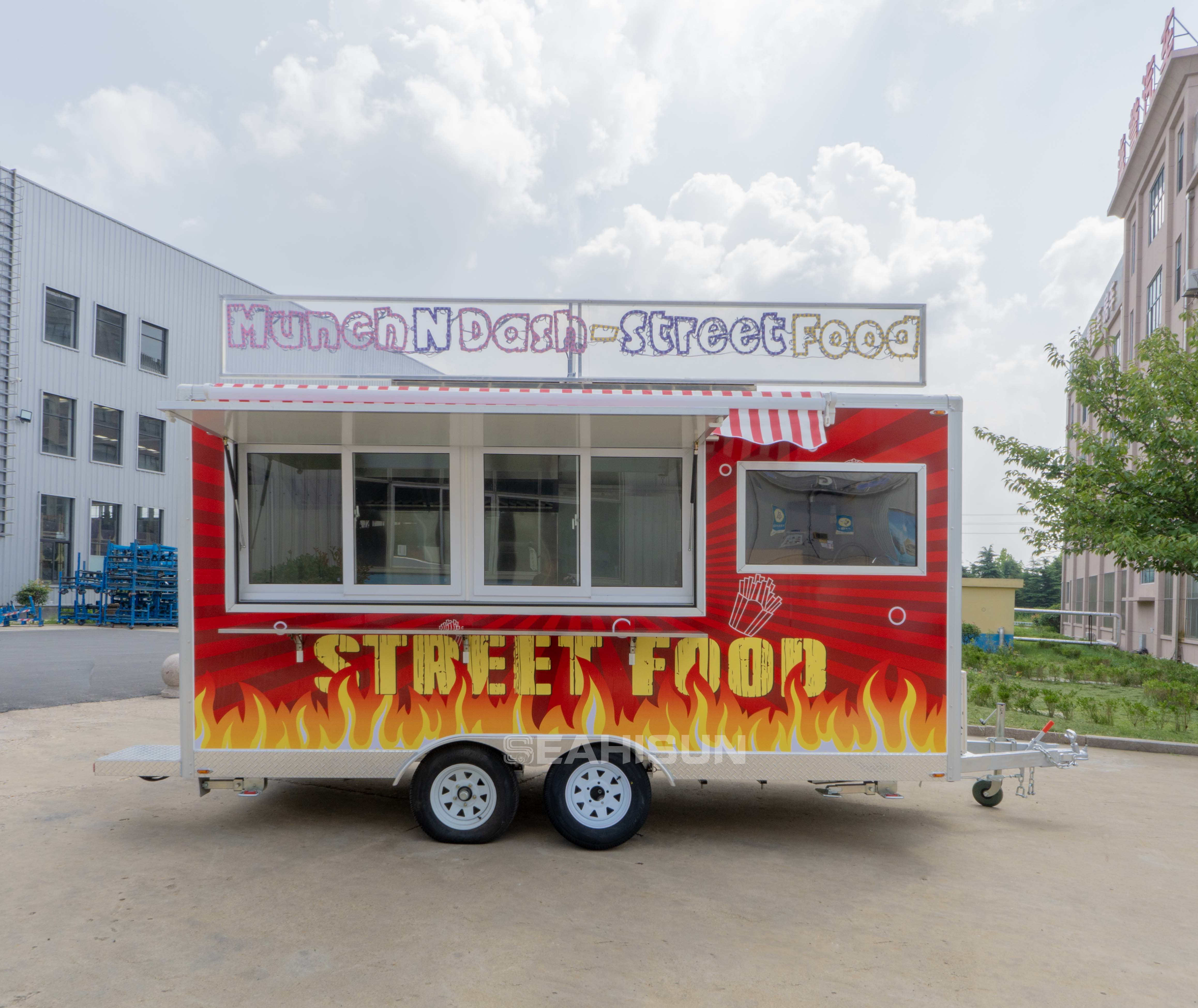
Essential Evaluation Criteria for an Outdoor Street Food Trailer
Physical specifications translate directly into daily operational success. Every material choice impacts your speed of service and your ability to pass rigorous county inspections. When evaluating an outdoor street food trailer, you must look past cosmetic finishes and examine the underlying engineering.
Chassis and Exterior Durability
Assess the foundational frame carefully. Tubular steel frames provide vastly superior torsional rigidity compared to cheaper C-channel frames. Tubular steel resists twisting on uneven festival grounds. You should also evaluate exterior skin thickness. Manufacturers typically use .030 or .040 gauge aluminum. Thicker .040 aluminum prevents "oil canning"—a visible warping effect caused by road vibration and intense heat. Thinner skins dent easily and degrade your brand's professional appearance.
Health Code Compliance (Plumbing & Sanitation)
Local health departments enforce strict plumbing regulations. You cannot secure an operating permit without meeting these baseline mandates.
- Sinks: Mandatory 3-compartment sinks require dual drainboards. The sink basins must be large enough to submerge your largest cooking pot. You also need a separate, dedicated handwashing sink equipped with splash guards.
- Water Ratios: Fresh-to-gray water tank ratios must align with local codes. The standard requirement dictates gray water capacity must be 15% to 50% larger than your fresh water supply. This prevents contaminated water from overflowing onto public streets.
- Surfaces: Washable, non-porous interior surfaces are legally required. Fiberglass Reinforced Plastic (FRP) or stainless steel walls prevent bacterial growth and wipe down quickly at closing time.
Power Generation
Sizing your generator correctly prevents disastrous mid-service shutdowns. Do not base generator size on running wattage alone. You must calculate the simultaneous starting wattage of all equipment. For example, upgrading from a 7,000W to a 12,000W generator provides a necessary buffer for AC units and refrigeration compressors starting concurrently. You should also ensure the rig features a manual transfer switch and shore-power plug-in capabilities. Shore power allows you to plug directly into grid electricity at established festival sites, saving fuel and reducing noise.
| Feature Category | Heavy Cooking (BBQ/Grill) | Climate-Sensitive (Ice Cream/Coffee) |
| Payload & Chassis | Dual/Triple drop axles, tubular steel. | Standard axles, upgraded suspension for fragile machines. |
| Power Requirements | Moderate amps, heavy propane line integration. | High amps (100A+ panels), continuous generator cycling. |
| Fire & Ventilation | Type 1 Hoods, Ansul Suppression, Makeup Air. | No Type 1 hood required; standard rooftop vents suffice. |
| Insulation Needs | Standard R-value, focused on heat extraction. | Maximum R-value, focused on ambient cooling retention. |
Procurement Options: Custom-Built vs. Ready-to-Deliver Trailers
You face two distinct procurement paths. You must weigh speed-to-market against exact workflow tailoring. Your target launch date and menu complexity dictate which route makes financial sense.
The Custom Build Route
Building from scratch allows for ultimate control over your kitchen environment.
Pros: You gain an exact ergonomic layout. You tailor the equipment footprint down to the inch, reducing wasted steps during service. You can also integrate highly customized branded exterior designs. A uniquely shaped street food trailer acts as a rolling billboard.
Cons: Lead times routinely stretch from 3 to 6 months. Manufacturers require higher upfront deposits to secure materials. You also face the inherent risk of supply chain or manufacturer delays pushing your launch past peak festival season.
The Ready-to-Deliver Trailer Route
Pre-built models prioritize immediate deployment and standardized efficiency.
Pros: You gain immediate availability for fast-approaching peak seasons. These models feature proven, standardized floor plans vetted by hundreds of operators. You also benefit from clear upfront pricing with no hidden engineering fees. Buying a ready-to-deliver trailer gets you on the road within days.
Cons: You have limited ability to swap major equipment footprints. Gas lines and electrical outlets are permanently routed. You might over-purchase unneeded features, like an oversized flat top grill you rarely use.
Verdict: Pre-built units are best for standard concepts or operators who need to generate cash flow immediately. Custom units suit highly specialized menus requiring unusual heavy equipment.
Implementation Risks and Hidden Costs
Procurement is only the first hurdle. Many vendors face severe operational realities immediately after finalizing their purchase. Addressing these implementation risks early prevents catastrophic delays.
Towing Capacity (GVWR)
Do not buy a rig that exceeds the legal or mechanical towing capacity of your existing truck. The Gross Vehicle Weight Rating (GVWR) includes the chassis, equipment, full water tanks, and inventory. Pulling a 10,000-pound setup with an undersized half-ton pickup destroys transmissions and voids insurance policies in the event of an accident.
Permitting Blindspots
Buying an out-of-state build carries immense regulatory danger. A model built perfectly to Texas standards might fail miserably in California. Local county health and fire codes vary wildly. Some counties demand specific hood overhang dimensions—often requiring the exhaust hood to extend six inches beyond the cooking equipment. If your imported rig fails this test, inspectors will deny your permit until you tear down and rebuild the ventilation system.
Commissary Requirements
Most cities legally mandate a contracted commissary kitchen for overnight parking, dumping gray water, and grease disposal. You cannot legally clean your grease traps in a residential driveway or dump wastewater down a storm drain. Securing a commissary agreement incurs monthly rental fees. First-time buyers frequently overlook this ongoing operational expense when calculating their initial runway.
How to Shortlist a Street Food Trailer Manufacturer
The manufacturing market is saturated with low-quality importers and unreliable builders. You need strict criteria to evaluate trustworthiness before handing over a deposit.
Blueprint Transparency
Legitimate builders provide stamped, detailed CAD schematics before the build begins. Health departments require these schematics to issue pre-approvals. If a builder refuses to supply detailed plumbing and electrical diagrams, walk away. You need proof of compliance in hand before signing.
Component Certifications
Inspectors look for specific regulatory stamps. Are all sinks, work tables, and refrigerators NSF (National Sanitation Foundation) certified? Are the electrical panels and breakers UL (Underwriters Laboratories) listed? Does the chassis meet DOT (Department of Transportation) highway standards? Non-certified equipment is cheaper but will instantly trigger a failed inspection.
Warranty and Support
Demand clear documentation separating the structural warranty from equipment warranties. The manufacturer handles chassis welds and roof leaks. Third-party brands handle refrigerator compressors and generator faults. Verify that replacement parts are readily available in your country. A cheap imported axle does you no good if replacement bearings take two months to ship.
Best Practices for Manufacturer Vetting
- Request three references from active clients in your specific state.
- Verify the manufacturer holds a valid World Manufacturer Identifier (WMI) code.
- Demand a line-item contract detailing the exact make and model of every installed appliance.
- Never pay the final balance until a third-party inspector or local health official reviews the blueprints.
Conclusion
The best mobile kitchen is engineered specifically for your menu's exact thermal, electrical, and payload demands. Success relies on strictly adhering to local health codes before fabrication even begins. Standardized solutions work well for simple menus, but heavy-duty concepts demand custom structural support.
Your immediate next step is to finalize your exact equipment list. Take those dimensions and power requirements to your local health department for a preliminary consultation. Only after receiving their structural guidance should you request custom quotes or view ready-to-deliver inventory.
FAQ
Q: How much does a fully equipped BBQ food trailer cost?
A: A fully equipped unit typically ranges from $40,000 to $80,000 or more. The high cost stems from structural upgrades. You must pay for heavy-duty dual or triple drop axles to support smoker payloads. Mandatory Type 1 commercial exhaust hoods with integrated Ansul fire suppression systems also add significant expense.
Q: Can I use an ice cream trailer for a coffee trailer business?
A: Yes, they share similar structural requirements. Both concepts rely heavily on high-amperage electrical systems rather than propane or heavy ventilation. You can easily execute a dual-concept layout if you plan for dedicated plumbing lines and reinforce the countertops to hold heavy espresso machines.
Q: What is the difference between a custom build and a ready-to-deliver trailer?
A: A custom build offers exact workflow tailoring and precise equipment footprints but requires 3 to 6 months of lead time. A ready-to-deliver unit provides immediate availability and proven floor plans but limits your ability to swap major equipment without voiding warranties or requiring retrofitting.
Q: Do food trailers come with health department approval?
A: No. Manufacturers build to general state or national codes, but they do not issue permits. You, the owner, are entirely responsible for passing your specific county's local health and fire inspections. Always submit builder blueprints to your local inspector before purchasing.
 注: 建议图片大小150px*50px


