Historically, commercial properties and luxury estates relied heavily on custom-built masonry for outdoor dining spaces. These permanent, site-built projects often brought unpredictable timelines and messy construction phases. Today, contractors frequently face severe weather delays, extensive cost overruns, and highly inconsistent quality levels. This sheer unpredictability directly disrupts property operations. It severely delays crucial revenue generation for hospitality venues. Property owners clearly need a better approach.
We now see a massive industry shift toward modular architecture. This engineered approach provides a faster, highly reliable solution. In this guide, you will discover an objective framework built specifically for property managers, hospitality directors, and homeowners. You will learn exactly how to evaluate, specify, and seamlessly implement a modular outdoor kitchen. We will walk you through material selection, property-specific tailoring, and rollout risk mitigation to ensure a flawless installation.
Key Takeaways
- Modular systems reduce installation timelines from weeks to days, minimizing operational downtime for commercial properties.
- Standardized manufacturing ensures predictable durability, particularly when utilizing marine-grade or 304-grade stainless steel.
- Scalability allows properties to deploy identical setups across multiple locations (e.g., standardized campsite layouts or hotel franchises).
Custom Construction vs. Modular Systems: Assessing the Business Case
When planning an outdoor kitchen, stakeholders must weigh custom hardscaping against modern modular solutions. The business case for modular architecture relies heavily on reducing operational variables. Custom builds require extensive on-site coordination between masons, plumbers, and electricians. This exposes the project to endless delays.
Cost and Timeline Predictability
Modular systems offer clear fixed-cost predictability. They eliminate the variable labor costs inherently tied to custom masonry. A site-built project halts entirely during heavy rain or freezing temperatures. This pushes schedules back by weeks. Modular units arrive pre-assembled or in ready-to-bolt panels. Installation labor drops to a fraction of traditional methods. You secure a guaranteed completion date. This allows hotels and resorts to market their new amenities without fear of construction delays.
Quality Control and Structural Integrity
Site-built block structures frequently suffer from human error. Factory-machined tolerances prevent these issues entirely. Modular frames undergo precise laser cutting and robotic welding. This ensures incredibly tight seams. It prevents the structural settling and unsightly cracking commonly seen in heavy masonry structures. When ground shifts slightly over time, a rigid modular frame flexes as a single unit. Masonry simply cracks under the same stress.
Permitting and Compliance
Freestanding modular units often bypass complex permanent-structure zoning permits. Local municipalities typically classify them as equipment rather than permanent architectural additions. This significantly accelerates the approval phase. You must still strictly follow local fire codes and utility regulations. However, avoiding structural zoning hearings saves months of bureaucratic delays.
Comparison Chart: Custom Masonry vs. Modular Architecture | Evaluation Factor | Custom Masonry Construction | Modular Architecture |
| Timeline | 4 to 8 weeks (weather dependent) | 1 to 2 days (post-utility prep) |
| Cost Predictability | Highly variable; prone to labor overruns | Fixed upfront pricing |
| Quality Control | Inconsistent; relies on specific contractor skill | Standardized; factory-machined precision |
| Permitting | Often requires structural zoning approval | Typically viewed as freestanding equipment |
Best Practice: Always consult your local fire marshal regarding setback requirements before finalizing your layout, even if zoning permits are not required.
Common Mistake: Do not assume modular systems lack structural rigidity. Modern commercial systems utilize heavy-gauge framing that outlasts poorly mixed concrete blocks.
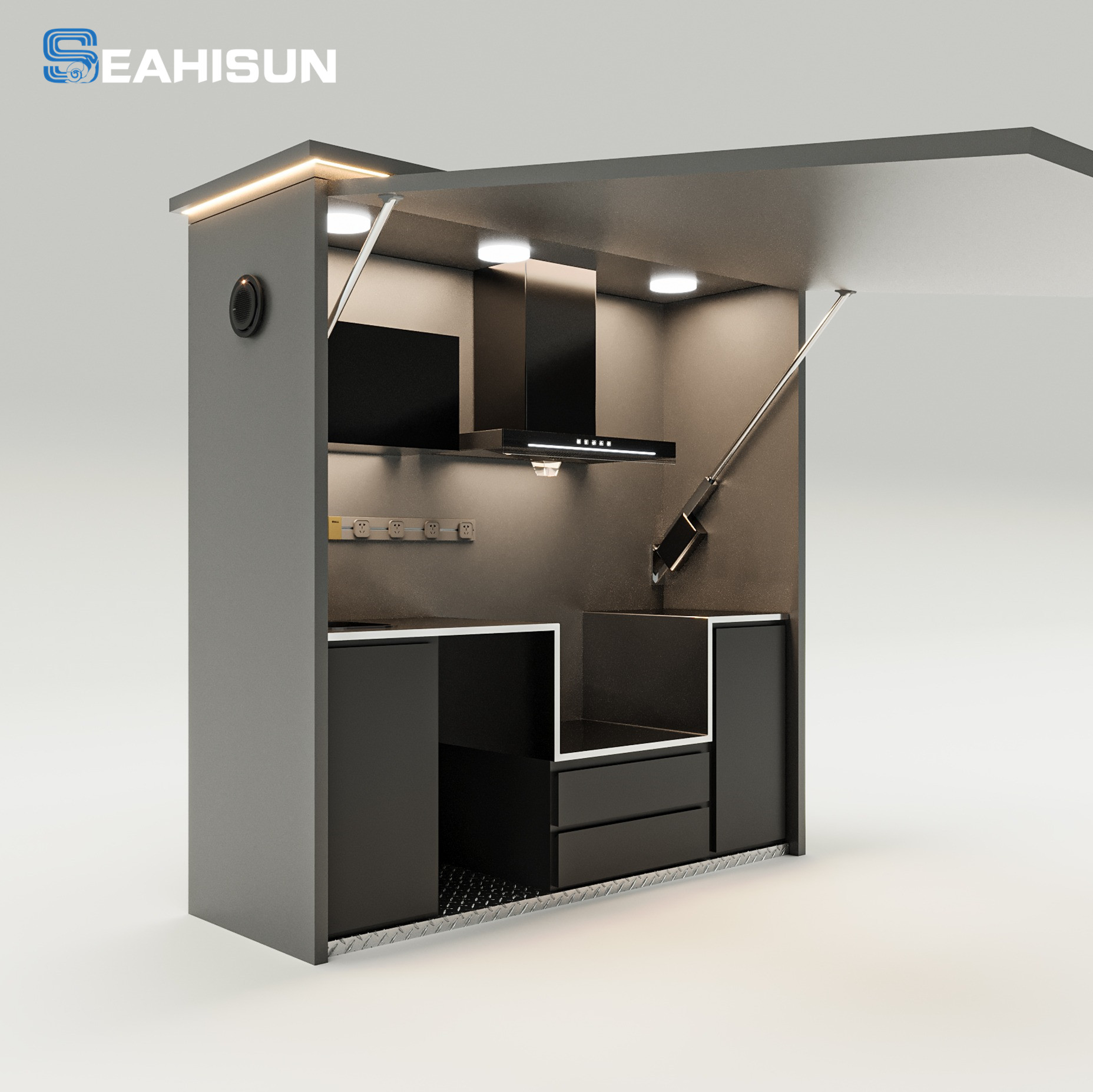
Core Material and Specification Requirements
The longevity of your installation relies heavily on strict material selection. Outdoor environments aggressively test structural materials through UV radiation, moisture, and temperature fluctuations. You must specify commercial-grade materials to avoid rapid degradation.
Cabinetry and Framework Standards
A stainless steel outdoor cabinet serves as the absolute baseline for durability. Wood frames rot quickly. Galvanized steel eventually rusts in humid climates. You must choose between 304-grade and 316-grade stainless steel. Standard 304-grade steel performs excellently in most inland environments. It resists typical oxidation perfectly. However, 316-grade (marine-grade) steel contains added molybdenum. We strongly recommend 316-grade if your property sits near saltwater coasts. You also need 316-grade if the setup sits adjacent to heavy chlorine off-gassing from a resort pool.
Safe Appliance Integration
Integrating an outdoor grill station demands strict safety protocols. High-performance grills generate immense radiant heat. You must include insulated thermal jackets when mounting a grill into any structure. These double-walled steel liners protect surrounding cabinetry from extreme heat transfer. Furthermore, proper ventilation gaps remain non-negotiable. Propane is heavier than air. You must install low-placed ventilation louvers to prevent dangerous gas pooling inside the cabinet body.
Countertops and Work Surfaces
Surfaces face relentless environmental exposure. You must prioritize UV-resistant and non-porous materials. We recommend sintered stone or dense granite. They vastly outperform high-maintenance options like poured concrete or porous ceramic tile. Sintered stone resists staining from acidic foods. It never fades under direct sunlight. It ignores brutal winter freeze-thaw cycles that easily crack conventional tile grout.
- Framing: 16-gauge or 18-gauge tubular stainless steel.
- Fasteners: All exterior screws must match the steel grade of the chassis.
- Hinges: Specify soft-close, weather-sealed marine hinges to prevent seizing.
- Leveling Legs: Must feature wide-base, adjustable stainless feet to accommodate minor slope variances.
Application Framework: Tailoring to the Property Type
Every property type demands a specific layout and feature set. You cannot deploy a universal layout and expect optimal performance. You must tailor the modular setup to the exact user demographic.
Luxury Villas and High-End Residential
Homeowners expect their BBQ island to act as an entertainment focal point. Aesthetics and seamless integration matter most here. Modular systems offer vast design flexibility for private estates. You can specify custom powder-coated finishes. You can apply faux-stone cladding to match the villa's exterior architecture. High-end residential setups often incorporate specialized accessories. We frequently see integrated wine chillers, artisan pizza ovens, and expansive bar-height seating areas. The focus remains on creating a luxurious, welcoming social hub.
Hotel and Resort Environments
Commercial hospitality venues view these installations as direct revenue generators. A strategically placed hotel outdoor kitchen directly drives localized Food & Beverage (F&B) revenue. Guests spend significantly more money when dining options sit close to pools or lounge areas. In these environments, you must focus on high-throughput commercial appliances. Grills must recover heat rapidly after opening. You must specify heavy-duty lockable storage to ensure after-hours inventory security. Additionally, commercial properties must strictly adhere to ADA (Americans with Disabilities Act) regulations. You must include ADA-compliant service counter heights and accessible approach clearances.
Glamping and Premium Campsites
Campsites demand extreme ruggedness and simplicity. You must prioritize pest-resistant sealed enclosures. Raccoons and rodents easily breach flimsy residential cabinets. Use heavy latches and fully sealed floor panels. Furthermore, glamping sites require compact linear footprints. A simple, straight-line configuration maximizes utility within tight space constraints. Focus on essential functions: a reliable grill, a durable prep surface, and a deep sink for easy cleanup.
Implementation Realities and Rollout Risks
Even the finest modular systems fail if the underlying site preparation is poor. You must approach the implementation phase systematically. Skipping crucial prep work guarantees long-term operational headaches.
Utility Rough-Ins and Pre-Planning
You cannot simply place modules and hope utilities align. You must pre-plan underground rough-ins extensively. Determine your fuel source early. Natural gas requires permanent underground trenching and hard-piped connections. Bulk liquid propane offers more flexibility but requires different grill orifices. Electrical planning is equally vital. You need dedicated 20-amp GFCI electrical circuits for refrigeration and rotisserie motors. If you include a sink, plan for winterized plumbing. You must install accessible blowout valves to clear water lines before freezing temperatures arrive.
Substrate and Structural Leveling
Modular systems require exceptional foundational support. You must provide a reinforced, perfectly leveled concrete pad or a heavily reinforced deck. If the concrete pad slopes unevenly, the modular seams will separate. Doors will hang crookedly and refuse to close flush. Do not rely solely on the cabinet's adjustable leveling legs to fix a terrible concrete pour. The substrate must meet tight level tolerances before the units ever arrive on site.
Wind and Environmental Anchoring
Lightweight modular frames present a tipping risk in extreme weather. You must address safety protocols for securing these units. In high-wind or hurricane-prone coastal regions, gravity is not enough. You must utilize heavy-duty concrete anchors. Bolt the internal framework directly to the concrete pad. This prevents dangerous shifting during severe storm events.
- Phase 1: Site Audit. Verify exact dimensions, prevailing wind directions, and utility access points.
- Phase 2: Utility Trenching. Run gas lines, electrical conduit, and plumbing before pouring the pad.
- Phase 3: Substrate Pour. Pour the reinforced concrete pad, ensuring less than a 1/4-inch slope variance per 10 feet.
- Phase 4: Delivery and Uncrating. Inspect all modular panels for freight damage immediately upon arrival.
- Phase 5: Assembly and Anchoring. Bolt modules together, level them perfectly, and anchor them to the substrate.
- Phase 6: Appliance Drop-In. Connect utility lines, drop in the grill, and test all connections for leaks.
Vendor Shortlisting and Evaluation Logic
Selecting the right manufacturing partner dictates the long-term success of your rollout. The market is flooded with varying quality tiers. You must critically evaluate vendors based on engineering reality, not just visual appeal.
Component Modularity and Expansion
True modularity means interchangeable parts. Assess whether the manufacturer allows for future layout expansion. Can you easily add a beverage center next year? More importantly, verify individual module replacement. If a service cart dents a specific door, you should only need to replace that door. You should never have to dismantle the entire structural run just to fix one damaged drawer track.
Warranty Exclusions and Fine Print
Do not simply look at the "Lifetime Warranty" badge. You must scrutinize the warranty fine print extensively. Many residential warranties instantly void upon commercial use. Others exclude rust damage if the unit sits within five miles of a coastline. Look for specific clauses regarding user-inflicted surface damage versus structural frame failure. A transparent vendor clearly defines these boundaries.
Lead Times and Shipping Logistics
Factor in absolute freight shipping realities. Modular kitchens ship on massive pallets via LTL (Less Than Truckload) freight. Confirm whether the vendor guarantees lead times. Ask about their crate unboxing protocols. You need to know how quickly they dispatch replacement parts if a forklift damages a panel in transit. A reliable vendor stocks spare fascias and hardware domestically for immediate overnight shipping.
Vendor Evaluation Matrix | Evaluation Criteria | Green Flag (Look For) | Red Flag (Avoid) |
| Steel Grade Options | Offers both 304 and 316 marine-grade | Only offers generic "stainless" or 430-grade |
| Modularity | Individual panels and doors can be ordered separately | Fully welded monolithic units requiring total replacement |
| Commercial Warranty | Explicit commercial terms provided in writing | Warranty voids upon installation in a public space |
| Ventilation Safety | Pre-engineered venting louvers built into cabinets | Requires the installer to cut their own vent holes |
Conclusion
Transitioning from unpredictable masonry to engineered modular architecture fundamentally streamlines property upgrades. The decision ultimately hinges on balancing upfront capital with long-term operational predictability. Modular setups guarantee faster deployment, higher quality control, and simplified maintenance. By prioritizing correct steel grades, planning utilities meticulously, and evaluating vendors critically, you ensure a highly successful installation.
- Conduct a Professional Site Audit: Map out your exact footprint and verify existing utility capacities before doing anything else.
- Standardize Your Material Specs: Demand 304-grade or 316-grade steel framing in all your vendor requests.
- Confirm Local Code Requirements: Consult your fire marshal regarding overhead clearances and ventilation mandates for commercial setups.
- Request Granular Quotes: Ask short-listed vendors to separate freight logistics from unit pricing to identify hidden costs.
FAQ
Q: How long does it take to install a modular outdoor kitchen?
A: Once the site utilities and concrete pad are properly prepared, actual assembly happens rapidly. A standard modular layout typically takes only 1 to 2 days to fully bolt together, level, and connect to utilities. This drastically reduces property downtime compared to custom masonry.
Q: Can modular outdoor cabinets withstand freezing temperatures?
A: Yes, high-quality stainless steel easily withstands extreme freezing temperatures without cracking. However, you must follow strict winterization protocols for plumbing. You must drain all water lines, blow them out with compressed air, and shut off exterior valves to prevent internal pipe bursts.
Q: Is it possible to relocate a modular BBQ island after installation?
A: Yes, this is a massive advantage over custom masonry. You can unbolt the modules, disconnect the utility lines (gas, water, electric), and physically relocate the entire structure to a new patio or property. Always use licensed professionals for utility disconnections.
Q: Do commercial properties need specialized ventilation for outdoor grill stations?
A: Yes. Commercial fire codes dictate strict overhead clearance rules and mandate specific setback distances from combustible materials. If a roof or canopy covers the area, you usually must install a commercial-grade exhaust hood system to extract smoke and grease safely.
 注: 建议图片大小150px*50px


