Building a hybrid mobile unit introduces intense operational complexities. Combining the extreme water and electrical demands of a modern juice bar alongside the heavy ventilation and gas requirements of a hot kitchen demands rigorous capacity planning. Many operators quickly outgrow basic mobile setups. A standalone juice truck often limits winter revenue. A standard hot-food unit completely lacks the specialized sanitary prep areas needed for fresh produce. To bridge this gap, you need a highly specialized mobile facility. This guide serves as your definitive technical blueprint. We will walk you through scoping, designing, and commissioning a custom hybrid unit. You will learn to navigate local health inspections seamlessly. We focus on scaling your operational profitability efficiently.
Key Takeaways
- Utility planning is the primary bottleneck: Blenders and cold-press machines draw massive electrical loads, while griddles and fryers require commercial-grade gas lines and fire suppression.
- Spatial zoning prevents cross-contamination: Your floor plan must strictly separate cold produce prep from ambient heat generated by the hot line.
- Weight distribution dictates chassis selection: Fresh produce and expanded fresh water tanks add significant payload, requiring heavy-duty, dual-axle concession bases.
- Compliance dictates design: A hybrid menu requires adherence to stringent health codes covering both raw agricultural processing and raw meat handling.
Defining Your Menu Capacity and Success Criteria
You must clearly define the business problem frame before buying any equipment. Why upgrade from a simple mobile beverage trailer to a full-service unit? The primary goal involves expanding your average order value (AOV). Customers buying a premium cold-pressed green juice will readily add a hot sandwich or protein bowl. Offering hot food alongside premium juices dramatically increases the revenue generated per customer stop. It transforms your cart from a seasonal beverage stand into a year-round dining destination.
You need to establish clear output metrics immediately. Define your maximum hourly ticket volume. Your required output directly dictates equipment size. If you plan to serve 100 guests per hour, you need larger refrigeration banks and wider griddles. These larger appliances demand higher power loads. Ultimately, this expected volume dictates your overall trailer length. You cannot squeeze a high-volume kitchen into a 12-foot space.
Evaluate the strict structural requirements of your target menu. Menu flexibility has physical limits. A setup equipped to operate as a heavy-duty burger food trailer demands entirely different exhaust systems than one focused solely on paninis or raw foods. Heavy grease loads require advanced makeup air systems. Lighter menus allow for simpler, less invasive ventilation strategies. You must lock in your core menu before drafting any blueprints.
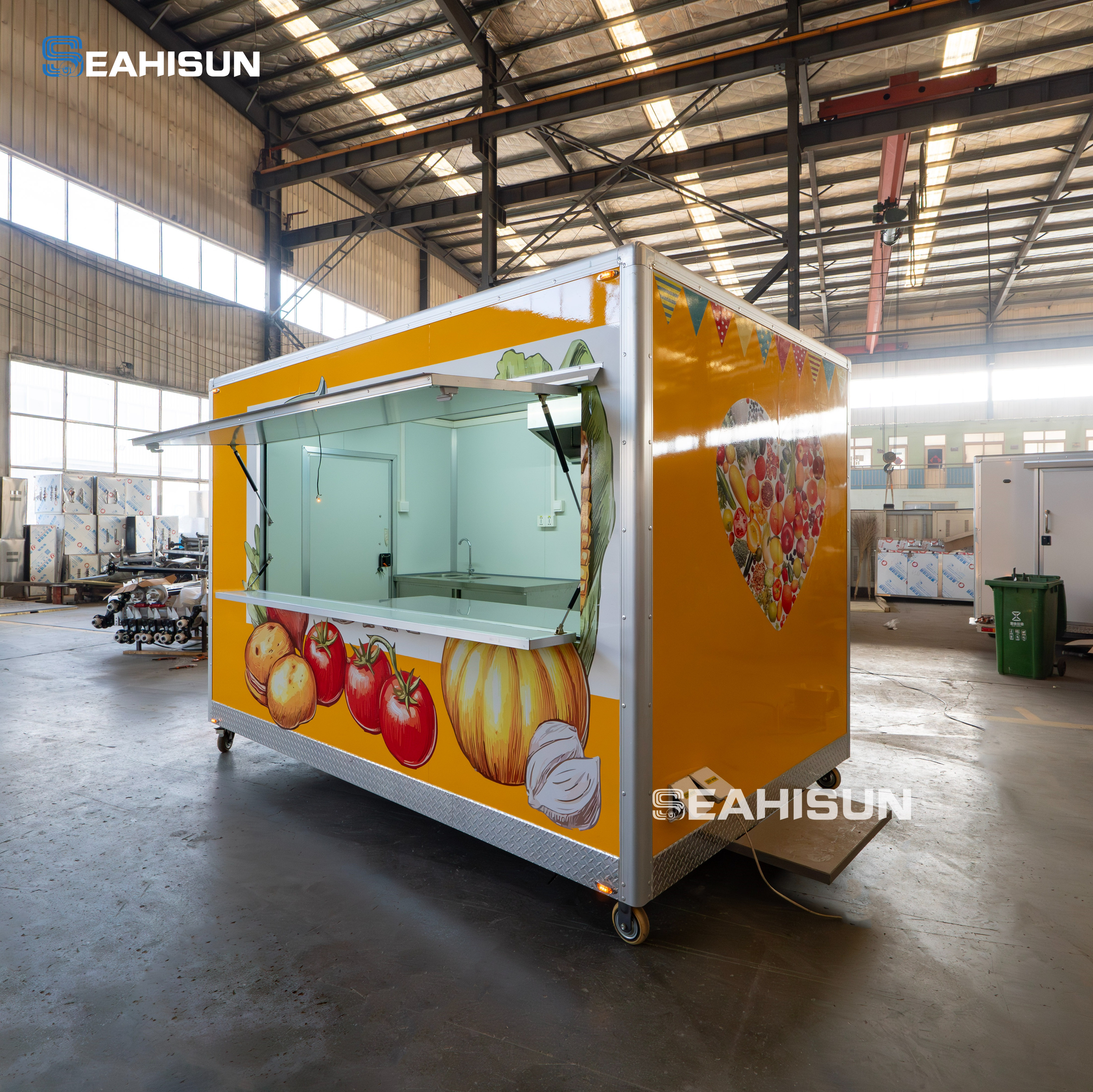
Calculating Utility Loads for a Full Kitchen Trailer Setup
Mapping your electrical infrastructure prevents catastrophic power failures during rush hour. You must document the startup and running wattage of every appliance. Commercial juicers, espresso machines, and display fridges draw massive electrical loads simultaneously. Do not underestimate these figures. Motor-driven appliances require surge power when turning on.
Evaluate your generator sizing carefully. A standard 10kW generator often fails to power a hybrid unit. You will likely need a 15kW or larger unit. Consider the necessity of specialized 50-amp shore power hookups. Relying on standard 30-amp connections limits how many blenders and fryers you can operate concurrently.
Utility Load Example Table
| Equipment Type | Running Wattage | Startup Wattage (Surge) | Voltage Requirement |
| Commercial Cold-Press Juicer | 1,200W | 2,400W | 110V/120V |
| High-Performance Blenders (x2) | 3,600W | 4,500W | 110V/120V |
| Display Refrigeration Unit | 800W | 1,500W | 110V/120V |
| Commercial Espresso Machine | 3,500W | 3,500W | 220V/240V |
Plumbing constraints heavily influence payload limits. Address the reality of high-volume produce washing. Standard concession food trailer water tanks typically hold 30 to 40 gallons. These small tanks are completely insufficient for a high-volume operation. You must continuously wash raw fruits and vegetables.
Calculate your payload impacts meticulously. Upgrading to a 100-gallon water tank adds immense weight. One hundred gallons of water weighs over 830 pounds. When you add heavy commercial appliances, this payload requires structural reinforcement over the axles. You will need a heavy-duty chassis to prevent suspension failure.
Address gas and fire suppression protocols early. Outline the strict regulations for propane tank mounting. Tanks must sit securely on the tongue or in specialized exterior compartments. If you plan on frying or grilling hot food, you must install a Type 1 commercial hood exhaust system. This system requires an integrated fire suppression module to pass local safety inspections.
Layout Optimization: Separating the Juice Bar from the Hot Line
Workflow efficiency dictates your daily stress levels. Design the floor plan using the classic "triangle" method. Adapt it specifically tailored to a narrow mobile environment. Your staff must pivot between the prep station, cooking equipment, and service window without colliding. A linear kitchen design often works best in these tight spaces.
Implement strict temperature zoning to protect your inventory. Ambient heat destroys fresh produce quickly.
- Cold Zone: Position under-counter fridges, ice makers, and prep sinks here. Keep them far away from open flames. This zoning protects produce shelf life and prevents your refrigerators from overworking.
- Hot Zone: Group ranges, fryers, and grills together. Place them directly under the exhaust hood. This maximizes ventilation efficiency. It severely minimizes ambient heat bleed into the cold zone.
Cross-contamination prevention remains non-negotiable. Implementing dedicated three-compartment sinks is mandatory. You must create distinct prep tables for different food types. Health departments enforce strict standards for handling both raw fruits and raw proteins. A dedicated prep table for slicing chicken cannot double as your citrus juicing station.
Layout Configuration Chart
| Zone Designation | Equipment Placed | Primary Function | Key Compliance Rule |
| Cold Prep Area | Produce sinks, blenders, juicers, under-counter fridges | Washing, chopping, and blending raw fruits/vegetables | Must remain isolated from raw meat handling areas. |
| Hot Cooking Area | Fryers, flat-top grills, ranges, exhaust hoods | Cooking raw proteins and heating assembled meals | Requires dedicated Type 1 ventilation and fire suppression. |
| Service/Assembly Area | POS system, warming displays, drink coolers | Taking orders, packaging food, handing out meals | Requires adequate sneeze guards and customer barriers. |
Sourcing Equipment and Managing Health Department Compliance
You must choose commercial equipment over residential appliances. Justify the necessity of NSF-certified equipment immediately. Outline the extreme risks of using residential appliances. They often lead to failed inspections instantly. Using household blenders or fridges voids their warranties once placed in a commercial setting. They suffer rapid burnout under heavy daily use.
Prepare for a strict health department reality check. Address variations in county-by-county commissary requirements. Some counties require daily commissary check-ins. Others allow self-contained operations. You must research your specific jurisdiction.
Highlight common compliance failure points to avoid them. Many builders ignore inadequate hot water recovery rates. If your water heater cannot keep up with continuous dishwashing, inspectors will halt your operation. Improper sneeze guards represent another frequent failure. Furthermore, insufficient gray water holding capacity causes major delays. Your wastewater tank must typically be 15% larger than your fresh water tank.
Understand the strict ventilation realities. Explain how adding a full kitchen dramatically changes the permitting process. A standard beverage cart might only need a simple roof vent. A true full kitchen trailer producing grease-laden vapors triggers complex building codes. You will need signed engineering plans for your hood system.
Evaluating Builders: Custom vs. DIY Retrofitting
Establish strict shortlisting logic when hiring professionals. Define clear criteria for evaluating custom builder quotes. Look closely at warranty lengths. Prioritize builders using high-grade stainless steel build materials over cheap aluminum composites. Demand timeline guarantees in writing. Evaluate their post-sale support infrastructure before signing any contracts.
Analyze the hidden dangers of self-building. The risk of DIY projects remains high. Self-built units frequently fail L&I (Labor and Industries) inspections. Electrical fire risks escalate without certified wiring. Chassis weight imbalances can cause the trailer to sway violently on the highway.
Watch out for red flags in vendor selection. Avoid builders displaying these warning signs:
- Builders who refuse to provide detailed CAD drawings prior to construction.
- Quotes lacking line-item transparency for electrical and plumbing systems.
- Builders unfamiliar with your state's specific mobile food unit codes.
- Manufacturers demanding full payment upfront without milestone inspections.
Conclusion
Building a highly functional hybrid unit represents a serious infrastructure investment. It is definitely not a cheap weekend project. You must balance the demanding electrical loads of high-powered juicers alongside the ventilation requirements of commercial griddles. Proper planning ensures you pass strict health inspections while maximizing your operational workflow.
- Finalize your core menu items completely before purchasing any equipment.
- Consult with your local health inspector early to review preliminary floor plans.
- Calculate your total electrical and payload requirements to size your generator and chassis correctly.
- Hire a certified manufacturer who provides transparent CAD drawings and understands commercial codes.
FAQ
Q: How much power does a combined juice bar and full kitchen trailer need?
A: A hybrid unit typically requires between 10,000W and 15,000W of consistent power. Commercial refrigeration, espresso machines, and high-performance blenders draw massive electrical loads. You must size your generator to handle the simultaneous surge wattage of multiple heavy-duty appliances turning on at once.
Q: Do I need a commercial hood if I only serve juice and light food?
A: It depends on the heat source. Any cooking process producing grease-laden vapor, like grilling burgers or frying bacon, legally triggers the need for a Type 1 hood and fire suppression. Simple heating, boiling, or toasting may only require a basic Type 2 ventilation system.
Q: Can I run a full kitchen trailer off standard 110v outlets?
A: No. A 220v/50-amp electrical service is almost always mandatory for complex hybrid units. Standard 110v outlets cannot safely support multiple commercial refrigeration units running alongside heavy-duty cooking appliances and continuous-use water heaters without constantly tripping circuit breakers.
 注: 建议图片大小150px*50px


