Running diverse, high-demand menus from a single mobile footprint introduces massive operational complexity. Frying, grilling, and high-heat baking all under one roof demand precise structural and mechanical engineering. Upgrading from a simple single-item setup to a complex multi-menu concept requires strict attention to weight distribution. You must carefully balance exhaust capabilities and maximum utility loads to prevent catastrophic failures. This article provides operators and investors with a technical, decision-stage framework. You will learn how to evaluate and specify a commercial mobile unit effectively. We will explore how to design thermal zones safely. These zones must legally support multiple distinct food preparation areas. Ultimately, you will gain the practical knowledge needed to launch a highly profitable, code-compliant mobile kitchen without sacrificing workflow efficiency.
Key Takeaways
- Combining high-heat equipment (pizza ovens) with precision-temp stations (doughnut fryers, ice cream freezers) requires strict thermal zoning and commercial-grade HVAC/exhaust systems.
- Power and payload are the primary limiting factors; a full kitchen mobile trailer requires careful calculation of BTU limits, electrical draw, and axle weight capacities.
- Health and fire code compliance (e.g., Type 1 exhaust hoods, fire suppression systems) is non-negotiable for multi-menu trailers and heavily dictates the final build cost and timeline.
- Evaluating manufacturers should be based on their engineering transparency, warranty terms, and ability to meet local DOT and health department standards, not just base price.
The Multi-Menu Challenge: Defining Operational Requirements
Many first-time operators underestimate the physical limitations of mobile platforms. A standard hot dog trailer cannot easily transition into a high-volume pizza bakery. Basic concession builds simply lack the necessary structural reinforcement. Retrofitting a simple snack food trailer for heavy frying operations often leads to severe ventilation failures. These smaller units lack adequate power panels and proper workflow spacing. You cannot just drop commercial ovens into a small space and expect safe operation.
A successful multi-menu trailer must eliminate cross-contamination completely. It should minimize worker movement during peak service times. Every step a chef takes reduces order fulfillment speed. Efficient designs maintain distinct temperature zones across different cooking methods. We define operational success by how seamlessly your team can pivot between distinct food categories during a busy lunch rush.
You must map your specific menu items to their required commercial equipment. Consider the following equipment demands:
- Doughnuts: They require precise proofing cabinets, commercial fryers, and specialized grease traps. Frying introduces heavy grease-laden vapors into the air.
- Hot Dogs: This menu needs reliable flat-top grills, high-capacity steamers, and rapid-prep condiment stations.
- Pizza: High-BTU ovens (deck or conveyor style) dominate the space. Pizza prep demands dedicated prep coolers and wide dough manipulation surfaces.
- Add-ons: Integrating cold storage requires careful placement. Acting partially as an ice cream trailer means isolating freezers from intense heat sources. Radiant heat can easily overwhelm a compressor, causing premature failure.
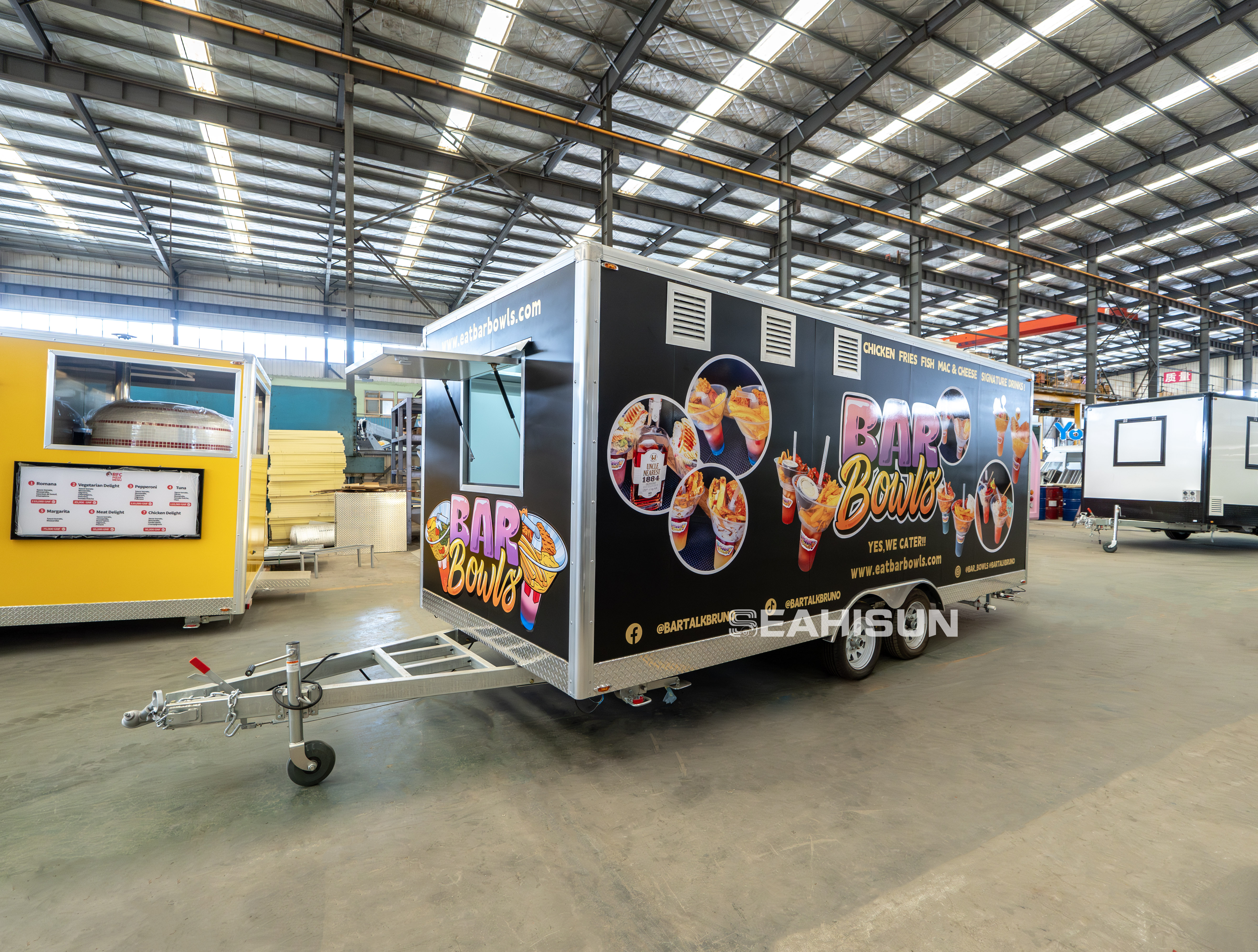
Spatial Engineering & Zoned Workflows
Creating separate environments inside a single metal box requires strategic thermal zoning. A pizza station routinely reaches ambient temperatures exceeding 500°F around the oven doors. Meanwhile, doughnut proofing demands gentle, controlled warmth. Ice cream holding cabinets require extreme cold. Placing a high-heat oven next to an ice cream freezer forces the freezer's compressor to run constantly. You must install physical heat shields and map out aggressive HVAC ventilation to separate these zones.
Order flow and line of sight heavily dictate daily profitability. Your interior structure must allow multiple workers to operate simultaneously. Bottlenecks destroy service speeds. A dual-window serving system often works better than a traditional linear assembly line. One window handles hot food handoffs while the other manages desserts or beverages. Workers should never cross paths while carrying hot oil or heavy pizza peels.
Balancing ingredient storage against daily output is a massive challenge. You must optimize the ratio between fresh/gray water tanks, dry storage, and active prep areas. If you allocate too much space to cooking equipment, you lose ingredient storage. This forces mid-shift restocking, which kills momentum. The layout must guarantee survival through a busy four-hour service period without needing outside replenishment.
Workflow Optimization Chart
| Zone Focus | Primary Equipment | Workflow Placement Strategy | Common Mistake to Avoid |
| High-Heat Prep | Pizza Ovens, Grills | Rear or designated end, directly under Type 1 exhaust hood. | Placing near the service window, exposing customers to high heat. |
| Frying & Vapors | Deep Fryers | Centralized under hood, separated from dough stations. | Mixing grease-heavy zones with dry prep areas. |
| Cold Assembly | Prep Coolers, Freezers | Near the service window for quick topping and handoff. | Positioning compressors next to high-BTU ovens. |
Evaluating Utility Capabilities: Power, Gas, and Payload
Electrical draw often serves as the invisible bottleneck for mobile operators. Generators must handle continuous running wattage and massive peak starting loads. Prep coolers, exhaust fans, fryers, and water heaters frequently cycle on simultaneously. When multiple compressors kick in, the electrical spike can trip breakers instantly. You must calculate the exact amperage required for every single plug and hardwired appliance. Undersizing a generator leads to catastrophic equipment shutdowns during service.
High-capacity menus also necessitate commercial-grade gas routing. You must perform strict BTU calculations for all propane equipment. Commercial gas lines must deliver consistent pressure to multiple high-demand appliances. A gas-powered pizza oven pulls massive BTUs, but it reduces electrical dependency. Electric pizza ovens provide precise temperatures but demand massive generators. You must weigh these trade-offs carefully based on your available payload limits.
Axle rating and weight distribution dictate the lifespan of your unit. Placing heavy equipment unevenly creates a severe risk of chassis failure. Pizza ovens, full 50-gallon water tanks, and oil-filled commercial fryers weigh thousands of pounds. A true full kitchen mobile trailer requires upgraded suspension systems. Moving to dual or triple heavy-duty axles is a mandatory specification. Single axles cannot handle the dynamic stress of a fully loaded multi-menu kitchen bouncing down the highway.
Payload Management Best Practices
- Always calculate water weight (approx. 8.3 lbs per gallon) at maximum capacity.
- Distribute the heaviest equipment directly over the axles, never at the extreme rear or tongue.
- Factor in the weight of raw ingredients (flour bags, meat boxes, oil jugs) into the gross vehicle weight.
- Select aluminum interior wall paneling over heavy steel where legally permitted to save hundreds of pounds.
Navigating Compliance, Safety, and Fire Codes
Running diverse cooking methods triggers the strictest fire codes available. Operating a doughnut food trailer inherently produces grease-laden vapors. You must install a Type 1 commercial exhaust hood. This hood requires an integrated fire suppression system, commonly known as an ANSUL system. Operating flat-top grills and fryers alongside ovens requires massive airflow extraction. Local fire marshals will rigorously inspect these suppression nozzles. They must accurately cover the specific high-risk zones beneath the hood.
Health departments rely heavily on NSF certifications and strict local codes. You need commercial-grade stainless steel surfaces across all prep areas. Wood or porous materials fail inspections instantly. Local codes dictate sink sizes strictly. A three-compartment sink must include adequate drain boards for air-drying pots and pans. Health inspectors also mandate specific hand-washing station placements. These hand sinks must have dedicated splash guards to prevent contaminated water from reaching food prep areas.
Road safety compliance heavily involves the Department of Transportation (DOT). A fully loaded kitchen weighs considerably more than standard cargo. DOT regulations strictly govern braking systems. Trailer brakes must actuate seamlessly with the tow vehicle. Hitch ratings must exceed the Gross Vehicle Weight Rating (GVWR) of the fully loaded unit. Road-legal lighting packages, reflectors, and emergency breakaway chains require precise installation to avoid hefty fines or impoundment.
Sourcing and Shortlisting Manufacturers
Choosing the right fabricator determines your ultimate success or failure. Buyers often weigh the lower upfront costs of imported units against domestic fabricators. Pre-built imports may seem attractive initially. However, custom domestic fabricators typically offer localized compliance guarantees. They understand specific state health codes. Warranty enforcement proves much easier with a domestic partner. Custom engineering ensures your specific spatial and thermal zoning needs are met safely.
You must recognize common red flags in vendor quotes immediately. Beware of manufacturers who refuse to provide detailed CAD drawings or floor plans prior to taking a deposit. Vague specifications should pause any negotiation. If a quote lacks specific details on insulation thickness, steel gauge, or the exact axle brand, walk away. Furthermore, avoid any builder offering absolute "guarantees" of health department approval. Approval remains entirely jurisdictional and depends heavily on local inspectors.
To receive an accurate, binding quote, buyers must provide manufacturers with a comprehensive Request for Proposal (RFP). Use this strict RFP checklist:
- Menu Specifics: Detail every food item, cooking method, and required holding temperature.
- Estimated Volume: Provide realistic projections for peak hourly orders to size tanks and storage.
- Target Jurisdiction: Name the specific city and county health departments governing your operation.
- Tow Vehicle Specs: List the make, model, and maximum towing capacity of your specific truck.
- Utility Preferences: State your preference for propane versus electric, and any generator brand requirements.
Conclusion
Investing in a multi-menu pizza trailer that also handles doughnuts and hot dogs means building a mobile brick-and-mortar restaurant. You are condensing a massive commercial kitchen into a tiny footprint. Success heavily hinges on conservative utility planning. You cannot cut corners on electrical sizing or axle ratings. Strict workflow zoning ensures your staff can actually execute the menu during chaotic events.
Partnering with a transparent builder remains your best defense against failure. Look for fabricators who design for code compliance first, rather than aesthetic appeal. They must prioritize structural integrity and safety. Your next immediate action should be drafting a highly detailed equipment specification sheet. Take this sheet and consult directly with your local health department and fire marshal. Gathering their preliminary feedback before contacting manufacturers will save you immense time and capital.
FAQ
Q: Can I run a pizza oven and a deep fryer on the same exhaust hood?
A: Yes, but fire codes dictate strict placement. Deep fryers produce heavy grease-laden vapors, requiring a Type 1 hood with fire suppression. You must place the fryer under the suppression nozzles. Consult your local fire marshal, as some jurisdictions require physical baffle separation between grease appliances and open-flame pizza ovens.
Q: What is the minimum size for a full kitchen mobile trailer supporting three distinct menus?
A: Supporting three distinct menus safely requires significant space for equipment, storage, and personnel. You typically need an 18-to-24-foot trailer as an absolute baseline. Anything smaller risks severe workflow bottlenecks, dangerous heat accumulation, and inadequate water storage for health code compliance.
Q: How much fresh and gray water capacity do I need for high-volume service?
A: Capacity depends on sink usage and specific menu demands. High-volume setups generally require a minimum 30-to-40-gallon fresh water tank. Health codes typically mandate that your gray water tank must be at least 15% larger than your fresh water supply to prevent overflow.
Q: Do I need a commercial driver's license (CDL) to tow a fully loaded kitchen trailer?
A: It depends entirely on the Gross Combined Weight Rating (GCWR) of your tow vehicle and trailer. If the combined weight exceeds 26,000 pounds, federal regulations usually require a CDL. Multi-menu setups are exceptionally heavy, so always verify your specific state laws and vehicle weight ratings.
 注: 建议图片大小150px*50px


