 注: 建议图片大小150px*50px

丨
注: 建议图片大小150px*50px


Views: 0 Author: Site Editor Publish Time: 2026-06-27 Origin: Site


Upgrading to a custom build or finalizing a purchase requires balancing upfront capital against long-term durability. You must make incredibly smart investments from day one to ensure profitability. You face a critical operational decision regarding interior materials. It goes far beyond simple aesthetics or matching your exterior branding. Vague manufacturer claims about "stainless" finishes often hide cheap, degrading materials beneath a shiny surface. These material choices severely impact your daily operations, cleaning times, and health inspection results.
We will explore why a 304 stainless steel food trailer stands as the absolute industry standard for durability and compliance. You will discover exactly how specific alloys prevent rust and ensure absolute code compliance over years of heavy use. We will also outline exactly how to verify material quality before you sign any contract or hand over your hard-earned deposit.
The reality check found on Reddit and industry forums feels incredibly harsh. New operators frequently complain about fresh trailer builds rusting within months of operation. People wrongly assume "stainless" guarantees a pristine, rust-free environment. It is merely a broad metal category covering dozens of different alloys. Inferior interior materials create massive hidden operational costs over time.
You face immediate downtime when cheap walls warp behind hot grills. Closing your service window to replace rusted backsplashes kills your weekly revenue completely. Sanitation bottlenecks also ruin your operational efficiency. Pitted walls trap thick grease over time. Rusted seams harbor dangerous bacteria. End-of-shift cleaning quickly turns into a prolonged, frustrating chore. Your staff spends hours scrubbing surfaces instead of prepping for tomorrow.
Beware the common industry bait and switch. Budget builders frequently use lower-grade metals to maximize their profit margins. They might install 430-grade steel or thin aluminum sheeting. These mimic high-end finishes perfectly on a brightly lit showroom floor. However, they degrade rapidly under severe commercial stress. You must demand total transparency from your builder regarding exact material specifications.
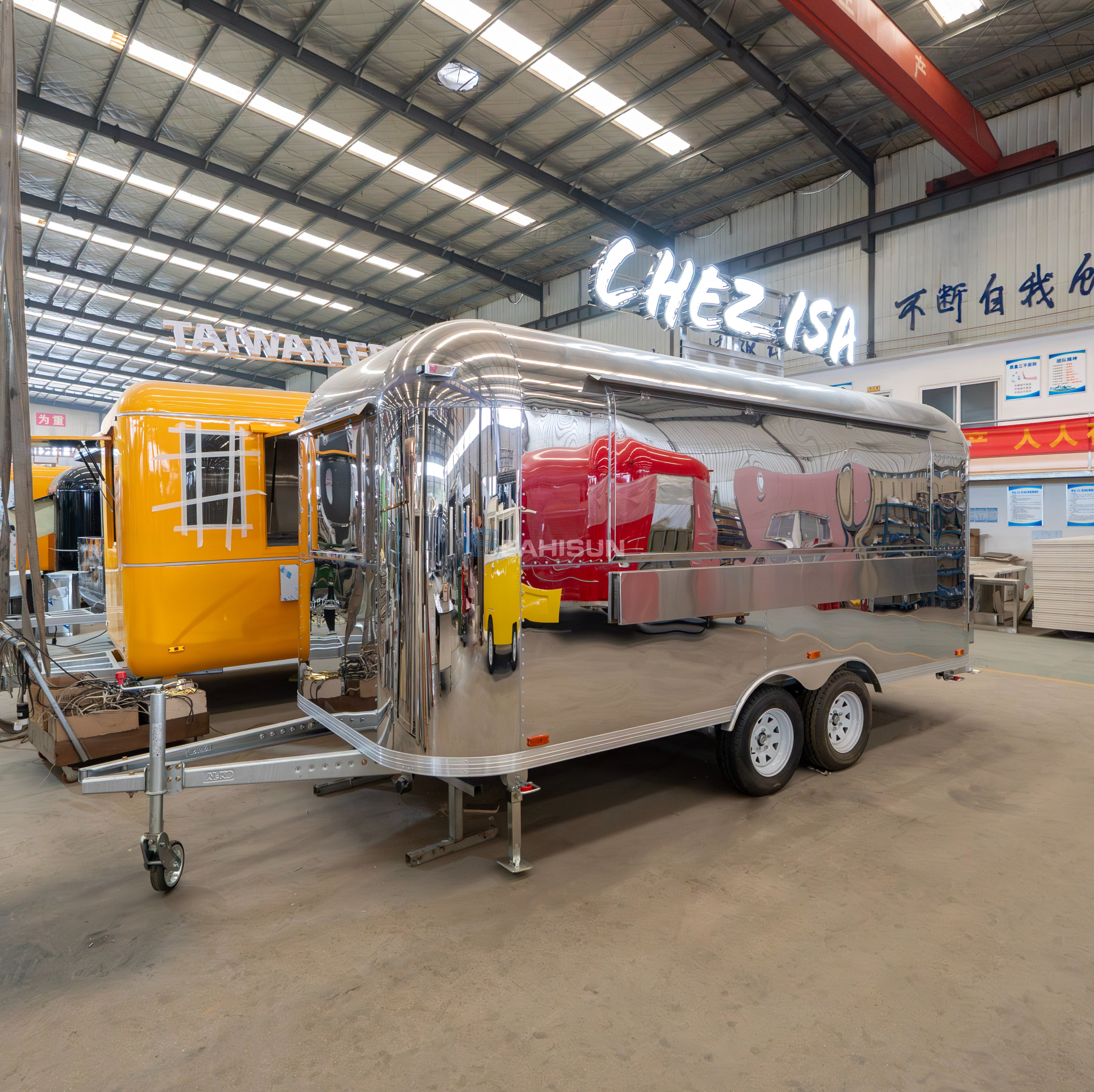
Let us clearly define proper 304 stainless steel. It features a specific 18/8 chemical composition. This means it contains 18% chromium and 8% nickel. The nickel content acts as an absolute game-changer. It provides active, aggressive corrosion resistance against harsh elements. Moisture, acidic tomato sauces, and road salt cannot penetrate this chemical barrier easily. This exact chemistry builds a reliable food-safe trailer.
Next, consider the 430 stainless steel compromise. Builders love it because it costs significantly less. However, 430 completely lacks nickel. It relies solely on chromium for surface protection. This makes it highly susceptible to surface rust. Humid environments and winter road salt destroy 430 surfaces incredibly fast.
We must also briefly examine aluminum alternatives. Aluminum weighs less but dents incredibly easily. It oxidizes over time, leaving a dull, powdery residue across your walls. You will find it much harder to sanitize properly over several years.
You can verify materials quickly using the simple magnet test. Grab a standard refrigerator magnet. Grade 430 steel is highly magnetic. The magnet will snap right onto the wall. High-quality 304 steel remains largely non-magnetic. The magnet will slide off or barely stick.
| Material | Composition | Corrosion Resistance | Magnet Test Result |
|---|---|---|---|
| 304 Stainless Steel | 18% Chromium, 8% Nickel | Excellent (Handles acid and salt) | Non-magnetic (or very weak) |
| 430 Stainless Steel | 17% Chromium, 0% Nickel | Low (Prone to surface rust) | Highly magnetic |
| Aluminum | Aluminum alloy | Moderate (Oxidizes, dulls easily) | Non-magnetic |
Demystifying gauge thickness remains vital for your success. Metal thickness uses a reverse numerical scale. A lower number signifies a much thicker sheet of metal. You need the right thickness in the correct operational zones to prevent damage.
Here is a breakdown of standard metal gauges used in manufacturing:
Heat deflection relies entirely on proper metal thickness. Commercial cooking equipment pumps out massive BTUs during peak hours. Thin 22-gauge metal warps rapidly under this intense heat. Warped walls break your silicone seals instantly. Broken seals allow raw grease to seep behind your walls. You avoid these structural failures by mandating 18-gauge steel in hot zones across your commercial kitchen trailer.
Common Mistake: Never accept a builder placing 22-gauge metal directly behind a charbroiler. The extreme heat will ripple the wall paneling within your first month of operation.
Health code compliance dictates your long-term operational survival. Local health departments follow strict, uncompromising guidelines. They use NSF-aligned standards for inspecting mobile kitchens. Inspectors demand smooth, non-absorbent surfaces throughout the entire prep area. Your walls must be easily cleanable at all times.
Installation methods matter tremendously for compliance. A proper stainless steel interior requires seamless, rigid construction. Builders should weld and polish the structural seams carefully. Overlapped, riveted joints create disastrous grease traps. Rivets catch food debris and block your daily scrubbing pads. Welded seams ensure hot grease slides right off the wall.
Chemical resistance represents another major inspection factor. You will use harsh commercial degreasers daily. Quaternary sanitizers break down weak metals over time. Grade 304 handles these harsh chemicals perfectly. It never pits, clouds, or discolors. This resilience ensures your hygienic food trailer passes strict health inspections year after year. Watch out for cheap metals turning cloudy after simple bleach exposure.
Let us compare Capital Expenditure (CapEx) against Operating Expenses (OpEx). Upgrading to genuine 304 steel increases your upfront build cost by roughly 15 to 20 percent. You might hesitate at this initial price tag. However, you must factor in massive long-term maintenance savings. Cheap walls require constant scrubbing, rust removal, and eventual replacement. You save thousands in daily operational expenses over a five-year period by investing wisely upfront.
Resale value retention heavily favors premium materials. Buyers on the secondary market are incredibly smart. They actively hunt for well-built, reliable units. A true 304-grade trailer commands a premium price on Facebook marketplace and industry forums. You can recover much of your initial upgrade cost when you eventually sell the unit.
Insurance and liability benefits also play a significant role. Stainless walls present a significantly lower fire risk. Wood-backed FRP panels burn easily. Premium metals reduce your monthly insurance premiums. You also face lower foodborne illness liabilities. Clean, non-porous walls stop dangerous bacteria dead in their tracks.
You must protect your investment before signing anything. Follow this exact checklist to verify your mobile kitchen trailer materials.
Best Practice: Always request a physical material sample from the factory floor before finalizing your purchase. You can perform the magnet test on this sample directly.
Opting for a premium interior serves as a defensive business strategy, not a luxury. Surviving the rigorous daily grind of the mobile food industry requires heavy commercial materials. You cannot compromise on your foundation.
Take action today. Confront your builder about exact metal grades before signing a deposit. Protect your operational capital by investing in materials built to outlast your toughest operational days.
A: You can easily verify the material using a basic magnet test. Grade 304 is non-magnetic or only very weakly magnetic due to its high nickel content. If a magnet strongly sticks to the wall, the builder likely used cheaper 430 grade. Always advise your manufacturer to provide official material certifications before finalizing the purchase.
A: Weight is a valid concern, as steel weighs more than aluminum. However, experienced builders account for this extra weight. Proper axle sizing and strict payload capacity planning easily mitigate the issue. As long as the chassis and suspension are rated for commercial loads, the superior durability outweighs the slight weight increase.
A: Yes, it has limits. Exposure to high-concentration bleach, chlorine, or harsh abrasive pads can strip its protective layer. Using steel wool leaves microscopic iron particles behind, which cause surface rust. You should use dedicated stainless steel cleaners and soft microfiber cloths to maintain its active corrosion resistance.
A: It depends on the zone. Use 18-gauge for hot areas, prep zones, and spaces behind fryers. Its thickness resists denting and severe heat warping. You can safely use 20-gauge for ceilings and low-impact walls to balance overall durability and trailer weight.

