 注: 建议图片大小150px*50px
  注: 建议图片大小150px*50px

Views: 0 Author: Site Editor Publish Time: 2026-09-15 Origin: Site


Deploying a food vending unit in a pristine environment presents unique operational challenges. Unlike urban street vending, you face a strict set of hurdles here. A scenic area food trailer must balance rigid local environmental regulations against high-volume tourist foot traffic. Success in these locations requires a highly intentional approach to exterior design. Specifically, you must perfect the shape and color to gain permit approval. Operating in nature leaves little room for error. You must engineer a highly focused menu. It needs to maximize throughput within a strictly limited interior space. This guide provides a clear framework for evaluating essential equipment specifications. We will explore how to ensure full regulatory compliance. You will learn practical strategies to blend in aesthetically. By the end, you will understand how to capture consistent daily revenue seamlessly.
Every tourism food trailer requires special operational criteria. You cannot simply tow a standard city unit into a national park. Park authorities prioritize conservation and visitor experience above all else. Let us examine the fundamental constraints guiding this commercial decision.
Scenic spots frequently lack direct utility hookups. Evaluating your off-grid capabilities is mandatory before finalizing any exterior design. You must consider how you will power the unit independently. Many nature reserves strictly prohibit loud, open-frame generators. You often need quiet inverter generators or heavy-duty solar battery setups. Furthermore, you must plan for oversized greywater tanks. Discharging waste into natural environments carries severe legal penalties. We recommend calculating your daily water usage carefully. You should size your holding tanks to handle at least 15% more volume than your freshwater tanks.
Park authorities and heritage boards hold immense power over vending permits. They frequently reject standard box-style concession trailers. Your unit must enhance the surrounding vista. It should never distract visitors from the natural or historic views. Park boards often review design proposals through a strict architectural lens. They look for softer lines, natural materials, and muted branding. We advise submitting preliminary sketches to the local board early. This saves you from buying a unit they will ultimately reject.
Tourist crowds do not arrive in steady, predictable streams. They move in massive, sudden surges. A tour bus arrives and instantly creates a queue of fifty people. Your service window size must accommodate this reality. Your internal ergonomic workflow needs flawless optimization. Two employees must pivot, prep, and serve without bumping shoulders. Rapid transaction times keep the queue moving. If visitors wait too long, they will abandon the line. They want to enjoy the scenery, not stare at a menu board.
Selecting a shape involves a careful trade-off. You must balance visual appeal, towing aerodynamics, and interior cubic volume. Certain shapes win fast approval from heritage boards. Other shapes offer maximum storage for complex menus. Let us compare the main options below.
| Trailer Shape | Aesthetic Appeal | Interior Capacity | Ideal Vending Scenario |
|---|---|---|---|
| Airstream-Style | Premium, Retro, Highly Photogenic | Moderate (Curved Walls Limit Space) | Heritage Sites, Artisanal Menus |
| Round/Oval | Approachable, Unique, Modern | Minimal (1-2 Operators Max) | Pedestrian Parks, Single-Item Menus |
| Traditional Square | Utilitarian, Industrial | Maximum (Fits Standard Equipment) | State Parks, High-Volume Menus |
An Airstream food trailer delivers a distinct, premium vibe. It looks highly professional and nostalgic. These units encourage organic social media sharing among tourists. The naturally weather-resistant aluminum shell withstands harsh outdoor elements brilliantly.
However, this shape presents distinct operational challenges. The curved interior walls limit standard commercial equipment placement. You cannot easily push a square commercial refrigerator flush against a rounded wall. This gap wastes precious floor space. You will likely face higher initial fabrication costs. Custom stainless steel fabrication is often necessary to match the interior curves. They perform best for artisanal concepts. We see them thrive at heritage sites and premium tourist destinations.
A round food trailer offers an exceptionally approachable silhouette. It looks fun, modern, and completely non-threatening to natural landscapes. These units are excellent for locations featuring strict footprint limitations. They navigate narrow park access roads easily.
The main drawback is minimal storage capacity. You generally only have room for one or two operators inside. You must optimize every square inch of counter space. You cannot store days worth of inventory. Daily restocking becomes a strict requirement. They remain best suited for pedestrian-heavy parks and botanical gardens. They excel when serving single-item menus.
The traditional square trailer maximizes your interior cubic space. It accommodates standard commercial kitchen equipment perfectly. Everything sits flush against the straight walls. It supports complex menus and larger staff numbers easily.
Unfortunately, the utilitarian appearance often faces pushback. Park boards view them as industrial intrusions. You will require significant exterior customization. You must invest in high-quality cladding or custom vinyl wraps. This effort helps meet scenic area aesthetic standards. They remain best for high-volume state parks. If your location has fewer visual restrictions, the square unit maximizes your daily revenue potential.
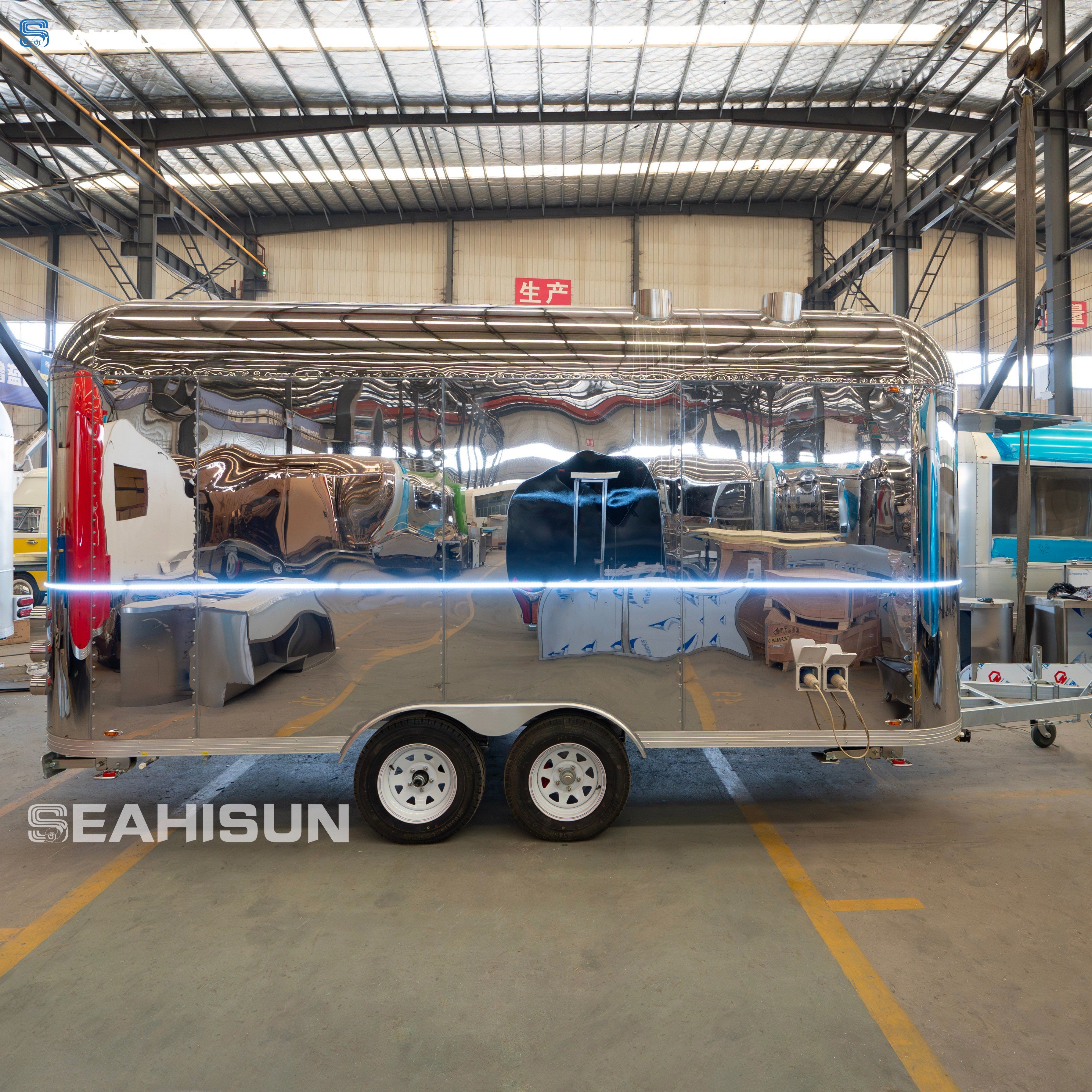
Color choices directly impact permit approval rates. They also drive your customer acquisition in outdoor settings. An inappropriate color palette will trigger immediate rejection from local zoning authorities. You must choose colors intentionally.
Earth tones and matte finishes work best for national parks. You want to complement the natural backdrop. Using muted greens, soft browns, or wood cladding helps immensely. Matte blacks and charcoal grays reduce solar glare. They satisfy stringent environmental aesthetic boards. Your goal is visual harmony. The unit should look like it naturally belongs there.
Different rules apply to beach boardwalks or amusement-focused areas. In these environments, you want strategic contrast. Vibrant colors draw attention from a distance. Bright aquas, sunny yellows, or crisp whites work beautifully near the ocean. They signal refreshment and fun. However, you must still avoid neon colors. Neon clashes heavily with natural daylight.
Highly reflective surfaces cause problems. Unpainted, polished stainless steel creates dangerous glare for passing drivers. It can also disrupt local wildlife. We strongly advise controlling your reflectivity. Opt for high-quality vinyl wraps instead. Powder-coated metal finishes provide excellent durability against harsh weather. They offer a muted, elegant look.
Best Practices for Exterior Design:
Common Mistakes to Avoid:
Your menu dictates your equipment needs. Your equipment dictates your trailer size and power requirements. In scenic areas, complex cooking must be avoided. You should heavily favor high-margin, low-prep items. Heavy grease exhaust and massive energy consumption complicate your off-grid operations.
Operating a coffee trailer offers incredible year-round viability. Coffee provides exceptionally high gross margins. Tourists seek warm beverages during brisk morning hikes. They want iced lattes during summer afternoons. This flexibility protects your cash flow.
You face specific operational realities here. You need robust water filtration systems. Hard water destroys commercial espresso machines quickly. You also need highly stable power. An espresso boiler cycling on pulls massive amperage. A small footprint handles this concept beautifully. Coffee equipment fits easily within compact round or airstream models.
An ice cream trailer captures massive demand in summer tourist spots. Families flock to cold treats after walking nature trails. Transaction times are incredibly fast. You scoop, serve, and collect payment in seconds.
The main operational reality involves temperature control. You need heavy-duty, climate-adapted refrigeration. You must install reliable backup power. A grid failure or generator stall causes catastrophic inventory loss within hours. The footprint requirements are very manageable. You need moderate space for chest freezers. You require almost zero food prep counters. This frees up valuable walking space for your operators.
Tourists actively seek out a "taste of the region." They want local flavors. Offering pre-packaged or easily assembled local foods works perfectly. Think about local artisanal cheeses, pre-baked pastries, or smoked jerky.
This approach sharply reduces interior cooking requirements. You eliminate the need for heavy fryers and griddles. You minimize grease exhaust entirely. You produce far less greywater. This concept proves highly adaptable to any trailer shape. You rely primarily on elegant display cases. You use simple warming or cooling units instead of active cooking lines. It keeps your operation clean, quiet, and highly profitable.
| Menu Concept | Power Draw Profile | Water Usage Profile | Ventilation Needs |
|---|---|---|---|
| Specialty Coffee | High (Espresso Heaters) | High (Steaming/Rinsing) | Minimal |
| Ice Cream / Gelato | Moderate (Constant Compressor) | Low (Scoop Dipper Well) | Minimal |
| Grab-and-Go Snacks | Low (Display Coolers) | Low (Handwashing Only) | None |
Launching successfully requires careful risk mitigation. You cannot afford surprises after taking delivery of your unit. Park regulations differ wildly from county to county. You must verify every detail before spending capital.
Always confirm if the scenic area allows gas generators. Many places ban them entirely due to noise pollution. If they only provide shore power, calculate the exact amperage limit. You must ensure your equipment list stays strictly within that power budget. You also need written clarity on greywater disposal rules. Some parks require you to haul waste out entirely.
You must shortlist custom builders carefully. Look for manufacturers possessing proven experience. They need to understand local health department codes thoroughly. They must grasp transport department weight regulations. A poorly balanced trailer creates dangerous towing conditions on winding mountain roads. Ask for references from operators currently working in similar scenic environments.
Never authorize fabrication based on a rough sketch. Follow these critical steps during the blueprint phase:
Taking these steps ensures your workflow functions smoothly before any metal is actually cut.
Launching a vending unit in a scenic environment represents a highly lucrative opportunity. You must balance strict regulatory constraints against pure commercial viability. Aligning your exterior shape and color with local aesthetic guidelines is your first major hurdle. You must choose designs blending gracefully into natural landscapes. Engineering a streamlined, low-prep menu solves your internal space and power challenges.
Focus heavily on concepts requiring minimal active cooking. Secure your power and water strategies before finalizing any design. Your next step involves requesting precise aesthetic guidelines from the targeted park board. Sketch your basic layout, secure your necessary permits, and then confidently commission your custom build.
A: Round or Airstream-style trailers are frequently preferred by park boards due to their softer silhouettes and ability to blend into natural landscapes better than standard box trailers.
A: It depends on local ordinances. Many nature reserves prohibit loud gas generators due to noise and emission pollution, requiring operators to use battery banks, solar panels, or dedicated shore power hookups.
A: Always request the specific aesthetic guidelines from the local tourism or park board before designing. Most require earth tones, matte finishes, and limit the size of high-contrast branding.
A: Beverages (specialty coffee, artisanal lemonades) and low-prep snacks (ice cream, pre-baked local pastries) offer the highest margins and fastest transaction times, which are critical during tourist rush hours.

