Many new operators mistakenly focus entirely on the exterior wrap design. They prioritize custom lighting over basic structural integrity. This approach often leads to catastrophic financial losses. Sourcing an overseas export food trailer offers an attractive profit margin for ambitious entrepreneurs. However, you measure the true price of a mobile kitchen at the port of entry. The local inspection office will also determine your final operational success. U.S. Customs and Border Protection (CBP) seizures happen frequently. Health department rejections occur often as well. Buyers frequently import units lacking mandatory legal and safety credentials. To successfully import and operate a mobile kitchen, you must move past cosmetic features. Buyers must rigorously verify chassis legality first. Regional safety compliance and utility standards require strict verification. You must perform these vital checks before you transfer any funds overseas. Compliance forms the bedrock of a sustainable business.
Key Takeaways
- A valid 17-digit VIN requires the manufacturer to possess a recognized World Manufacturer Identifier (WMI).
- DOT compliance demands specific standards for chassis weight, lighting, and tires; a DOT sticker alone is insufficient without manufacturer registration.
- A true CE food trailer requires whole-vehicle certification, not just CE marks on individual fryers or fridges.
- Electrical mismatch (e.g., 220V vs. 110V) and non-compliant wiring gauges are the leading causes of local health and fire inspection failures.
- Third-party pre-shipment inspections are a mandatory step for risk mitigation in overseas manufacturing.
The Financial Risk of Ignoring Import Compliance
Customs officers hold strict authority over imported commercial vehicles. Importing a non-compliant unit triggers severe legal consequences. You risk immediate port seizures at the border. Daily holding fees accumulate rapidly while units sit in limbo. These demurrage charges can easily bankrupt a small business. Customs may issue mandatory destruction orders for illegal frames. They can also force a costly return-to-sender directive. Passing customs represents only step one in your journey. Local authorities guard the operational licenses tightly. The DMV and local health departments demand verifiable manufacturing standards. They reject builds failing these core legal tests.
Health inspectors focus strictly on public safety standards. They evaluate cleanability, ventilation, and plumbing systems meticulously. A non-compliant sink layout guarantees an instant inspection failure. Inspectors measure the exact dimensions of your service windows. They check the spacing between cooking equipment and combustible walls. Failing these localized tests means zero daily revenue.
Many buyers fall into a classic sunk cost fallacy. You often see this painful trap discussed on buyer forums. People believe they saved thirty percent on the purchase price initially. Then they spend double the trailer's original value later. They must retrofit illegal frames to pass local codes. Rewiring non-compliant electrical panels drains operational budgets quickly. Plumbers charge premium rates to replace illegal gas lines. Treat compliance as your absolute priority from day one. Failing to do so ruins profitable business models entirely.
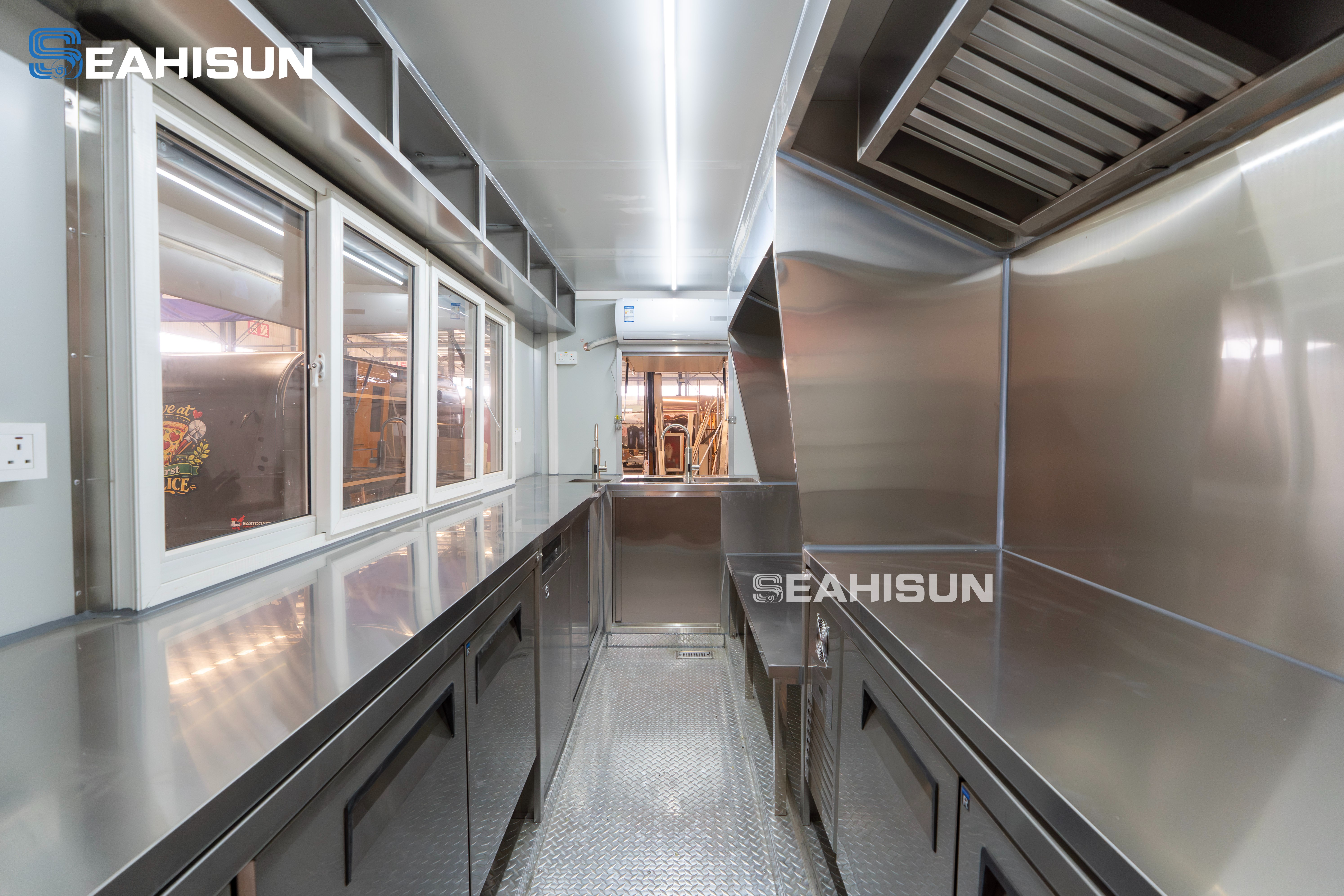
Verifying VIN and DOT Food Trailer Standards
Decoding the Vehicle Identification Number (VIN) is absolutely critical. A legal VIN requires a World Manufacturer Identifier (WMI). You must ensure your manufacturer actually holds a registered WMI. Buyers can verify this data through international registries online. In the US, check the NHTSA database directly. This ensures the local DMV recognizes your VIN food trailer instantly. Without WMI verification, your trailer remains legally unregistered. Unregistered vehicles cannot obtain license plates anywhere. You also cannot secure commercial liability insurance.
The Department of Transportation enforces strict highway safety mandates. Trailer axles endure immense stress during highway transit. They must feature a certified Gross Axle Weight Rating (GAWR). Overloaded axles snap at high speeds. This causes catastrophic road accidents. DOT-stamped tires feature specialized rubber compounds. They resist heat buildup during heavy commercial towing. Standard passenger tires fail under commercial kitchen weights.
A legitimate DOT food trailer requires more than a simple sticker. You must evaluate these key physical areas rigorously:
- Verify the tire load index matches the total trailer weight perfectly.
- Check exterior safety lights for proper amber and red coloration.
- Ensure the trailer tongue features stamped weight capacity ratings.
- Confirm the manufacturer holds an active DOT registration number.
- Examine the safety chain specifications for proper tensile strength.
Instruct the manufacturer to supply their registered DOT plant number. Demand exact axle specifications in writing. Do this before finalizing any factory build sheet. Cross-reference their plant number with the federal registry. This step prevents counterfeit DOT claims entirely.
Evaluating the CE Food Trailer for European Markets
European markets demand stringent safety verifications. Deceptive marketing plagues the overseas manufacturing industry. Factories often slap a CE logo on their brochures. They purchase cheap, CE-marked deep fryers and refrigerators. They install these appliances into an uncertified steel frame. They then market the entire unit as CE certified. This represents a dangerous half-truth. European customs agents inspect the overarching structural certification. They look for the whole-vehicle type approval (WVTA). A true CE food trailer requires this comprehensive whole-vehicle certification. Selling a unit without WVTA violates European import laws.
Importing into Europe requires specific formal documentation. You absolutely need a valid Certificate of Conformity (COC). The COC acts as your primary legal shield. Customs agents will reject units lacking this crucial document. The document proves the frame meets structural safety codes. It verifies the braking system works under heavy loads. The WVTA process requires extensive laboratory testing. Factories must submit engineering schematics to a notified body.
Always verify compliance directly with the source. Request testing laboratory report numbers from the builder. You can verify the declaration of conformity yourself. Contact the issuing European notified body directly via email. Confirm the certificate matches your exact chassis model.
Comparing CE Certification Levels for Food Trailers | Certification Element | Component-Level CE (Deceptive) | Whole-Vehicle CE (WVTA) |
| Appliance Compliance | Only fryers and fridges possess marks. | All internal systems pass rigorous testing. |
| Chassis & Towing Frame | No structural testing performed. | Frame, axles, and brakes fully certified. |
| Customs Clearance | Likely seized or held at the port. | Smooth entry via valid COC documentation. |
| Local Road Registration | Impossible to register legally. | Accepted by national transport authorities. |
Electrical Wiring and Gas Systems: The Make-or-Break Inspection
Electricity systems vary drastically across the globe. You must match your build to your destination country. North American grids provide 110V/120V at 60Hz. European and Australian grids supply 220V/240V at 50Hz. Connecting a European panel to an American generator is disastrous. It destroys compressors and fryers instantly. It also creates extreme fire hazards within the enclosed walls. Ensure your export trailer specifies the correct frequency exactly.
Component standards dictate your inspection success rates. Inspectors check the physical labels on your breaker panels. North American fire marshals look for UL or ETL marks. These laboratories test components against severe thermal stress. European inspectors demand strict CE declarations for all circuitry. Outlets and wiring gauges must meet these exact safety codes. Using cheap, unmarked wires leads to rapid insulation melting. This causes hidden electrical fires behind the stainless steel walls.
Gas line safety requires equal diligence and scrutiny. Commercial gas systems require specialized engineering. High-pressure propane systems behave unpredictably under transit vibrations. Local regulations dictate acceptable commercial gas pipe materials. Some municipalities mandate rigid black iron pipes exclusively. Iron pipes withstand road vibrations better. Others allow flexible copper tubing for specific appliance connections. Fire marshals require mandatory pressure test certificates before opening. They pressurize the system to check for microscopic leaks. A single leak causes immediate permit denial.
Mandate a complete electrical schematic in your commercial contract. Require a localized gas line diagram too. These documents prove the factory understands local compliance codes.
The Pre-Shipment Audit for an International Food Truck
Documenting the build process mitigates extreme financial risks. Never transfer your final balance blindly. Create a strict shortlist of required photographic evidence. Demand clear video proof before releasing your final payment. Request a live video walk-through from the factory floor. Have the representative focus on critical safety components. Zoom in on the VIN plate rivets. Ensure they look professionally installed. Ask for high-resolution images of the DOT tire sidewalls. Inspect the breaker box wiring neatness visually through photographs. Sloppy wiring indicates poor overall quality control. Check the structural welds on the chassis closely. Bad welds compromise the entire structural integrity.
Structure your commercial invoice to protect your investment. Your commercial invoice serves as a legal contract. It dictates the exact terms of your international purchase. Vague descriptions lead to customs delays. List every required certification explicitly on this document. Specify the VIN, DOT status, and whole-vehicle CE marks. Include exact electrical specifications on the bill of lading. This prevents bait-and-switch tactics. Unethical overseas builders often employ these tricks. Legally binding invoices give you recourse during disputes.
Third-party verification provides ultimate peace of mind. Hiring an independent quality control inspector is mandatory. Agencies like SGS or TÜV specialize in overseas manufacturing audits. Send them to the factory of origin immediately. They will verify your international food truck against the contract before container loading. They cross-reference the physical unit against your contract specifications. They test the electrical load capacity safely. They verify the correct installation of certified gas lines. Their detailed report empowers you to demand corrections. Paying a small inspection fee saves thousands later.
Conclusion
Sourcing an export unit overseas is a high-stakes procurement process. You must treat the manufacturer as a true compliance partner. They are much more than just a metal fabricator. Never assume regulatory compliance based on a glossy sales brochure. Brochures rarely reflect the final delivered product reality.
Always verify manufacturer credentials through official government databases. Demand transparent documentation for every major structural component. Protect your capital through meticulous commercial contract terms. Refuse to accept vague promises regarding safety certifications.
Your next step is critical for procurement success. Download a comprehensive pre-purchase compliance checklist today. You should also consult an experienced import broker. Do this before placing any factory deposit overseas. Professional guidance prevents catastrophic border rejections.
FAQ
Q: Can I get a VIN for an imported trailer after it arrives?
A: Obtaining a VIN after importation is highly difficult. You usually must title it as a custom-built trailer. This process requires extensive local inspections. The DMV frequently rejects these applications if structural documentation is missing. It is always safer to import a unit with a pre-registered VIN.
Q: What makes a food trailer DOT approved?
A: A unit achieves DOT approval through specific chassis standards. The trailer requires certified axles with proper weight ratings. Tires must feature official DOT safety stamps. Exterior lighting and safety reflectors must meet strict federal placement rules. The manufacturer must also hold a registered DOT plant number.
Q: Does a CE mark guarantee my trailer is legal in the UK or EU?
A: A simple CE sticker does not guarantee legality. You need a full Certificate of Conformity (COC) for the entire vehicle. Local authorities require comprehensive gas and electrical sign-offs. Component-level marks on appliances fail to satisfy whole-vehicle road and safety regulations.
Q: Why do I need a wiring diagram before buying an international food truck?
A: Local health and fire inspectors demand a wiring diagram. They use it to verify safe electrical load distribution. The diagram proves compliance with strict municipal fire codes. Without it, inspectors cannot confirm proper grounding or correct wire gauges, resulting in immediate permit denial.
 注: 建议图片大小150px*50px


