 注: 建议图片大小150px*50px

丨
注: 建议图片大小150px*50px


Views: 0 Author: Site Editor Publish Time: 2026-07-07 Origin: Site


Operating a mobile doughnut business is highly profitable. However, frying dough inside a compact, moving space introduces rigid engineering and compliance challenges. Many entrepreneurs underestimate these physical demands. Unlike standard coffee carts, a doughnut food trailer requires commercial-grade frying equipment. It also needs heavy-duty ventilation and precise temperature controls for proofing and glazing. A successful build requires balancing high-volume output with strict fire safety codes, weight limits, and efficient workflow. This guide breaks down the technical setup required to evaluate and spec a mobile doughnut operation safely. You will learn how to select the right fryers, design an optimal layout, and ensure compliance. We also cover essential plumbing and electrical configurations to keep your business running smoothly.
Success begins by defining your operational model early. You must decide how your product reaches the customer. Clarify the difference between "fry-on-site" and "glaze-and-sell" setups. A fry-on-site model requires raw dough storage, proofers, and commercial fryers. This approach demands heavy infrastructure. Alternatively, a glaze-and-sell model relies primarily on display cases and holding cabinets. You fry off-site in a commissary kitchen, then finish the product on the road.
Your chosen model directly dictates your space requirements. The dimensions of your mobile dessert trailer impact your equipment choices heavily. A longer footprint accommodates automated donut machines. A shorter footprint forces you to rely on standard open-pot floor fryers. Space versus capacity is a constant battle. You must balance adequate walking room against high-volume production capabilities.
Avoid the risk of under-speccing your unit. Standard concession trailers fail when tasked to handle intense heat, grease, and moisture. Continuous doughnut production lines emit significant greasy vapors. Standard walls warp under constant humidity. Light-duty floors bow under the weight of heavy fryers. You must reinforce the chassis from the beginning.
| Feature | Fry-On-Site Model | Glaze-and-Sell Model |
|---|---|---|
| Equipment Needs | Fryers, proofers, Type 1 hoods | Holding cabinets, display cases |
| Space Requirement | High (16ft - 20ft+) | Low to Medium (10ft - 14ft) |
| Power Draw | Very High (Heavy generator) | Moderate |
| Compliance Complexity | Strict (Fire marshal approval) | Standard (Basic health codes) |
Common Mistake: Many operators buy a generic shell, assuming they can simply drop a fryer inside later. This mistake triggers massive renovation costs. Upgrading walls to stainless steel and reinforcing floors post-build wastes time.
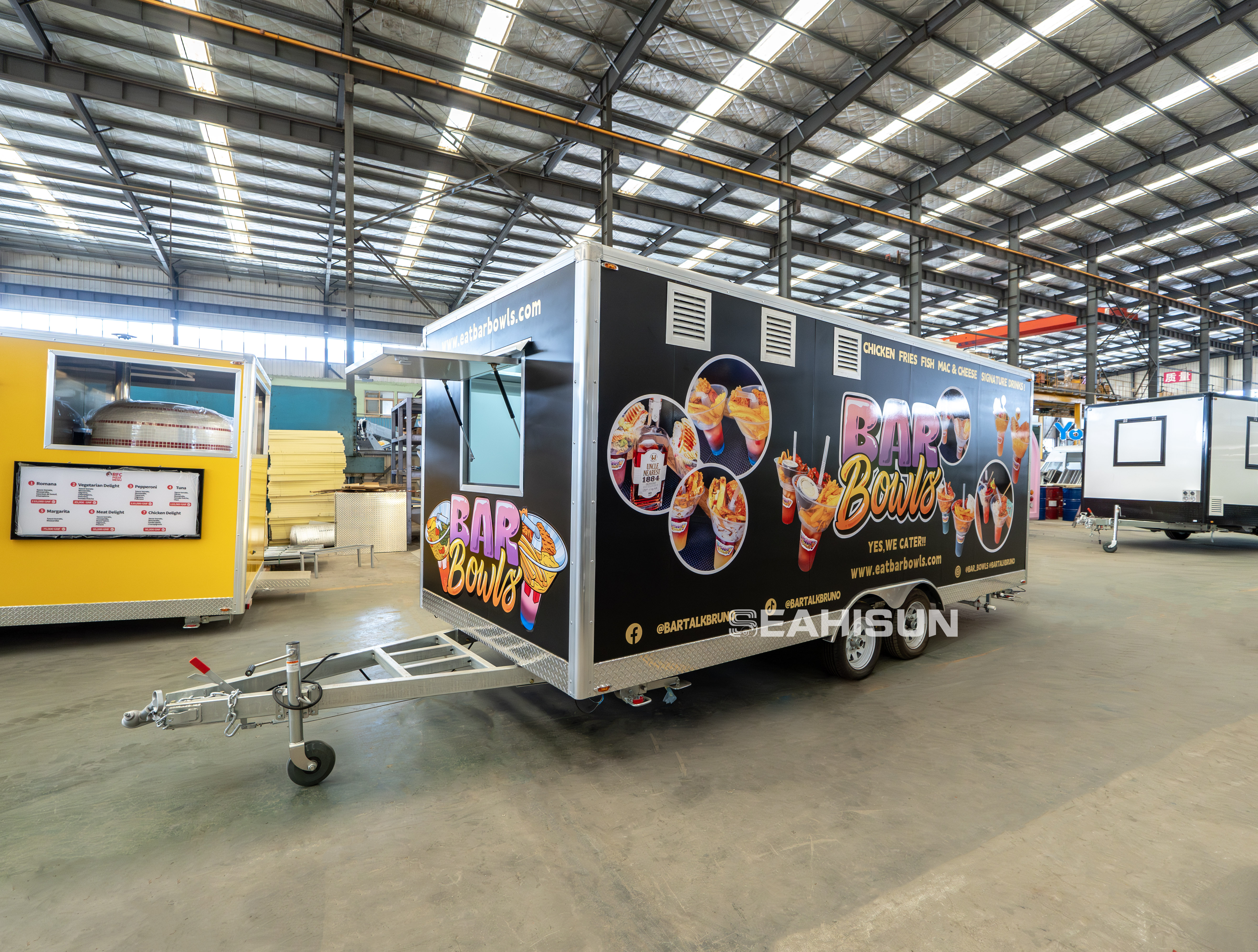
Choosing the right fryer setup defines your workflow. You must evaluate automated systems against manual alternatives. Automated systems, like Belshaw-style drop fryers, offer incredible consistency. They reduce labor needs significantly. However, they demand more linear counter space. Flat-bottom manual fryers work better for yeast or artisan donuts. Manual frying requires more hands-on flipping but uses vertical floor space better.
Next, decide between gas and electric power. Propane (LP) fryers are the industry standard for mobile units. Propane provides faster temperature recovery times. Dropping cold dough into hot oil plummets the temperature. Gas burners rebound quickly. Electric fryers draw massive amounts of power. Running multiple electric fryers requires an unrealistically large generator. Propane does require secure exterior tank mounts, but the efficiency tradeoff is worth it.
Ventilation and fire suppression are absolutely non-negotiable. Fire marshals strictly scrutinize grease-producing equipment. You must install a Type 1 Commercial Hood. This hood handles grease-laden vapors safely. Local codes enforce this requirement rigidly.
Furthermore, you need an ANSUL system. This automatic fire suppression system sits above the fryers. It uses specific chemical agents to smother oil fires. Installation costs run high, and you need certified inspection clearances annually. Do not cut corners here.
Finally, calculate your exhaust fan requirements. You must size the CFM (Cubic Feet per Minute) accurately. Grease baffle filters catch airborne oil droplets. The fan must clear intense heat quickly. However, an oversized fan creates a negative pressure vacuum. This vacuum slams doors shut and starves pilot lights of oxygen. Proper make-up air vents solve this pressure imbalance.
Doughnut preparation requires precise environmental control. You need dedicated proofing and retarding space. Integrating under-counter or half-height proofing cabinets saves valuable room. These cabinets activate yeast dough in a climate-controlled environment. You can set specific humidity levels for optimal rising.
Insulation is critical in this zone. You must protect proofing dough from the ambient heat of your fryers. A mobile kitchen gets incredibly hot. Uninsulated proofers will over-activate your dough. Keep the hot cooking zone physically separated from the warm proofing zone.
Refrigeration and dry storage keep your operation compliant. Use NSF-certified under-counter prep tables. They provide safe surfaces for applying glazes, toppings, and fillings. The refrigerated base holds dairy-based icings safely below 41 degrees Fahrenheit.
Calculate your dry storage volume carefully. Flour, sugar, and heavy shortening boxes take up massive space. Install secure, lipped shelving. You must prevent heavy items from shifting during transit. A spilled 50-pound box of flour ruins a busy morning.
Sanitation setups are tightly regulated by health departments. You must adhere to specific plumbing layouts. Follow these mandatory sanitation steps:
Best Practice: Use marine-edge stainless steel counters near your glazing station. The raised lip prevents sticky glaze run-off from dripping onto the floor. This small detail saves hours of mopping.
The serving window dictates your speed of service. Positioning the Point of Sale (POS) accurately is crucial. You want to minimize the steps taken by the operator. A poorly placed register causes bottlenecks. Place the POS directly adjacent to the pickup window. Keep the transition from the glazing station to the display case incredibly short.
Choosing the right bakery display cases matters. You must decide between heated and ambient displays. Heated displays keep certain products warm, but they can dry out sensitive glazes. They can also melt delicate icings quickly. Ambient displays showcase the product beautifully without altering the texture. Most doughnut operators prefer ambient bakery cases.
Use angled shelving inside your cases. Angled displays show the top of the doughnut to the customer. Add bright LED lighting to draw foot traffic. Warm white LEDs make golden-fried dough look irresistible. Customers eat with their eyes first.
Aesthetic integration ties the whole concept together. A purpose-built donut trailer utilizes specific window sizing. Massive concession windows invite customers into your process. Seeing the frying and glazing action builds anticipation. Use exterior fold-out counters to enhance customer interaction. These counters provide a space for napkins and sugar packets. A well-lit, stainless-steel interior projects a strong image of perceived cleanliness.
Mobile kitchens carry hidden engineering constraints. Weight distribution is the most critical factor. Commercial fryers, heavy exhaust hoods, and water tanks add massive payload. Furthermore, carrying 50+ pounds of liquid frying oil changes your center of gravity. You must demand heavily reinforced flooring. Dual or triple 7,000-pound axles are standard for this equipment weight.
| Equipment Type | Estimated Weight Range (lbs) | Placement Impact |
|---|---|---|
| Commercial Floor Fryers (x2) | 300 - 500 | Requires heavy floor reinforcement |
| Frying Oil (Operational) | 70 - 150 | Sloshing hazard during transit |
| Type 1 Hood & Exhaust Fan | 200 - 400 | Top-heavy; requires roof support |
| Fresh & Gray Water Tanks (Full) | 400 - 800 | Impacts axle balance heavily |
Electrical load balancing requires careful planning. Even in a gas-powered full kitchen trailer, you need substantial electricity. The electrical draw comes from proofers, AC units, exhaust fans, and holding cabinets. You require a heavy-duty, quiet inverter generator. Typically, operators need a 9kW to 12kW+ unit. Mounting this generator on a reinforced tongue platform distributes weight safely.
Grease management and plumbing dictate your daily tear-down routine. Size your gray water tanks 15% larger than your fresh water tanks. Health departments require this extra capacity. Frying produces heavy grease particulate. Install accessible baffle systems to prevent grease from clogging your plumbing lines.
Establish strict protocols for securing used fryer oil. Hot oil is incredibly dangerous during transit. Allow long cooling periods before moving the vehicle. Use secure rendering tanks or drain the oil into heavy-duty transport caddies. Never drive while fryers contain hot, unsecured oil.
Selecting the right manufacturer dictates your long-term success. You must weigh pre-built options against custom configurations. Pre-built units offer faster deployment. They work well if you need to launch quickly. However, they are often generic. They usually lack the specific linear workflow needed for high-volume donuts.
Custom builds demand a higher upfront cost. Yet, they are optimized for labor efficiency. A custom builder tailors the hood size precisely to your fryer specs. They also design the plumbing to handle local health department variances perfectly.
Vetting manufacturers requires due diligence. Ask for detailed CAD drawings. These drawings should show equipment payload distribution. You need to know the exact tongue weight. Verify their experience navigating NFPA codes for mobile units. Fire suppression is a specialized skill. Demand transparency on warranty terms. Custom hood fabrications and gas line installations must carry strong guarantees.
Your next step is finalizing your menu. Menu decisions dictate production volume expectations. You cannot request accurate quotes without these numbers. Volume dictates the fryer size. Fryer size dictates the hood length. The hood length consequently defines your entire footprint. Lock in your menu before calling builders.
Building a profitable doughnut operation requires strict attention to engineering. The entire vehicle is built around the fryer and the hood system, not the other way around. You must accommodate heavy equipment, manage massive heat output, and ensure safe oil transport. Always prioritize workflow efficiency and fire safety compliance over minor aesthetic savings. A beautiful exterior cannot compensate for an undersized exhaust fan or a failing suspension. Take your finalized equipment list and consult directly with a certified mobile kitchen builder to ensure your project meets all local codes.
A: Yes, if you are frying on-site. Any equipment producing grease-laden vapors requires a Type 1 hood. You must also install an automatic fire suppression system to meet local fire marshal codes safely.
A: It is possible, but generally discouraged. Electric fryers require a massive generator to maintain oil temperatures effectively. Propane is the industry standard because it offers faster heat recovery and lowers your overall electrical draw.
A: Never transport hot oil in open vats. Allow adequate cooling periods first. Use secure metal lids with heavy-duty latches. For maximum safety, drain the cooled oil into secure transport caddies before moving the vehicle.
A: Typically, a 14ft to 18ft footprint is the minimum requirement. This length comfortably fits dual fryers, proofing cabinets, a 3-compartment sink, and display cases while providing enough walking room to adhere to clearance codes.

