Campsite amenities have evolved dramatically over the last decade. We no longer rely solely on basic fire rings to prepare evening meals. Today, glampers and RV enthusiasts expect fully equipped mobile culinary stations right at their sites. They seek comfort and variety in their outdoor dining experiences.
Balancing this guest demand for premium meals presents real operational challenges. You must navigate logistical realities daily. These include utility constraints, harsh weather exposure, and strict health compliance standards. Finding the right camping site food trailer requires careful planning to avoid workflow friction. You cannot simply park a commercial kitchen in the woods and expect it to function flawlessly.
This guide establishes a clear evaluation framework for your next mobile kitchen investment. We will explore how to select a unit maximizing both utility and safety. You will learn to align technical specifications perfectly to your specific operational or personal footprint.
Key Takeaways
- Utility dictates design: Your choice of trailer depends entirely on your site’s power (30/50 amp vs. off-grid) and water infrastructure.
- Application determines category: Distinguish between a dedicated BBQ trailer for high-volume resort catering and a modular outdoor kitchen for private campsite cooking.
- Compliance is non-negotiable: Implementing a mobile catering unit requires navigating local health codes, fire setbacks, and wastewater management protocols.
Evaluating the Business Case for a Resort Food Trailer
Introducing a resort food trailer transforms the typical guest experience. Campers deeply appreciate on-site dining options after a long day of hiking. A dedicated setup drives secondary revenue streams and frequently increases overall site bookings. Families prefer locations offering convenient meal solutions.
However, you must weigh these benefits against everyday operational friction. Managing a remote kitchen involves significant logistical demands. Staffing requires careful scheduling, especially during peak weekend hours. You must also account for daily maintenance routines. Cooking equipment demands rigorous cleaning to prevent grease buildup. You should implement strict daily checklists to keep operations running smoothly.
Site planning dictates your ultimate success. You must analyze the physical space required for maneuvering and deploying the rig. We recommend conducting a thorough spatial audit before making any purchase.
- Maneuvering Space: Ensure access roads accommodate the turning radius of longer trailers.
- Leveling Ground: Identify firm, flat pads capable of supporting heavy commercial equipment.
- Awning Reach: Calculate overhead clearance for service windows and protective awnings.
- Customer Queuing: Designate safe, clearly marked areas for guests to line up away from traffic.
Risk assessment plays a critical role in your planning phase. Identify potential liabilities early to protect your guests and staff. Grease management remains a primary concern in wilderness settings. Poorly stored food waste attracts local wildlife. Bears and raccoons pose serious threats to unsecured campsites. You must implement bear-proof disposal systems immediately. Furthermore, consider off-season storage logistics. You will need secure, weather-resistant facilities to protect your investment during winter months.
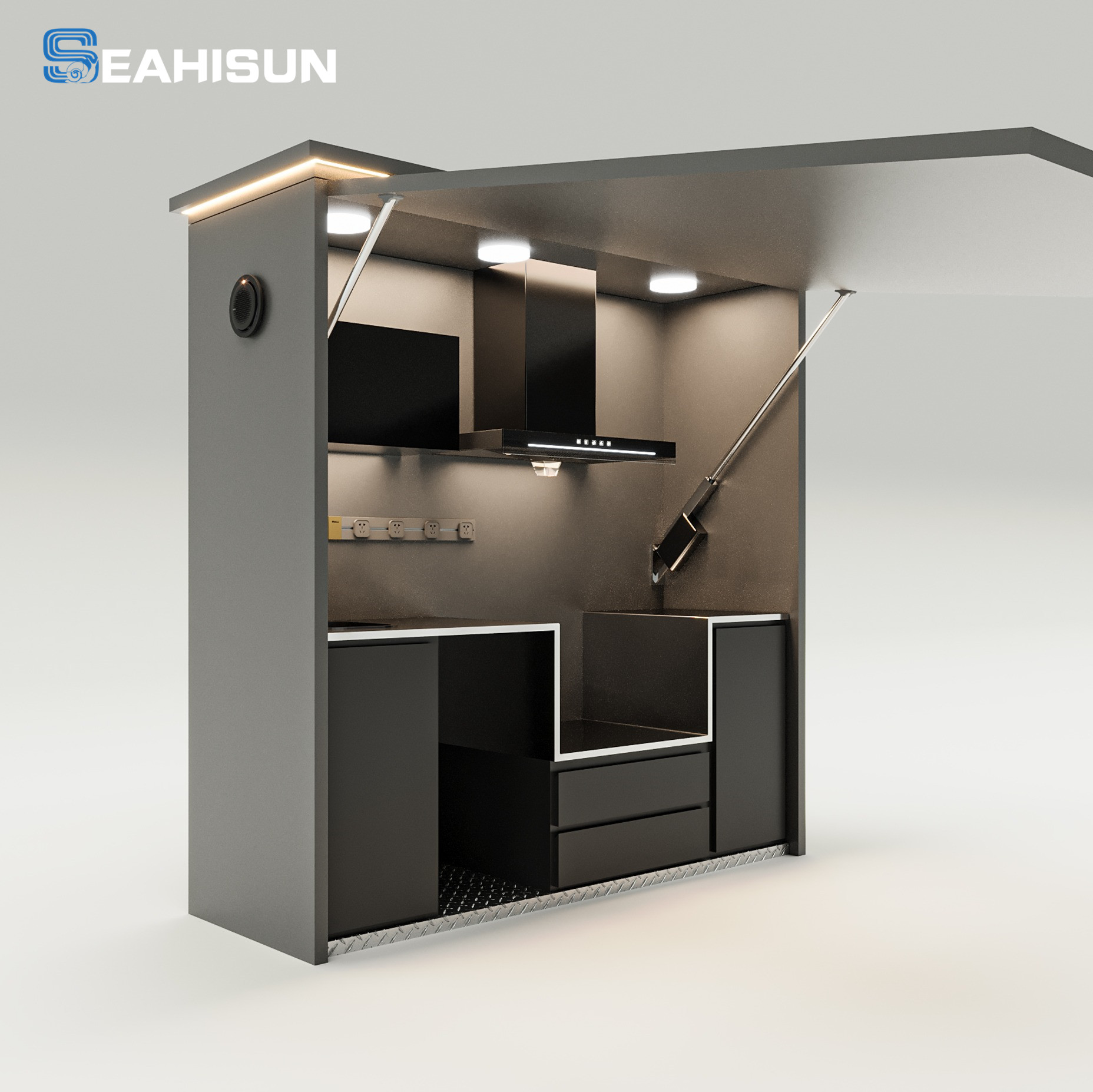
Comparing Outdoor Kitchen and Mobile Catering Unit Categories
Understanding the distinct categories of cooking trailers helps you narrow your options. Each category serves a specific purpose and guest demographic. We break them down to clarify their best applications.
The Compact Outdoor Kitchen Trailer
This category focuses on high-end RV glampers or small-scale private campsites. An outdoor kitchen prioritizes convenience and compact design. They integrate seamlessly into existing camp setups.
- Best for: Family camping trips, boutique glamping sites, and off-grid weekend warriors.
- Key Features: They typically feature pull-out griddles like Blackstone setups. You will find modular prep stations and compact refrigeration units.
- Advantage: These units draw very little utility power. They run efficiently on portable solar generators or basic 30-amp hookups.
The Dedicated BBQ Trailer
When you need to feed large crowds outdoors, a BBQ trailer steps up to the task. These units handle heavy smoke and intense heat.
- Best for: High-volume weekend events, resort smokehouse menus, and competitive cooking.
- Key Features: They boast integrated offset smokers and open-flame grills. You will also find heavy-duty ventilation systems installed.
- Advantage: They utilize fire-safe materials exclusively. Their layout maximizes airflow for managing wood and charcoal fires safely.
The Full-Scale Mobile Catering Unit
This category essentially replicates a commercial restaurant kitchen on wheels. A mobile catering unit handles complex menus and rapid service.
- Best for: Large resort operations, wedding venues, and corporate event hosting.
- Key Features: They feature fully enclosed prep areas. They support multi-zone cooking using deep fryers and ranges.
- Advantage: They utilize commercial-grade, NSF-certified stainless steel surfaces. This ensures fast cleaning and strict health code compliance.
Below is a quick comparison chart to help you visualize the operational differences:
| Category | Primary Application | Power Demand | Cooking Style |
| Compact Outdoor Kitchen | Private sites, Glamping | Low (12V / 30-Amp) | Griddle, light prep |
| Dedicated BBQ Trailer | Events, Smokehouses | Medium (Propane heavy) | Smoking, open flame |
| Mobile Catering Unit | Resorts, Large Venues | High (50-Amp / Dual Fuel) | Frying, baking, multi-zone |
Critical Specifications: Power, Water, and Off-Grid Capabilities
Technical specifications determine how efficiently your trailer operates in the field. You must match your equipment to your site's available infrastructure. Guesswork here leads to blown fuses and dry water tanks.
Electrical Infrastructure
Mapping your power draw stands as your first critical task. You must calculate the simultaneous load of your equipment. Commercial refrigeration, high-pressure water pumps, and LED lighting draw substantial current. You cannot run all these on a standard extension cord.
Evaluate your shore power options carefully. Standard 50-amp RV hookups provide reliable, consistent energy for most catering units. If your site lacks grid access, you must explore off-grid alternatives. Investing in robust solar arrays offers quiet, renewable power. You pair these panels with lithium battery banks to store energy for evening service. Dual-fuel generators serve as excellent primary or backup power sources.
Plumbing and Wastewater Management
Water systems require meticulous planning. Sizing your fresh and grey water tanks correctly prevents mid-service interruptions. Base your tank capacity strictly on your daily service volume. A coffee and pastry setup needs far less water than a full-service grill.
Four-season campsites demand specialized winterization features. Freezing temperatures destroy standard plumbing lines quickly. You should specify heated underbellies for your trailer chassis. Install insulated PEX lines throughout the unit. These upgrades keep your water flowing even during sub-zero mountain mornings.
Durability and Construction Materials
Outdoor environments punish weak construction. Evaluating frame types remains essential for long-term survival. Aluminum frames resist rust beautifully in high-humidity or coastal regions. They also reduce the overall towing weight significantly. Conversely, steel frames provide unmatched structural rigidity. You want steel if you tow your rig over rugged, off-road terrain.
Dust and weather sealing protect your sensitive cooking components. Exposed burners and electrical panels fail quickly when infiltrated by fine camp dust. Ensure your manufacturer uses industrial-grade rubber gaskets on all exterior doors and storage compartments.
Health, Safety, and Site Compliance Standards
Navigating regulatory frameworks ensures your operation remains open and legal. Wilderness settings do not exempt you from safety protocols. In fact, remote locations often invite stricter scrutiny regarding fire and sanitation.
Zoning and Permitting Realities
You must navigate local health department classifications early in your planning. Jurisdictions classify temporary food service structures very differently from permanent buildings. Some counties require seasonal permits. Others demand separate event-based licenses. Always consult your local zoning board before deploying a commercial unit on private resort land.
Fire Safety and Setbacks
Fire safety demands absolute strictness in forested environments. Open-flame BBQ trailers present obvious risks. You must understand mandatory clearance zones thoroughly. Local fire marshals dictate exact distances between propane tanks and combustible materials. You must keep open flames far away from surrounding forestry. Maintain significant setbacks from guest tents, wooden cabins, and RV parking pads.
Sanitation Requirements
Sanitation requirements dictate your interior layout. Commercial setups must include specific mandatory fixtures. Three-compartment sinks represent a universal requirement for dishwashing. You must also install dedicated, easily accessible handwashing stations for your staff. Grease trap regulations vary by county, but you should always incorporate them. Dumping untreated grease into a campsite septic system causes catastrophic blockages.
- Best Practice: Schedule weekly grease trap pumping with a certified local waste management company.
- Common Mistake: Using residential-grade hoses for fresh water supply. Always use NSF-certified, food-grade potable water hoses to prevent chemical leaching.
Shortlisting Logic: Choosing Your Campsite Food Trailer
Selecting the final unit requires disciplined logic. The market offers countless configurations. You must filter these options through your specific operational reality.
Needs-to-Features Mapping
Do not overbuy equipment you will never use. Match the trailer's capacity to your realistic daily peak volume. If you serve fifty guests a weekend, you do not need a dual-vat commercial fryer. Scale your prep surfaces to your specific camping group size or resort capacity. A streamlined menu allows for a smaller, more maneuverable footprint.
Custom Build vs. Turnkey Solutions
You face a choice between custom fabrication and turnkey solutions. Weighing the immediate availability of pre-built units makes sense for tight deadlines. Turnkey models arrive ready to deploy. However, custom-fabricated trailers offer profound workflow advantages. Custom builders design the prep lines around your exact menu. They place refrigeration exactly where your chefs need it.
Vendor Evaluation Criteria
Choosing the right manufacturing partner protects your operation long-term. Look for vendors who demonstrate clear transparency.
- Warranty Terms: Demand clear terms, especially concerning off-road or heavy commercial use. Standard warranties often void if taken off paved roads.
- Replacement Parts: Confirm the availability of replacement components. Post-sale technical support saves you during critical breakdowns.
- Lead Times: Understand delivery logistics clearly. Custom builds take time. Factor these lead times into your seasonal opening dates.
Conclusion
A successful mobile culinary deployment relies entirely on preparation. You must align the unit's technical specifications directly with your site's environmental realities. Utility constraints, terrain, and local regulations dictate your most critical decisions. Choosing the right setup transforms a basic campground into a premium hospitality destination.
Take immediate action by conducting a comprehensive site audit. Map your exact utility access points today. Speak directly with your local health and fire departments to verify compliance standards. Only after confirming these details should you begin requesting quotes or engaging custom fabricators for your new project.
FAQ
Q: Do I need a commercial health permit to operate a campsite food trailer?
A: Yes, if you sell food to the public. You must distinguish between personal family use and commercial resort operations. Local jurisdictions maintain distinct variations regarding "mobile food establishments." Always verify specific requirements with your county health department before serving guests.
Q: Can an outdoor kitchen trailer operate entirely off-grid?
A: Yes, they can operate off-grid successfully. This requires specific investments in propane systems for high-heat cooking. You will also need robust solar panel arrays and heavy-duty inverter setups to power refrigeration and water pumps reliably.
Q: What is the standard lead time for a custom BBQ trailer?
A: Industry averages typically range between 8 and 16 weeks. However, seasonal supply chain variations impact these timelines heavily. Spring orders often experience longer delays. We recommend placing custom orders well before your peak camping season begins.
Q: How do you manage wastewater for a mobile catering unit at a campsite?
A: You must utilize self-contained grey water tanks sized appropriately for your volume. Strict proper dump station protocols apply. You must never discharge grey water directly onto the ground. Always transport wastewater to approved municipal or resort dumping facilities.
 注: 建议图片大小150px*50px


