Transitioning a traditional or home-based bakery into a bakery pop-up food trailer requires a major shift in operational focus. You must move away from static storefront presentation to mobile durability. Taking delicate pastries on the road introduces unique environmental stresses. Standard commercial displays often fail in these harsh mobile environments. Road vibration rapidly degrades basic structural joints. Fluctuating ambient temperatures overwhelm standard compressors. Furthermore, strict power limitations dictate exactly what equipment you can safely run.
We built this guide to provide a vendor-agnostic framework for evaluating display cabinets and lighting systems. You will learn how to navigate power draws, thermal management, and equipment mounting. This knowledge helps you protect your margins and pass strict health inspections. By engineering your layout carefully, you can maximize visual merchandising within a highly compact footprint.
Key Takeaways
- Mobile display cabinets require specialized shock-absorption mounting and heavy-duty compressors that standard storefront cases lack.
- Selecting between dry, refrigerated, or dual-temperature cases dictates your trailer’s total power draw and generator sizing requirements.
- Lighting choices directly impact perceived freshness; specify LEDs with a Color Rendering Index (CRI) of 90+ to accurately highlight pastry textures.
- Health department compliance for a mobile setup mandates specific NSF certifications and integrated sneeze guards, distinct from temporary farmer's market tents.
Standard vs. Mobile: Why Storefront Cases Fail in a Bakery Trailer
Many operators mistakenly purchase standard restaurant equipment for their mobile setups. They quickly discover that static equipment fails under the stress of transit. Mobile environments demand specialized engineering.
Vibration and Structural Integrity
Road travel introduces constant, punishing vibration. This relentless shaking degrades standard silicone seals found in static bakery cases. Once seals fail, cold air escapes, and internal humidity fluctuates wildly. Worse, structural fatigue compromises standard plate glass. Hit a pothole, and standard glass can easily shatter over your inventory. You must specify tempered, shatter-resistant glass. Additionally, the chassis mounts require heavy-duty vibration dampening. Rubber-isolated mounting brackets absorb road shock before it reaches the delicate compressor lines.
Ambient Temperature Fluctuations
A pastry food cart operates in much harsher climates than a climate-controlled storefront. Think about a hot blacktop parking lot in July. A storefront case expects the surrounding room to be 72°F (22°C). Mobile cases often fight ambient temperatures exceeding 100°F (38°C). Standard compressors run continuously under these conditions until they overheat and fail. To maintain safe food temperatures below 41°F (5°C) in summer heat, you need up-rated compressors. Look for tropicalized condensing units designed specifically for high-ambient environments.
Weight Distribution
Static displays often utilize heavy materials like stone, marble, or thick structural steel. Installing a massive, stone-clad display case on one side of a trailer creates severe operational risks. Uneven weight distribution causes axle strain and uneven tire wear. It also leads to severe towing instability, creating sway at highway speeds. You must prioritize lightweight aluminum framing and balanced floor-plan engineering to keep your towing dynamics safe.
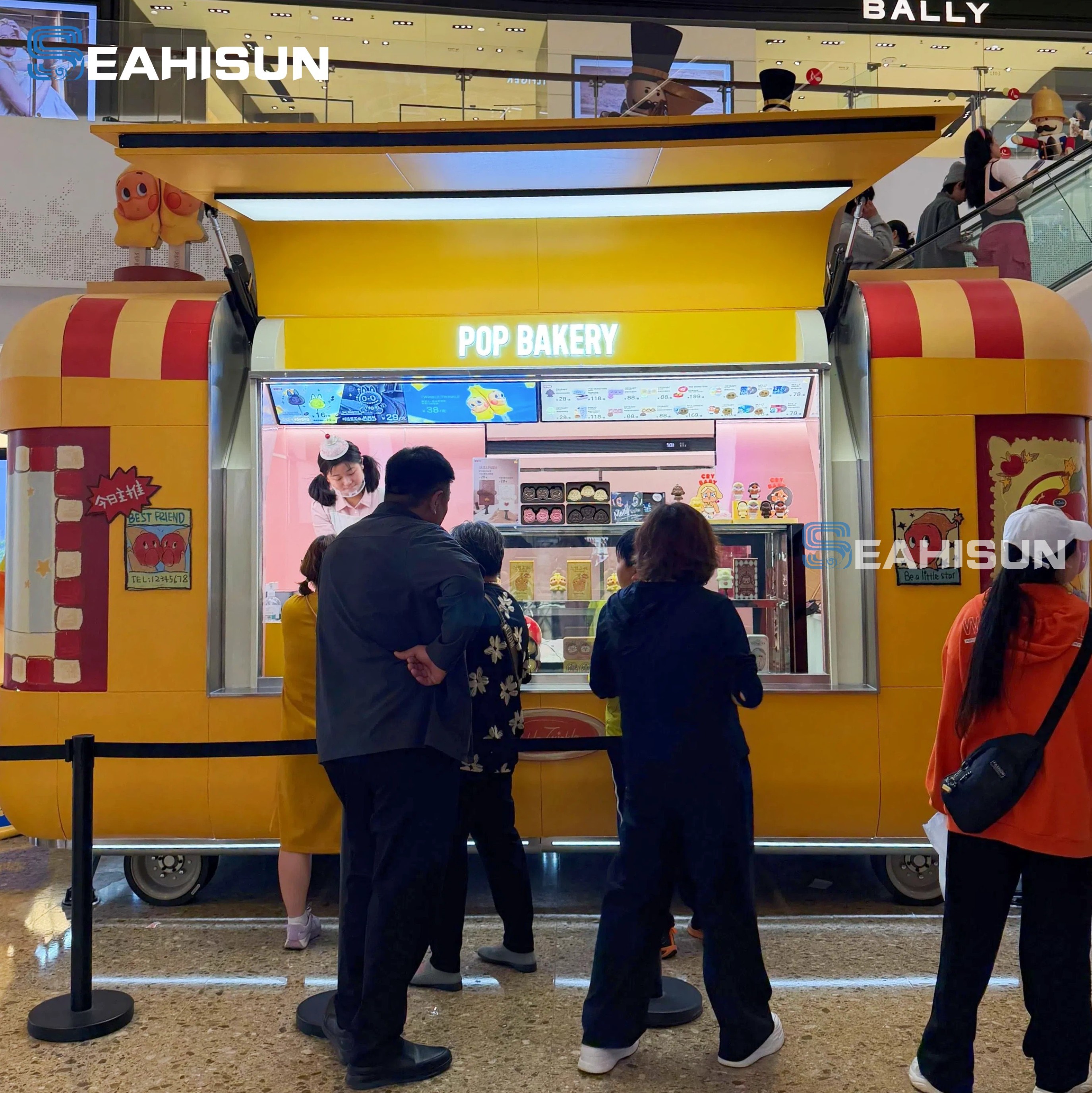
Evaluating the Right Display Cabinet Trailer Architecture
Your menu dictates your equipment architecture. Choosing the wrong cooling system destroys pastry textures. You must carefully evaluate dry, refrigerated, and dual-zone configurations before finalizing your build.
Dry vs. Refrigerated vs. Dual-Zone
Understanding the exact climate needs of your baked goods prevents inventory loss. Below is a breakdown of the three primary case types.
- Dry Cases: These are best for artisan breads, cookies, and ambient pastries. They offer a lower initial cost. They require zero power draw, which saves your generator capacity. They also weigh significantly less, improving payload capacity.
- Refrigerated Cases: These are mandatory for dairy, cream-filled, and meat-based items. However, you face a critical decision point regarding the cooling method.
- Forced Air: Uses fans to circulate cold air. It cools the case quickly and evenly. However, moving air dries out unpackaged cakes and cut sponges rapidly.
- Gravity Coil: Relies on cold air naturally sinking from top-mounted coils. It prevents pastries from drying out. However, it requires careful shelf placement to avoid blocking the cold air descent.
- Dual-Zone Systems: This is the ideal compromise for a dessert food trailer. It allows you to merchandise ambient croissants and chilled entremets in one footprint. It demands a higher initial investment and specific power routing, but it maximizes limited counter space.
Form Factor and Service Flow
Your operational flow relies on how you access the merchandise. Rear-access sliding doors protect inventory from outside elements. They keep employees positioned between the customer and the product. Front-access doors allow self-service but complicate health compliance in mobile units.
Glass geometry also matters for a display cabinet trailer. Curved glass offers a traditional aesthetic and naturally reduces overhead sun glare. Straight glass provides a modern, sharp aesthetic. It is much easier to clean. Furthermore, flat tops allow you to store lightweight packaging or ambient impulse items directly on top of the case.
Cooling Method Comparison Chart
| System Type | Best Suited For | Moisture Retention | Power Draw Profile |
| Dry Ambient | Breads, baguettes, cookies, dry tarts | Excellent (Natural) | None (Lighting only) |
| Forced Air Refrigeration | Packaged goods, beverages, sealed containers | Poor (High drying effect) | High (Continuous fan operation) |
| Gravity Coil Refrigeration | Unpackaged cakes, delicate pastries, macarons | Excellent (Minimal airflow) | Moderate |
| Dual-Zone Systems | Mixed menus (ambient + chilled) | Variable by zone | High (Complex compressor needs) |
Lighting Systems: Engineering Visual Merchandising
Lighting is your silent salesperson. Poor lighting makes expensive, fresh pastries look stale and unappetizing. Proper illumination drives impulse purchases. You must engineer your visual merchandising with exact specifications.
The Science of Color Rendering (CRI)
Standard trailer dome lights wash out food colors. They make crusts look dull and fruit toppings look gray. You must evaluate the Color Rendering Index (CRI) of your display lights. CRI measures how accurately a light source reveals true colors compared to natural sunlight. Establish a strict baseline requirement of CRI > 90. This high index ensures golden crusts pop and strawberry tarts look incredibly vibrant.
Heat Management
Never install halogen or older fluorescent bulbs in enclosed pastry displays. They are massive thermal liabilities. Halogen bulbs radiate intense heat downwards. This heat accelerates the melting of delicate glazes, buttercreams, and chocolate garnishes. It also forces your compressor to work twice as hard to combat the added heat load.
You must require low-heat, high-lumen LED strip lighting. Do not settle for a single overhead light. Integrate these slim LED profiles into the underside of every single shelf level. This guarantees shadow-free illumination across all product tiers.
Color Temperature (Kelvin)
Matching the light color to the food type is a professional merchandising secret. Color temperature is measured in Kelvin (K).
- Breads and Croissants (2700K–3000K): Use warm white lighting. It emphasizes the rich, baked tones of crusts. It makes baked goods feel fresh from the oven.
- Cakes and Creams (3500K–4000K): Use neutral white lighting. This provides a clean, bright presentation. It keeps white frostings looking pure, rather than yellowed or aged.
Compliance, Power Draw, and Installation Realities
Beautiful displays mean nothing if they fail health inspections or trip your generator breakers. Proper installation requires careful math and a firm grasp of local codes.
Power Budgeting
Refrigerated display cases pull massive power during startup. You must calculate both starting wattage (surge) and running wattage. A compressor might only require 500 watts to run, but it can spike to 1500 watts when the motor kicks on. If your generator lacks the surge capacity to handle this spike, the breaker will trip. Always size your generator to handle the combined starting wattage of your refrigeration and your AC unit simultaneously.
Health and Safety Compliance
Health departments scrutinize mobile food operations heavily. Your equipment must meet NSF/ANSI Standard 7 requirements for commercial food protection. Residential units simply will not pass. If you operate a hybrid window-service setup or a mall bakery kiosk, strict physical barriers are required. You must install integrated, shatter-proof sneeze guards. These guards protect exposed food from customer droplets and environmental debris.
Ventilation and Airflow
Many builders make a fatal aesthetic error. They box the display case compressor into a beautiful, custom wooden counter. This is a critical implementation risk. Compressors generate extreme heat as they cool the case. If that hot air cannot escape, the compressor overheats and destroys itself within days. You must design adequate clearance around the unit. Install highly breathable louvered vents. Implement exhaust fans to pull hot air out of the counter cavity.
Shortlisting Logic: Matching Equipment to Your Menu
Do not buy equipment based on aesthetics alone. Match the hardware directly to your core culinary offerings.
Scenario A: The Bread & Viennoiserie Specialist
If your menu features crusty sourdoughs and flaky croissants, moisture is your enemy. Prioritize large volumetric dry cases. Look for units featuring wooden slats or wire shelving. These materials allow crumbs to fall through, keeping the display looking clean during heavy rushes. Pair these cases with 2700K warm LED lighting to highlight the deep browns of your bakes.
Scenario B: The Patisserie & Cake Vendor
Delicate entremets and fresh fruit tarts demand strict environmental control. Prioritize high-humidity refrigerated cases equipped with gravity coil cooling. Select cases with anti-fog glass technology to maintain visibility during humid outdoor events. Ensure the unit has a precision digital thermostat to keep temperatures hovering exactly at 38°F (3°C) for a reliable bakery trailer operation.
Next-Step Actions
- Finalize your exact menu to determine the precise cubic footage needed for chilled versus ambient goods.
- Audit your trailer's payload capacity and generator output before placing any equipment orders.
- Request spec sheets directly from manufacturers. Specifically verify "mobile/food truck application" warranties. Many manufacturers immediately void commercial warranties if the equipment is installed in a mobile unit.
Conclusion
Building a highly profitable mobile bakery hinges on smart equipment choices. You must treat the display cabinet not as a passive shelf, but as a critical piece of active operational infrastructure. Road vibrations, heat waves, and power limits quickly break inadequate setups. Evaluate your electrical capacity and prioritize thermal ventilation.
Always prioritize mechanical reliability and mobile-specific warranties over raw aesthetic appeal. A beautifully lit, perfectly chilled display that survives relentless highway transit is your strongest asset. It guarantees product integrity, builds consumer trust, and directly drives high-ticket conversions.
FAQ
Q: Will using a standard commercial display case in a food trailer void the warranty?
A: Yes, in most cases. Manufacturers require specific vibration-reduction installations. Commercial storefront cases are not engineered for the relentless shock of road transit. Always look for equipment specifically rated and warrantied for mobile/truck use to protect your investment.
Q: How do I prevent condensation on my display case glass during outdoor pop-ups?
A: Opt for double-glazed, heated, or anti-fog glass. Condensation occurs when humid outside air hits the cold exterior glass. Ensure your trailer has adequate cross-ventilation or active air conditioning to manage overall interior humidity levels during service hours.
Q: Can I run my refrigerated display case while driving?
A: Only if wired to an onboard inverter/battery bank or a properly secured and ventilated running generator. Most operators pre-chill the case on shore power, pack goods in insulated cambros for transit, and power up the case upon arrival.
 注: 建议图片大小150px*50px


