 注: 建议图片大小150px*50px

丨
注: 建议图片大小150px*50px


Views: 0 Author: Site Editor Publish Time: 2026-07-10 Origin: Site


Operating a custom mobile kitchen means competing for attention in high-distraction environments. Quality food drives customer retention, but visual authority drives your initial acquisition. When hungry crowds scan a busy festival or crowded city block, they judge your operation in a matter of seconds. Effective custom food trailer branding transcends mere aesthetics. It serves as a highly functional marketing asset. You design it to maximize visibility, communicate your menu instantly, and withstand harsh operational environments.
Evaluating logos, exterior colors, signage, and wrap options requires careful balance. You must weigh initial capital expenditure against durability, municipal compliance, and expected foot-traffic returns. Picture a vibrant street food rally. Visitors immediately walk past dull, uninspired setups. They flock toward exteriors projecting professionalism and flavor. In this comprehensive guide, you will learn how to structure your mobile brand identity for maximum impact. We cover everything from premium vinyl material selection to strategic illuminated night signage.
Many unbranded or poorly designed units face a severe trust deficit. The mobile food industry operates heavily on impulse buying and perceived hygiene. Customers naturally hesitate before purchasing meals from a blank white box. They instinctively gravitate toward a professionally branded food truck. Strong external visuals imply established business practices, clean kitchens, and reliable culinary quality. This trust deficit directly impacts your initial sales volume. It also severely limits your ability to secure highly profitable private catering inquiries.
Effective visual identities must achieve three distinct success criteria simultaneously:
Operators must shift their financial perspective. You should treat external design as a core customer acquisition cost. It is never just a basic operational expense. A striking, high-quality exterior commands premium menu pricing. Customers expect to pay more for food originating from a premium-looking environment. Furthermore, well-designed exteriors guarantee higher acceptance rates from elite festival organizers. Event coordinators curate their vendor lists meticulously. They want visually appealing trucks enhancing their venue's atmosphere.
Choosing the right exterior application requires a deep understanding of your operational style. You generally select from three main tiers. Each offers distinct advantages regarding visual impact, budget, and downtime.
Full wraps deliver maximum visual impact. They create seamless brand immersion across every inch of exterior metal. Installers cover the entire surface, transforming the vehicle into a rolling billboard. This option completely protects the original factory paint from UV damage and minor scratches. It provides your designer unlimited space for creative artwork. However, full coverage carries the highest upfront cost. You will also experience the longest installation downtime during the application process.
Partial wraps provide a highly strategic and cost-effective alternative. Designers utilize the vehicle's base paint color as part of the overall canvas. This technique works exceptionally well on clean stainless steel surfaces or fresh, pre-painted factory units. Partial coverage typically costs 40% to 60% less than full coverage. It remains highly effective when executed intelligently. The transition between the vinyl and the painted surface must look intentional.
Spot graphics suit budget-conscious rollouts perfectly. They offer a clean, minimalist aesthetic. Many operators use simple cut-vinyl decals for logos and typography. They also provide flexibility for easily updatable menu boards. If you change your pricing frequently, spot decals prevent you from reprinting large vehicle panels.
Material selection dictates the long-term survival of your food trailer wrap. Always demand premium cast vinyl from established manufacturers like 3M or Avery Dennison. Cast vinyl starts its manufacturing life as a liquid. This means it holds its shape perfectly without shrinking over complex curves and rivets. Installers must pair it with a heavy-duty overlaminate. Avoid calendered vinyl entirely. Manufacturers squeeze calendered vinyl through rollers. Because it possesses structural "memory," it actively attempts to shrink back to its original shape. It peels aggressively when exposed to high kitchen exhaust heat and airborne grease.
| Wrap Type | Primary Benefit | Relative Cost | Best Use Case |
|---|---|---|---|
| Full Wrap | Total brand immersion and paint protection. | High | High-budget brands seeking maximum visibility. |
| Partial Wrap | Excellent ROI using base vehicle color. | Medium | Stainless steel or freshly painted trailers. |
| Decals & Spot Graphics | Easy updates and minimalist design. | Low | Menu boards and budget-conscious startups. |
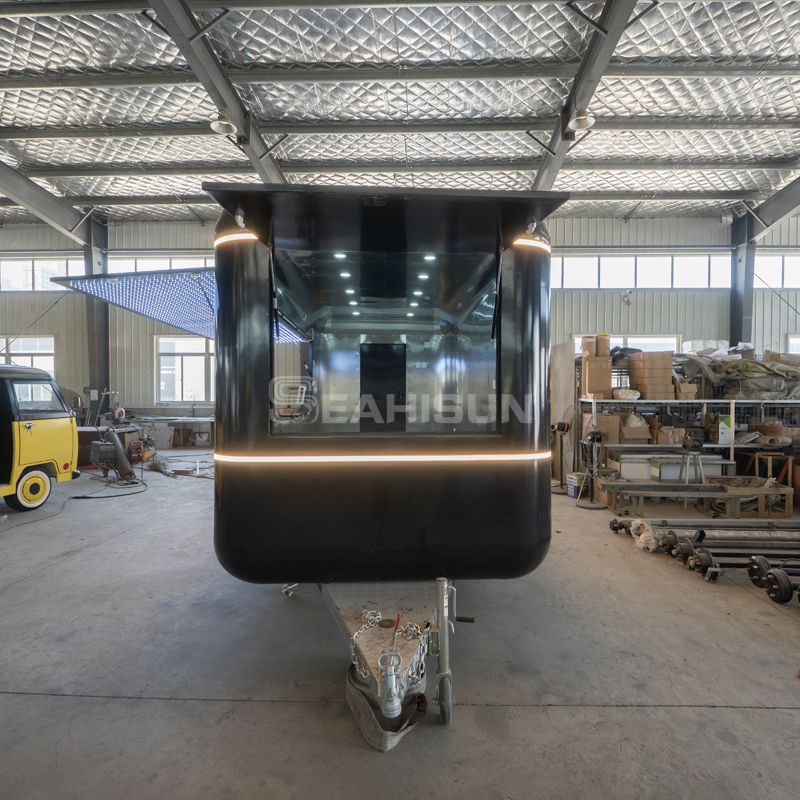
Standard flat signage presents a severe operational limitation. Beautifully designed vinyl graphics disappear completely after dusk. For late-night operators, non-illuminated exteriors result in massive lost foot traffic. Integrating a strategic light box food trailer layout solves this visibility gap immediately.
You can install custom 3D illuminated signs directly onto the vehicle body. Many successful operators mount backlit marquee boards along the roofline. This elevated placement creates a powerful beacon effect in crowded festival environments. It draws hungry attendees from across a dark field or down a busy street. Lighting transforms passive graphics into active attractions. Some owners also utilize LED backlighting behind perforated window graphics. This illuminates the serving window space, making the ordering process safer and more inviting.
Illuminated elements introduce specific technical risks you must manage. You must calculate power draw carefully. Light boxes add constant demand to your total electrical load. High-efficiency LED components remain absolutely mandatory to prevent tripping breakers. Check your exact generator capacity before approving any lighting installation. Factor in peak loads when refrigerators and fryers run simultaneously.
You also face strict zoning laws. Evaluate local municipal codes regarding illuminated signage. Many cities aggressively restrict mobile vehicles from operating bright, flashing lights while parked on public streets. Navigating these rules requires thorough research. Always secure compliance clearance before finalizing your electrical schematic. A bright sign holds zero value if code enforcement forces you to turn it off.
The commercial viability of your exterior design hinges on extreme legibility. Industry experts rely heavily on the "50-Foot/50-MPH" rule. You must evaluate your design through this strict framework. If potential customers cannot read your core food category from 50 feet away, the design fails commercially. A successful custom logo trailer prioritizes bold, simple typography. You must elevate readability above complex artistic details. Ornate script fonts look beautiful on a screen but become illegible messes on a moving vehicle.
Color psychology plays a vital role in consumer behavior. Different hues trigger specific emotional responses and physical reactions. Warm colors like red, orange, and yellow actively stimulate appetite. They create a subconscious sense of urgency. This makes warm palettes ideal for fast-casual concepts, burger spots, and taco stands. Conversely, cool or earthy colors signal completely different attributes. Greens, crisp whites, and browns naturally align with organic, vegan, or artisanal coffee offerings. Black backgrounds communicate high-end luxury, often used for premium barbecue or gourmet seafood.
Always prioritize high-contrast typography. Dark text on light backgrounds or bright white text on dark backgrounds ensures maximum readability. Cluttered background patterns destroy visual focus. Keep the physical space behind your primary logo completely clean. You usually place primary branding on the serving window side and the rear panel. Customers spend the most time looking at these specific zones while waiting in line or driving behind you.
Your vehicle exposes exterior graphics to unique environmental hazards daily. Exhaust heat, cooking grease, intense UV exposure, and frequent washing constantly assault the exterior. Your custom mobile kitchen requires specialized care to protect the financial investment. Without routine maintenance, even premium vinyl fails prematurely.
Establish strict cleaning routines to prevent laminate degradation. Avoid abrasive chemicals and harsh degreasers entirely. They strip the UV protective layer off the vinyl. Wipe away grease splatters daily using gentle, pH-neutral soaps and microfiber cloths. Never aim a high-pressure washer directly at graphic seams. Pressurized water easily forces its way under the vinyl edge. Once water penetrates the adhesive backing, the panel lifts and requires complete replacement.
Choosing the right commercial installer matters just as much as the graphic design itself. Not all local wrap shops understand the unique demands of mobile kitchens. Use this specific criteria when evaluating vendors:
Avoid rushing the preparation phase. The vehicle exterior must be perfectly clean. Grease, dirt, and wax destroy adhesive bonds. You must repair any rust, deep scratches, or peeling factory paint before the installer touches the vehicle. Vinyl graphics adhere extremely poorly to textured or compromised metal surfaces. Do not overcomplicate your menu board panels. Keep typography large and readable to prevent bottlenecks in your ordering line.
Transforming a blank, sterile unit into a highly profitable brand powerhouse requires a strategic mix of visual tools. You need high-grade wraps, contrasting colors, and illuminated elements working together harmoniously. This calculated combination maximizes your localized return on investment and solidifies your street presence.
Take decisive action before committing capital. First, finalize your exact menu and primary demographic before commissioning any graphic design work. Second, identify your primary operating hours. This definitively determines whether you can justify light box investments. Finally, request detailed material spec sheets and installation portfolios from local commercial wrap installers. Clear planning ensures your mobile kitchen attracts larger crowds, withstands daily operational rigors, and establishes lasting market authority.
A: With high-quality cast vinyl and proper maintenance (managing grease and sun exposure), a premium wrap can last 5 to 7 years before showing significant wear. Daily cleaning with pH-neutral soaps prevents the protective overlaminate from breaking down prematurely.
A: Yes, retrofitting is common. However, it requires structural evaluation for mounting security and an electrical audit to ensure your generator can handle the additional load. Always specify highly efficient LED components to minimize power draw during peak kitchen operations.
A: Once the design is finalized and printed, professional installation typically takes 2 to 4 days, depending on the complexity of rivets, windows, and whether it's a full or partial wrap. Thorough surface preparation adds to this timeframe.
A: The exterior must be completely free of grease, dirt, and wax. Any rust, deep scratches, or peeling paint must be repaired prior, as vinyl wraps adhere poorly to textured or compromised surfaces. Perfect adhesion requires a flawless, smooth foundation.

