Operating at high-traffic outdoor events requires much more than just serving good food. It requires heavy-duty equipment ready for intense, continuous pressure. You simply cannot afford a mechanical breakdown during a busy lunch rush. You also cannot risk getting shut down by strict health inspectors just hours before a festival opens. Unfortunately, unverified builds frequently lead to failed health inspections. They cause rejected event applications and result in severe lost revenue.
This comprehensive guide provides a clear framework for your business. We will show you exactly how to evaluate, specify, and source fully compliant mobile kitchens. You will discover exactly what an event food trailer needs to survive demanding outdoor markets. We cover the specific requirements for massive festivals and high-volume catering environments. By the end, you will understand the exact compliance standards required by municipal health departments. You will also know how to avoid the hidden financial traps of uncertified builds. Let us dive into the details.
Key Takeaways
- A certified mobile food trailer ensures immediate compliance with local health codes, reducing time-to-market and avoiding costly retrofits.
- Event food trailers require specific off-grid capabilities (power, freshwater, wastewater) that differ fundamentally from stationary street setups.
- Evaluating a commercial food truck or trailer build requires prioritizing NSF-certified equipment, commercial-grade fire suppression, and verified weight ratings.
- Vendor selection should hinge on blueprint transparency, warranty terms, and the builder’s proven understanding of multi-jurisdictional compliance (e.g., local city vs. county regulations).
The Financial Stakes of Choosing a Certified Mobile Food Trailer
Uncertified builds carry massive hidden financial risks. Many first-time buyers fall into a dangerous trap. They purchase cheap, unverified units hoping to save money upfront. However, these buyers often face thousands of dollars in post-purchase modifications. Local health and fire safety standards remain completely unforgiving. If you buy a non-compliant unit, you must rip out and rebuild the plumbing. You might have to upgrade the entire fire suppression system. This unexpected work completely destroys your launch timeline. It drains your operating capital before you even sell your first meal.
Furthermore, major festivals and municipal markets enforce strict participation rules. High-yield venues require rigorous documentation. Event organizers in major hubs routinely demand proof of valid health permits. They also mandate comprehensive commercial liability insurance policies. An uncertified build instantly disqualifies you from entering these lucrative events. You miss out on the best weekend crowds simply because your equipment lacks the proper paperwork. Organizers will not risk their event permits on non-compliant vendors.
To succeed financially, your mobile operation must hit three crucial benchmarks. First, it must achieve localized health department approval on the very first inspection. Failed inspections cause weeks of delay. Second, it must operate efficiently during extreme peak volume hours. Your layout must support rapid ticket times. Finally, it must maintain safe towing weights to protect your tow vehicle. A genuine certified mobile food trailer checks all these critical boxes before it ever leaves the factory floor. It acts as an upfront insurance policy for your business operations.
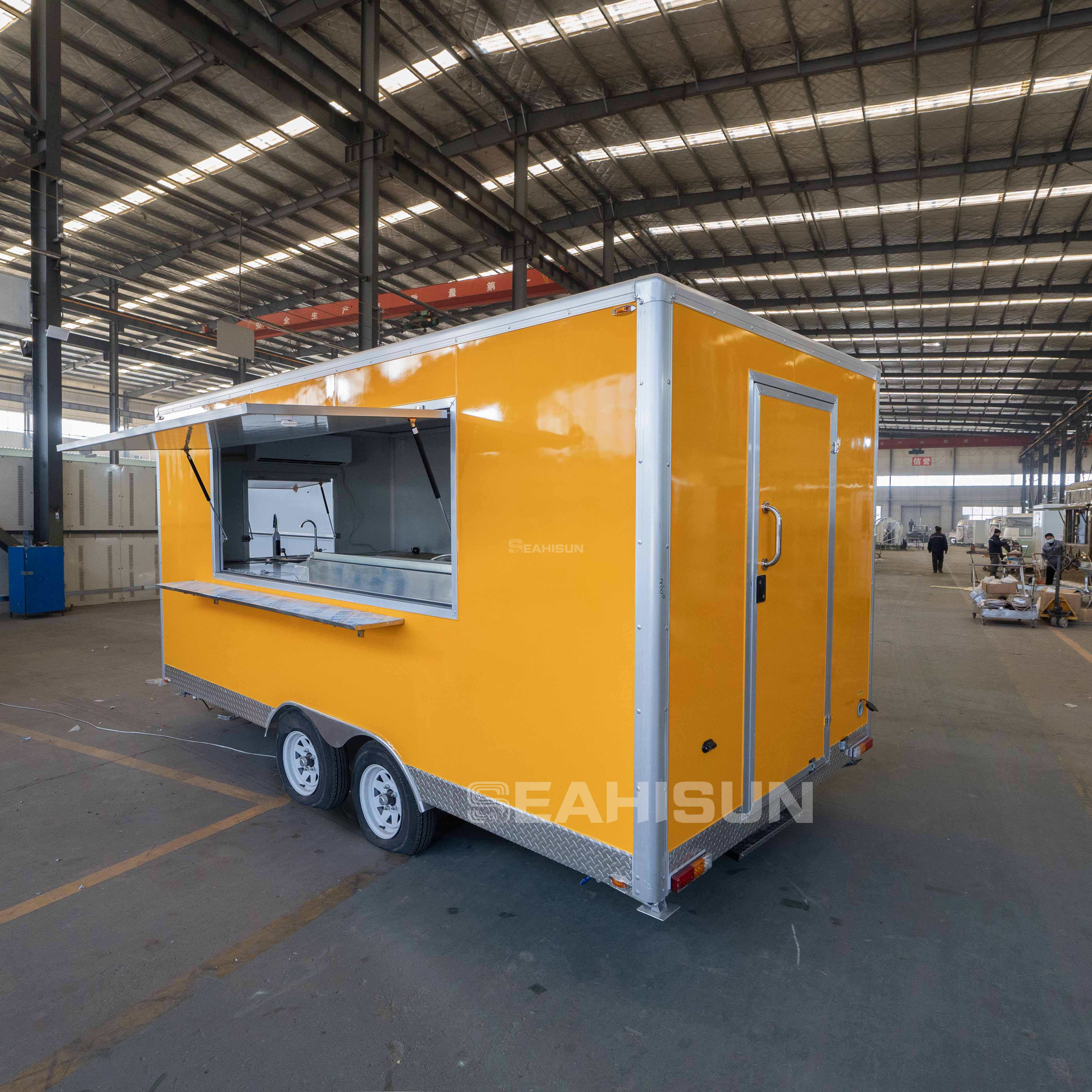
Matching Trailer Configurations to Outdoor Event Demands
Every outdoor event demands a completely different operational approach. You must match your equipment footprint to your menu, team size, and venue restrictions. Choosing the wrong size creates massive logistical bottlenecks. Let us examine the primary categories and their respective operational approaches.
Compact units typically span 8 to 12 feet in length. A well-designed outdoor food trailer of this size excels at local farmer's markets. They fit perfectly into tightly packed community events. They work beautifully for specialized, single-item menus like artisanal coffee, baked goods, or shaved ice. You benefit significantly from lower towing requirements. Almost any standard SUV or half-ton pickup can tow them safely. However, you face notable trade-offs. You get severely limited interior storage space. You also experience a lower peak-hour output because you cannot fit a large team inside.
Conversely, high-volume units range from 16 to 24 feet or even longer. A heavy-duty mobile catering trailer handles massive, multi-day festivals effortlessly. They support demanding corporate catering gigs and complex full-menu operations. The primary trade-off involves transportation logistics. These massive units require heavy-duty tow vehicles, usually a three-quarter-ton or one-ton truck. Yet, their size sustains larger cooking teams. They hold massive inventory, allowing you to serve hundreds of customers without restocking.
You must also carefully weigh custom layouts against pre-certified turnkey layouts. A standardized floor plan often meets conventional cooking workflows flawlessly. They pass inspections quickly because inspectors recognize the standard layouts. Sometimes, however, specialized commercial equipment requires custom fabrication. If you serve wood-fired pizza or operate complex smoking rigs, you need a custom blueprint.
Trailer Configuration Comparison Chart | Trailer Type | Length Range | Best Use Cases | Key Operational Advantage | Main Trade-off |
| Compact Outdoor Trailer | 8–12 ft | Farmer's markets, coffee, desserts, narrow urban venues | Easy towing, fits small event spaces, lower initial cost | Limited cold storage, maximum 2-person team, lower output |
| High-Volume Catering Trailer | 16–24+ ft | Multi-day festivals, full menus, corporate catering events | High peak output, supports a large prep team, massive storage | Requires heavy-duty tow vehicle, higher permit fees in some cities |
Essential Specifications for an Event Food Trailer
Surviving a brutal 12-hour festival shift requires rugged, reliable self-sufficiency. You cannot rely on external venue hookups for power or water. Your setup must handle heavy, continuous usage under demanding weather conditions. Here are the core specifications you must evaluate when sourcing your unit.
Off-Grid Self-Sufficiency
Inverter generators supply power to your entire operation. You must evaluate your total electrical load carefully. Add up the amps for your refrigerators, AC units, pumps, and lights. Event organizers frequently impose strict noise restrictions. Loud traditional generators will get you banned from premium spots. You need quiet-run commercial generators housed in sound-dampening boxes.
Next, examine your plumbing capacity closely. You must size fresh and gray water tanks accurately. Industry standards dictate that your gray water tank must hold at least 15% more volume than your fresh water tank. They must survive full daily shifts without relying on external water hookups. Running out of water instantly shuts down your operation.
Commercial-Grade Ventilation & Fire Safety
Cooking safely remains a non-negotiable requirement across all jurisdictions. Fire marshals inspect these systems rigorously before they let you open your windows.
- Type 1 Commercial Hoods: These are absolutely mandatory for any frying, grilling, or open-flame operations. They capture grease-laden vapors effectively. They must feature proper exhaust fans and make-up air systems to maintain internal air pressure.
- Integrated Fire Suppression: ANSUL systems or equivalent wet-chemical systems are universally required. They automatically extinguish grease fires before they spread to the chassis. They must sit above every piece of cooking equipment.
Sanitation and Material Compliance
Health inspectors focus heavily on sanitization protocols. You need the correct structural components to pass initial and routine inspections.
- Mandatory inclusion of deep 3-compartment sinks. You need dedicated basins for washing, rinsing, and sanitizing. They must feature dual drainboards.
- Dedicated handwashing stations. These must include tall splash guards to prevent contaminated water from splashing onto food prep areas.
- NSF-certified stainless steel surfaces for all food preparation zones. Wood or porous materials fail instantly.
- Proper commercial flooring requirements. Diamond tread aluminum offers incredible durability. Commercial vinyl provides excellent slip resistance and allows for rapid, compliant washdowns. The flooring must feature coved baseboards to prevent grease buildup in corners.
A properly built certified trailer integrates these strict elements seamlessly into the design. They ensure you stay safe, comfortable, and fully compliant.
Implementation Realities: Navigating Multi-County Health Codes
Compliance across different geographical regions creates major headaches for mobile vendors. You must navigate widely varying regulations carefully. Many new buyers fall victim to the "universal certification" myth. Let us clarify this dangerous misconception right away. No single build possesses a magical universal certification for every county in the U.S. Each local jurisdiction maintains its own unique rulebook.
A highly reliable builder anticipates this fragmentation. They build to the strictest known codes proactively. For example, they might engineer the unit using rigorous California guidelines or strict Texas municipal codes. By meeting the toughest standards, this strategy ensures broader compliance across state lines. It allows you to cross county borders without fearing a sudden shutdown.
Permitting roadblocks happen frequently with unverified units. We consistently see common reasons why amateur builds fail inspections. Inspectors reject improper plumbing angles instantly. They check for proper indirect waste drains and mandatory air gaps. Inadequate hot water recovery ruins many inspections. Your water heater must keep up with continuous sink usage. Incorrect hood overhangs also trigger immediate failures. The hood must extend at least six inches past the edge of the cooking equipment. You must avoid these costly, amateur mistakes.
You also face distinct logistical and physical risks. Towing capacity mismatches cause severe highway safety hazards. You must compare the gross weight of the fully loaded unit against your tow vehicle limits. Always factor in the weight of your full water tanks and food inventory. Furthermore, operating a massive commercial food truck or trailer involves tight, stressful maneuvers. Festival grounds often present narrow, unpaved, or muddy pathways. You must plan your exact entry and exit logistics before signing any venue contract.
How to Evaluate and Shortlist a Certified Trailer Builder
Selecting the right manufacturing partner determines your future operational success. You must vet potential manufacturers rigorously. Do not skip these critical evaluation steps, as reversing a bad purchase is nearly impossible.
First, demand complete blueprint transparency from the start. Never purchase anything without reviewing detailed, to-scale CAD drawings. You need to examine the exact plumbing routing, electrical schematics, and gas line layouts. A legitimate manufacturer provides these drawings eagerly. Second, verify their equipment sourcing protocols. Ensure your builder installs genuine name-brand, warranty-backed commercial equipment. Unbranded, non-NSF residential alternatives will fail health inspections. Furthermore, residential equipment warranties instantly void when used in a commercial mobile setting.
You must watch out for specific industry red flags. Avoid any builders who demand 100% payment upfront before fabrication begins. Walk away immediately if they refuse to guarantee health department compliance in writing. A total lack of a verifiable track record should also stop the deal. They must prove they have completed successful, compliant builds in your specific state.
For your actionable next steps, request a detailed, localized quote. Then, take the builder’s CAD blueprints directly to your local health inspector for a pre-application meeting. Cross-reference every detail with them before manufacturing actually begins. This proactive step saves thousands of dollars. You can also review common vendor questions on a comprehensive FAQ portal to better prepare yourself for these inspector meetings.
Conclusion
Investing in a fully compliant, verified build remains the smartest upfront business decision you can make. It fundamentally protects your launch timeline and secures your projected event revenue. Uncertified builds offer an illusion of savings, but they deliver massive hidden costs and constant operational stress. Keep these critical action steps in mind as you move forward:
- Protect your operational timeline: View certified builds as a powerful risk mitigation strategy against unexpected regulatory shutdowns.
- Demand written guarantees: Prioritize manufacturers who offer transparent compliance guarantees and provide full CAD blueprints.
- Plan for off-grid reality: Ensure your layout handles the rugged, unpredictable nature of outdoor catering seamlessly.
- Prioritize workflow: Match your trailer dimensions directly to your menu complexity and your target venue size.
Do not leave your compliance to chance. Contact our expert team today for a comprehensive consultation. We will gladly review your local health department requirements together. We can then configure a highly efficient, fully approved layout tailored for your next major event season.
FAQ
Q: What makes a mobile food trailer "certified"?
A: A unit becomes certified by meeting strict Department of Transportation (DOT) safety standards for the chassis. It must also pass local health and fire codes for the interior buildout. This includes installing mandatory NSF-certified commercial equipment. It also requires approved, commercial-grade plumbing configurations and safe electrical systems designed for heavy loads.
Q: Can I use a standard mobile catering trailer at any outdoor event?
A: Not automatically. While your equipment may be highly capable, event organizers dictate the final rules. They often impose specific footprint size limits. They also enforce strict generator noise restrictions. Additionally, you must secure localized vendor health permits for that specific municipality before operating legally.
Q: How long does it take to get a custom commercial food truck or trailer built and certified?
A: You should expect realistic timelines when ordering. Custom fabrication typically requires 8 to 12 weeks. After the build finishes, you need another 2 to 4 weeks for localized health inspections and municipal permitting. This overall timeline varies slightly depending on your specific city's backlog.
Q: Do I need a special license to tow a certified trailer?
A: It depends heavily on your Gross Vehicle Weight Rating (GVWR). Most standard setups keep the total combined GVWR below the commercial threshold. You can usually tow them safely with a standard driver's license. However, massive setups exceeding 26,000 pounds combined weight may legally require a commercial driver's license (CDL).
 注: 建议图片大小150px*50px


