 注: 建议图片大小150px*50px
  注: 建议图片大小150px*50px

Views: 0 Author: Site Editor Publish Time: 2026-08-01 Origin: Site


Upgrading to a custom mobile vending trailer requires balancing iconic aesthetics with rigorous operational realities. You want a design drawing massive crowds, but daily wear and tear demands extreme durability. Bare metal exteriors often force operators into a grueling cycle of constant upkeep.
The classic Airstream trailer design drives undeniable foot traffic. However, raw aluminum demands intense, frequent maintenance to prevent oxidation. An aluminum spray finish offers a brilliant alternative. It builds a necessary bridge between brand distinctiveness and environmental durability. A painted surface locks out the elements and saves countless labor hours.
This guide evaluates the structural, operational, and financial implications of specifying a sprayed aluminum build for your food trailer business. We will explore material strengths, application processes, and daily upkeep routines. You will learn exactly how to choose the right manufacturing setup for long-term operational success.
Choosing the foundation for your mobile kitchen dictates every future operational boundary. The underlying framework and exterior skin determine how much equipment you can carry safely. Investing in an aluminum food trailer changes the physics of your daily towing experience.
Aluminum frames are significantly lighter than traditional steel box trailers. This weight reduction directly impacts your towing requirements. A standard steel trailer often requires a heavy-duty three-quarter-ton or one-ton commercial truck for safe transit. Aluminum allows many operators to tow safely using a standard half-ton pickup truck. You experience less strain on the tow vehicle transmission. Braking distances shorten. You save heavily on daily fuel consumption.
Metals react differently to environmental exposure. Steel forms iron oxide when exposed to moisture. This rust flakes away, exposing fresh steel to further decay. Aluminum features a completely different natural oxidation process. When bare aluminum meets oxygen, it forms a microscopically thin, impenetrable layer of aluminum oxide. This layer permanently seals the metal underneath. Aluminum outlasts steel drastically in humid or coastal vending environments. Salty sea air destroys steel frames within years, but aluminum structures remain structurally intact for decades.
Gross Vehicle Weight Rating (GVWR) limits the maximum total weight your trailer axles can support legally. Every pound saved on the shell construction becomes a pound you can dedicate to revenue-generating equipment. A lighter aluminum shell enables you to up-spec internal components. You can install heavier, commercial-grade refrigeration units. You can mount larger, high-output generators. Most importantly, you can carry full fresh water tanks without overloading the suspension system or risking a tire blowout on the highway.
Transparency matters when evaluating materials. Aluminum is softer than steel. It bends and dents more easily upon impact. Road debris kicks up constantly during highway transit. Flying rocks strike the lower front panels inevitably. An aluminum panel will likely dent inward, whereas a steel panel might only suffer a paint chip. You must evaluate this dent susceptibility carefully. Installing diamond-plate rock guards on the lower front sections is absolutely necessary. These protective plates deflect impacts and preserve the softer exterior skin.
| Feature | Aluminum Frame & Skin | Traditional Steel Box |
|---|---|---|
| Base Weight | Significantly lighter (often 20-30% less) | Heavy and dense |
| Corrosion Response | Forms protective oxide layer; stops deep rust | Forms iron oxide (flaking rust); degrades fast |
| Payload Flexibility | High allowance for heavy kitchen gear | Lower allowance due to heavy shell |
| Impact Resistance | Softer; requires diamond-plate rock guards | Rigid; resists minor dents better |
The exterior finish dictates both visual appeal and maintenance intensity. A sprayed food trailer utilizes advanced automotive paint technology to seal the metal entirely. This engineering process requires precise climate control and chemical mastery.
Bare metal looks incredible initially. The mirror-like finish of a raw, polished trailer catches every eye. However, the operational upkeep is brutal. Bare metal oxidizes rapidly. Without continuous compounding, the shiny surface turns dull and milky. You must weigh this visual impact against the operational reality. A professional spray finish sacrifices the raw mirror look but delivers absolute protection. It cuts exterior labor drastically and maintains a uniform appearance year-round.
Manufacturers cannot simply spray paint directly onto smooth aluminum. The paint will peel off in sheets on the first highway trip. Quality builders follow a strict, multi-stage application process:
Commercial kitchens generate immense heat. Fryers, griddles, and ovens push interior temperatures to uncomfortable extremes. Your exterior paint color directly impacts interior heat load. Dark bare metal absorbs solar radiation aggressively. It turns the trailer into an oven. Conversely, a highly reflective paint acts as a thermal shield. Light, painted colors reflect UV rays away from the shell. Your kitchen staff stays considerably cooler. The air conditioning unit runs more efficiently.
You can leverage custom colors to dominate crowded event spaces. Imagine pulling a vintage light blue food trailer into a festival filled with boring white boxes. It commands attention immediately. The unique visual aesthetic aligns perfectly with artisanal branding. You can charge premium pricing based solely on perceived quality. The painted exterior makes your physical asset an integral part of your marketing strategy.
Operational longevity depends entirely on your maintenance discipline. You must protect the clear coat from environmental hazards and commercial kitchen byproducts. Establishing strict timelines ensures the paint remains vibrant for years.
Commercial exhaust hoods push grease vapor out onto the trailer roof. This grease fallout settles onto the clear coat. If left untreated, UV rays bake the grease into a hard resin. This acidic resin eventually eats through the clear coat. You must establish specific wash routines. Climb a ladder weekly and scrub the roof using a soft-bristle brush. Use non-abrasive, pH-neutral automotive soaps. Avoid harsh industrial degreasers. They strip protective waxes and dull the clear coat permanently.
Vintage, bare-metal Airstreams trap owners in an endless polishing cycle. Restoring a mirror finish requires multi-stage compounding. You must use specialized orbital polishers and messy aluminum pastes. It consumes dozens of labor hours monthly. A painted finish eliminates this chore completely. You reclaim your weekends. You simply wash the trailer as you would a commercial fleet truck. This massive reduction in labor hours directly boosts your operational efficiency.
Rock chips happen. Scratches occur when maneuvering in tight festival grounds. You must address paint damage quickly to prevent localized peeling. Minor clear-coat scratches usually buff out easily using a light polishing compound. Deep gouges require immediate intervention. You cannot ignore them. You must sand the edges of the scratch smooth. Spot-prime the bare metal using an aluminum-etching primer. Apply a color-matched touch-up paint carefully. This protocol seals the edge and prevents moisture from lifting the surrounding healthy paint.
Extreme climates punish mobile vending trailers relentlessly. Freezing temperatures and heavy snow loads degrade exterior seals. If you operate in cold climates, winterize your unit meticulously. Drain all water lines completely. Blow compressed air through the pipes. Pump non-toxic RV antifreeze through the plumbing system. If storing the trailer outdoors, consider shrink-wrapping the entire shell. Elevate the tires off the frozen ground to prevent dry rot. Keep heavy snow accumulation off the roof to protect the exhaust hood seals.
Exterior aesthetics bring customers to the window. Interior compliance keeps your business legally open. Health inspectors focus heavily on the transition zones between your walls and equipment.
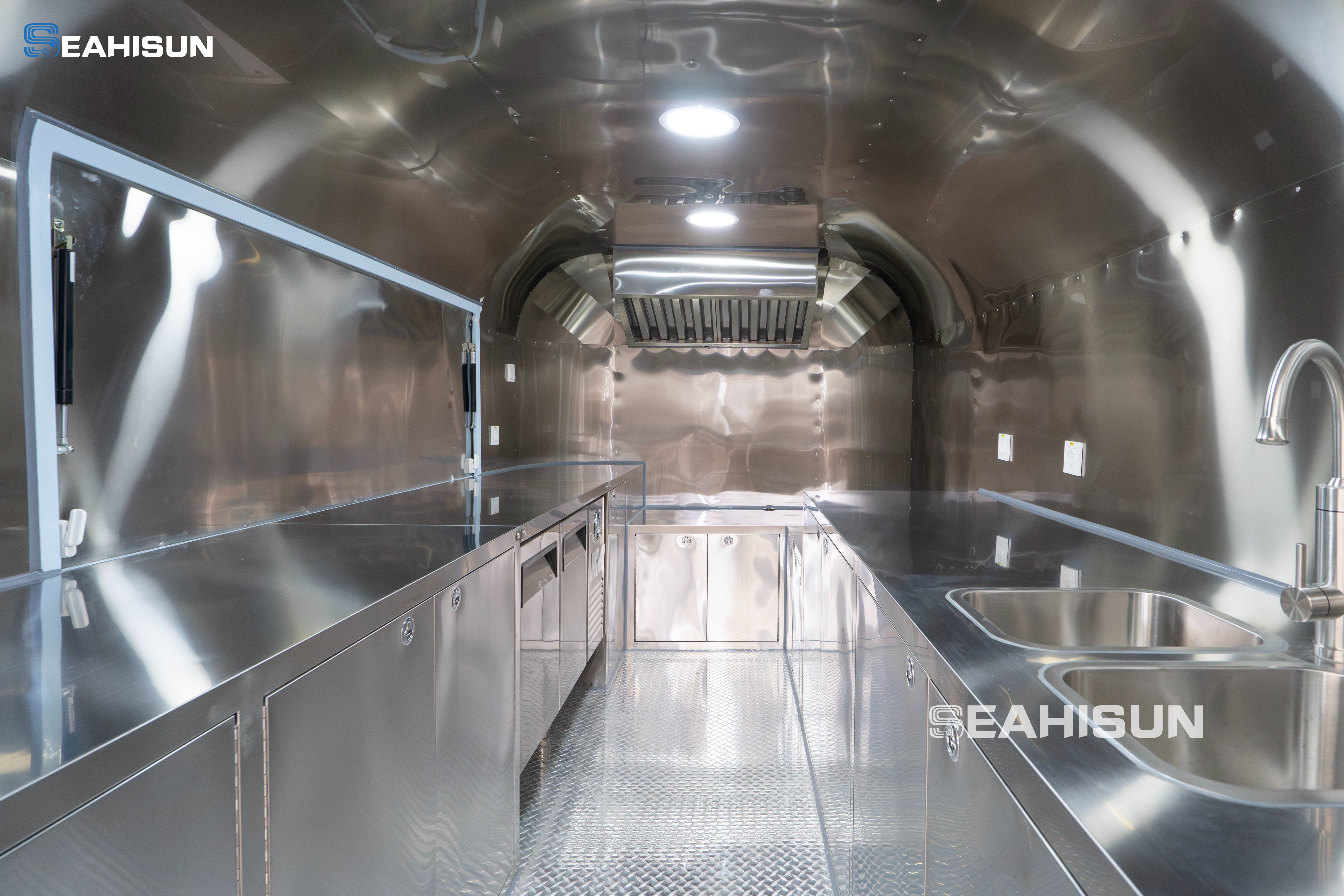
Inspectors despise gaps, rough textures, and porous materials. They demand seamless surfaces throughout the kitchen zone. Porous walls absorb grease and breed bacteria instantly. You must specify commercial-grade interior panels. Anodized aluminum offers a smooth, highly reflective surface. It wipes down easily and resists chemical cleaners. Alternatively, 304 stainless steel is the gold standard behind high-heat cooking equipment. It provides superior fire resistance. Both options satisfy the strictest health department codes nationwide.
The gap between the exterior aluminum skin and the interior walls is critical. You must evaluate how the builder insulates this void. Curved Airstream designs naturally trap air. When cold outside air meets hot interior kitchen air, condensation forms inside the walls. Closed-cell spray foam is vastly superior to fiberglass batting. Foam fills every microscopic gap. It blocks air movement entirely, preventing condensation. It also adds immense structural rigidity to the curved walls. Fiberglass batting settles downward over time. It absorbs moisture, becoming heavy and eventually fostering black mold.
Trailers endure violent vibrations during highway transit. The suspension transfers road shock directly into the aluminum shell. Thousands of rivets hold the exterior panels together. Over time, vibration attempts to loosen these joints. Manufacturers must seal the riveted aluminum joints meticulously. High-grade urethane sealants prevent rainwater ingress. More importantly, tight seams prevent interior kitchen grease from seeping into the wall cavities. Ask your builder exactly what commercial sealants they use during final assembly.
Not all fabricators build to the same standards. You must interview builders aggressively before paying a deposit. An aluminum spray Airstream food trailer represents a major capital expense. Protect yourself by validating their engineering claims.
Demand a detailed build sheet immediately. Ask specific structural questions. What is the chassis tubing thickness? A 1/8-inch wall thickness is the absolute minimum for commercial duty. Check the axle ratings carefully. Torsion axles utilize internal rubber cords to absorb shock. They offer a much smoother ride than traditional bouncy leaf springs. This protects your delicate refrigeration compressors. Finally, verify the wall stud intervals. Studs spaced wider than 16 inches result in flimsy, flexible walls.
Verify the longevity claims of the exterior paint. Do not accept vague promises. Ask the builder for the specific paint brand and chemical codes. Inquire about their baking and curing processes. Proper automotive paint requires controlled curing environments. Review the finish warranty exclusions meticulously. Warranties almost always exclude rock chips and physical impact damage. Ensure they cover chemical delamination, severe fading, or clear-coat peeling.
The iconic curved walls of the Airstream design create distinct operational challenges. Curved ceilings severely limit vertical storage capacity. Standard square trailers utilize massive upper cabinets. You cannot do this easily in a curved shell. Ensure the design compensates with intelligent lower-cabinet storage solutions. Furthermore, verify hood vent compliance. Standard commercial hoods require structural modifications to sit properly against curved roofs.
Investing in a custom-built aluminum trailer fundamentally upgrades your daily operations. It successfully replaces the high-maintenance demands of raw metal with a highly durable, brand-aligned asset. You eliminate endless polishing routines. You protect your framework from severe rust. You lock in a professional aesthetic that draws crowds consistently.
The upfront pricing might exceed standard steel box builds. However, the long-term value is undeniable. You gain massive towing efficiency. You reclaim hundreds of maintenance labor hours annually. The striking appearance of a painted, classic design yields increased foot traffic instantly.
Consult with a certified builder today. Align your specific menu equipment needs with the unique payload and structural layout of a custom-sprayed chassis. Take control of your brand image and build a lasting business.
A: With commercial-grade automotive paint and regular cleaning of kitchen exhaust grease, finishes typically last 7–10 years before requiring clear-coat restoration.
A: Yes, professional builders use standard automotive paint matching systems, allowing for any precise color palette.
A: Yes, aluminum builds can be 20-30% lighter than steel equivalents, often allowing towing by half-ton trucks rather than requiring heavy-duty commercial vehicles.
A: Minor clear-coat scratches can be buffed. Deep gouges require sanding, spot-priming with an aluminum-etching primer, and color-matching touch-up paint to prevent flaking.

